
Neat Crop with Soft Edges
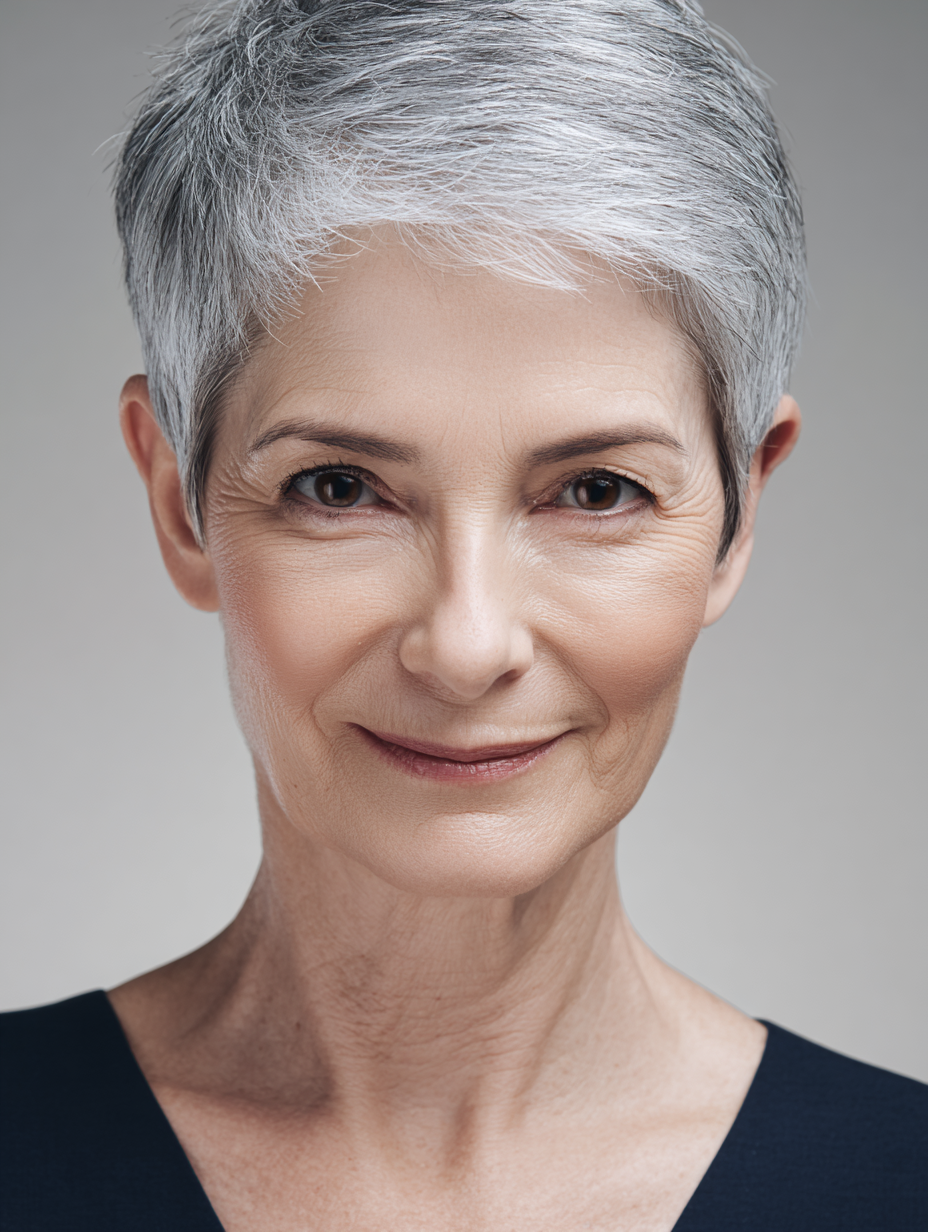
For women who like clean, deliberate hair without anything looking “done,” a neat crop with softened edges hits the right note. The shape is structured enough to look intentional but not so sharp that it reads as severe. Soft edges keep the cut feeling current rather than dated.
A surprising number of women in their 70s and 80s wear this cut beautifully. It ages with you instead of against you.
Short Bob with Wispy Bangs

Wispy bangs are not the same as full fringe. They are cut with a razor or with point-cutting to leave the ends piecey and translucent rather than solid. On fine hair, that translucency is the point — heavy bangs tend to flatten what little volume the rest of the hair has.
Skim the bangs across the forehead with your fingers when styling. Brushing them flat usually undoes the wispy effect.
Layered Crop with Gentle Texture

Gentle texture, in stylist-speak, means subtle internal layering that is invisible from the outside but creates lift from underneath. Most stylists use point-cutting for this rather than razor work, since razors can leave fine hair looking frayed at the ends.
The cut sits well between salon visits and grows out without dramatic shape loss.
Short Stacked Bob for Fine Hair
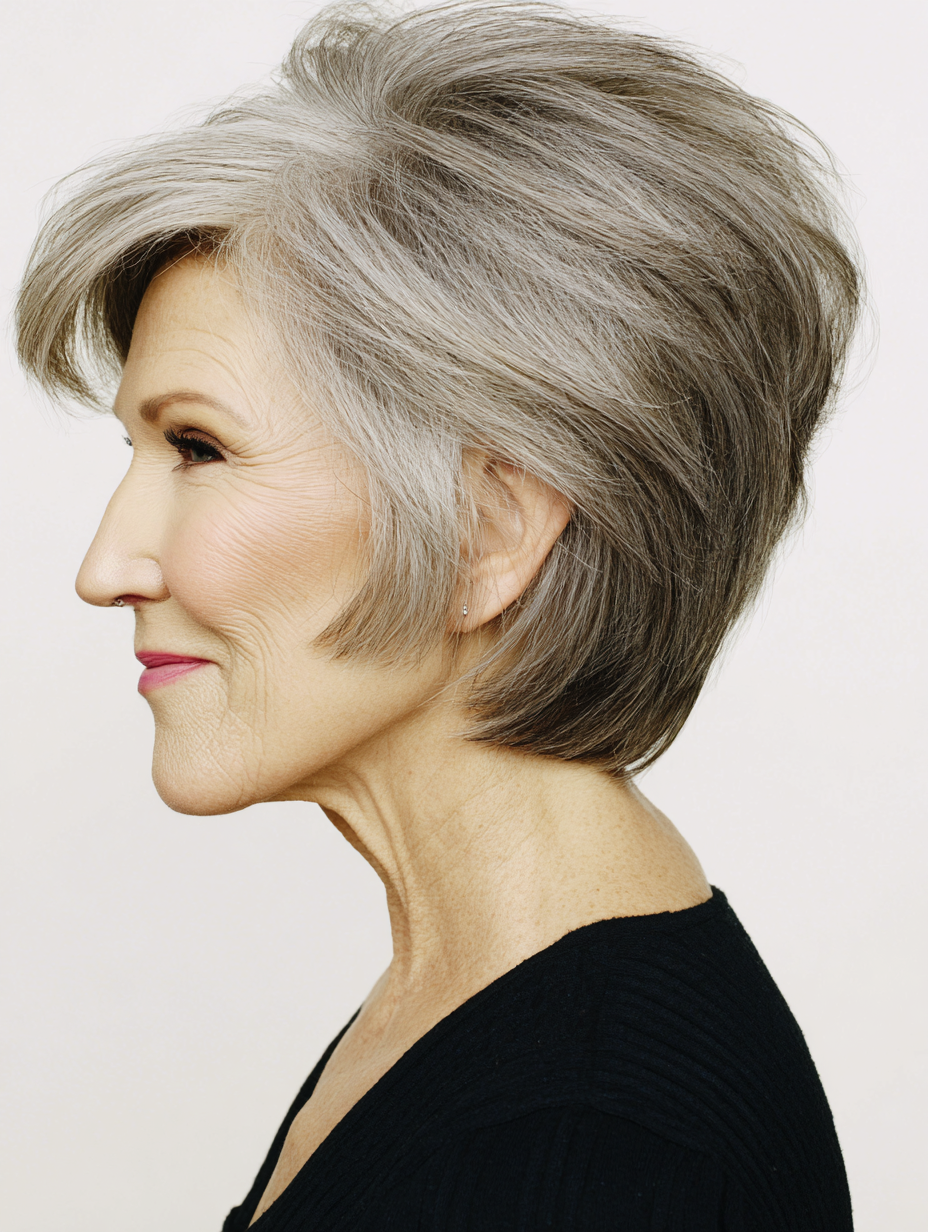
The classic stacked bob keeps length at the front and graduated layers at the back, building a rounded silhouette that is visibly fuller than a one-length bob. For fine hair, the back stacking is doing the work — it creates density where straight bobs tend to fall flat.
Worth asking your stylist to keep the front longer than the back by at least an inch. Less than that and the stacking effect gets lost.
Classic Pixie with Soft Tapering
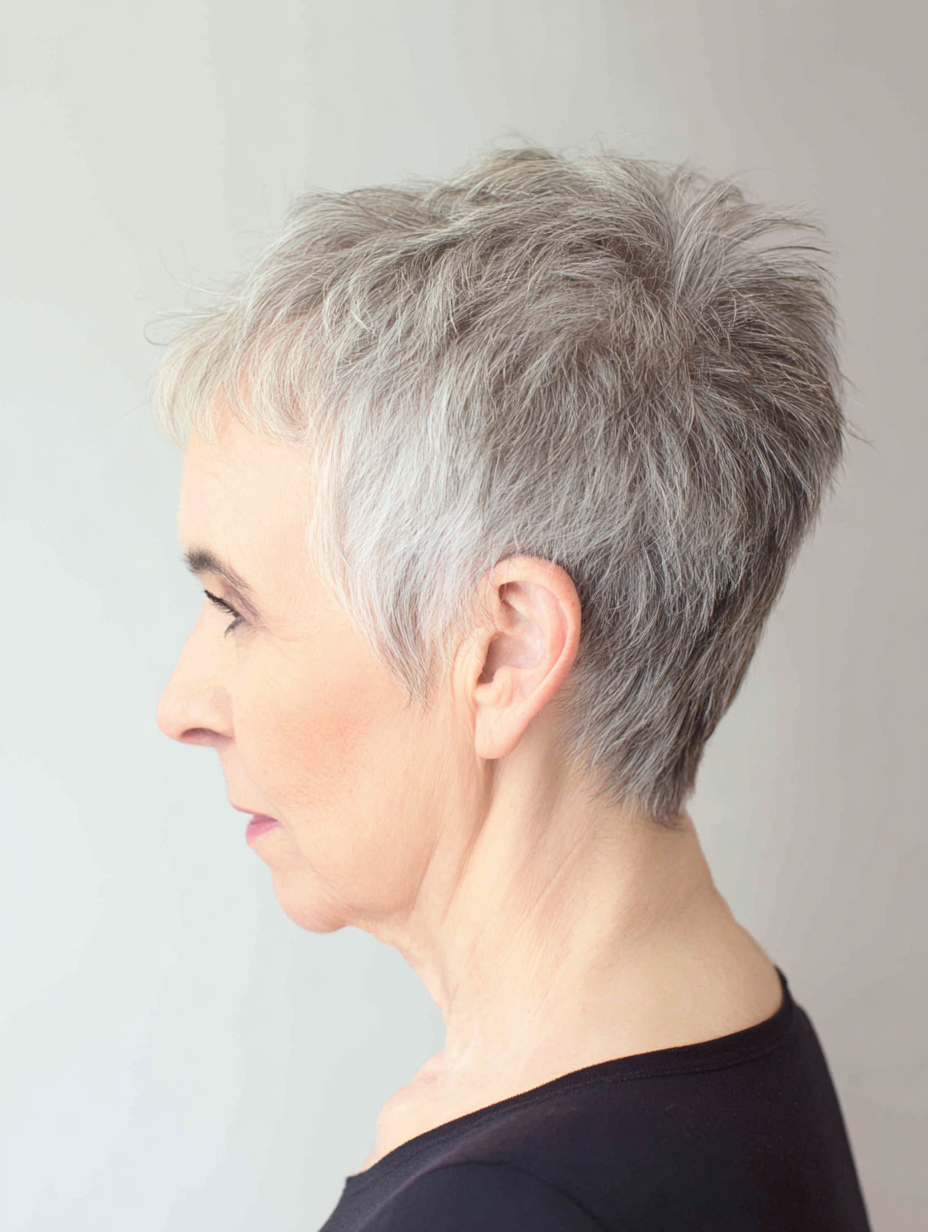
The classic pixie tapers gradually from longer on top to shorter at the nape, without any harsh transitions. Soft tapering is what separates a flattering pixie from a severe one — the cut should look like it is flowing into itself, not stacking in distinct sections.
This shape stays in style across decades. Audrey Hepburn’s pixie still looks current today; the shape is not going anywhere.
Short Bob with Light Face Framing
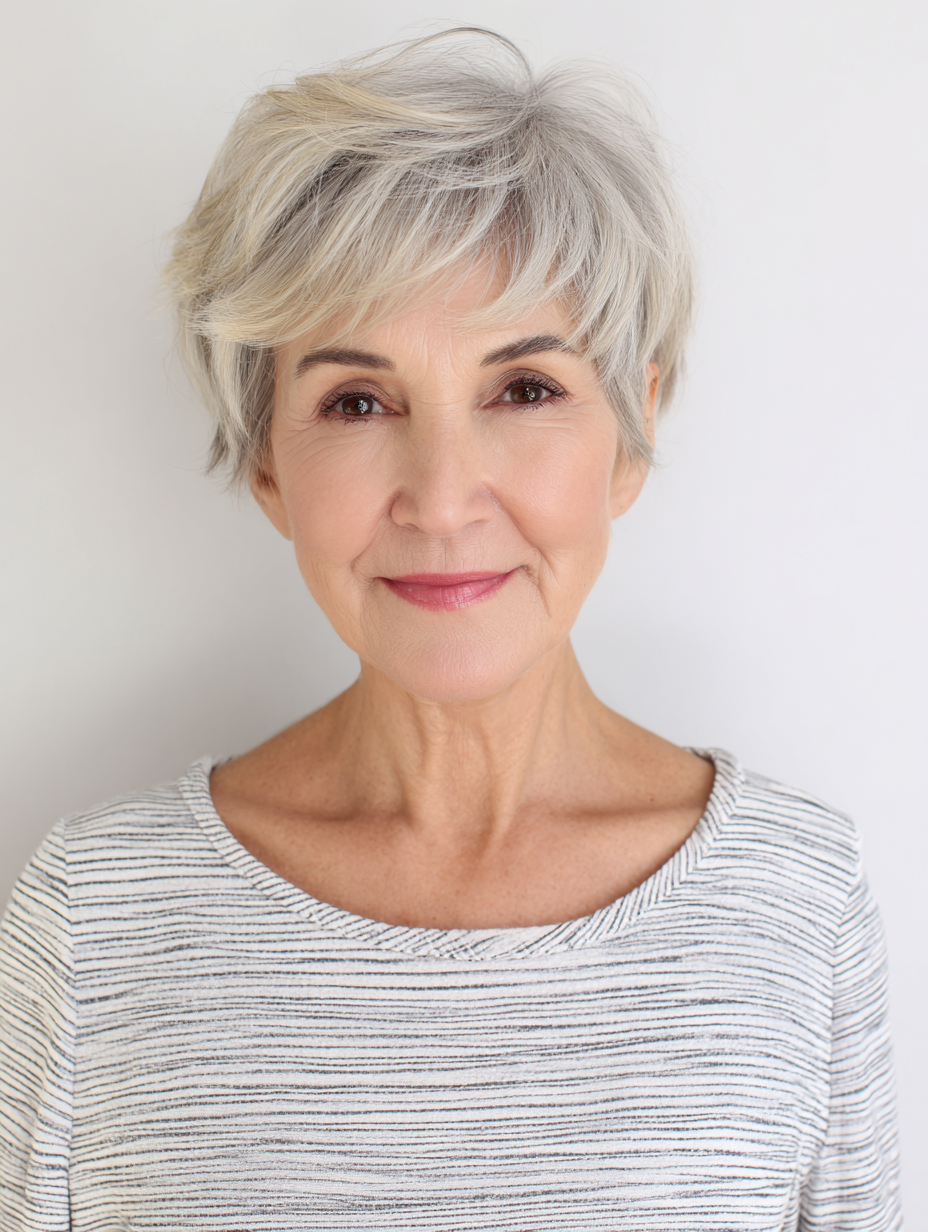
Face framing means slightly shorter pieces cut around the front to highlight the cheekbones and jawline. On a short bob, these pieces are subtle — not the dramatic curtain-bang version popular on longer hair, but a gentle taper that draws the eye toward the face rather than past it.
This adjustment alone can take an ordinary bob from “fine” to “flattering.” Worth requesting specifically by name.
Textured Crop with Natural Finish
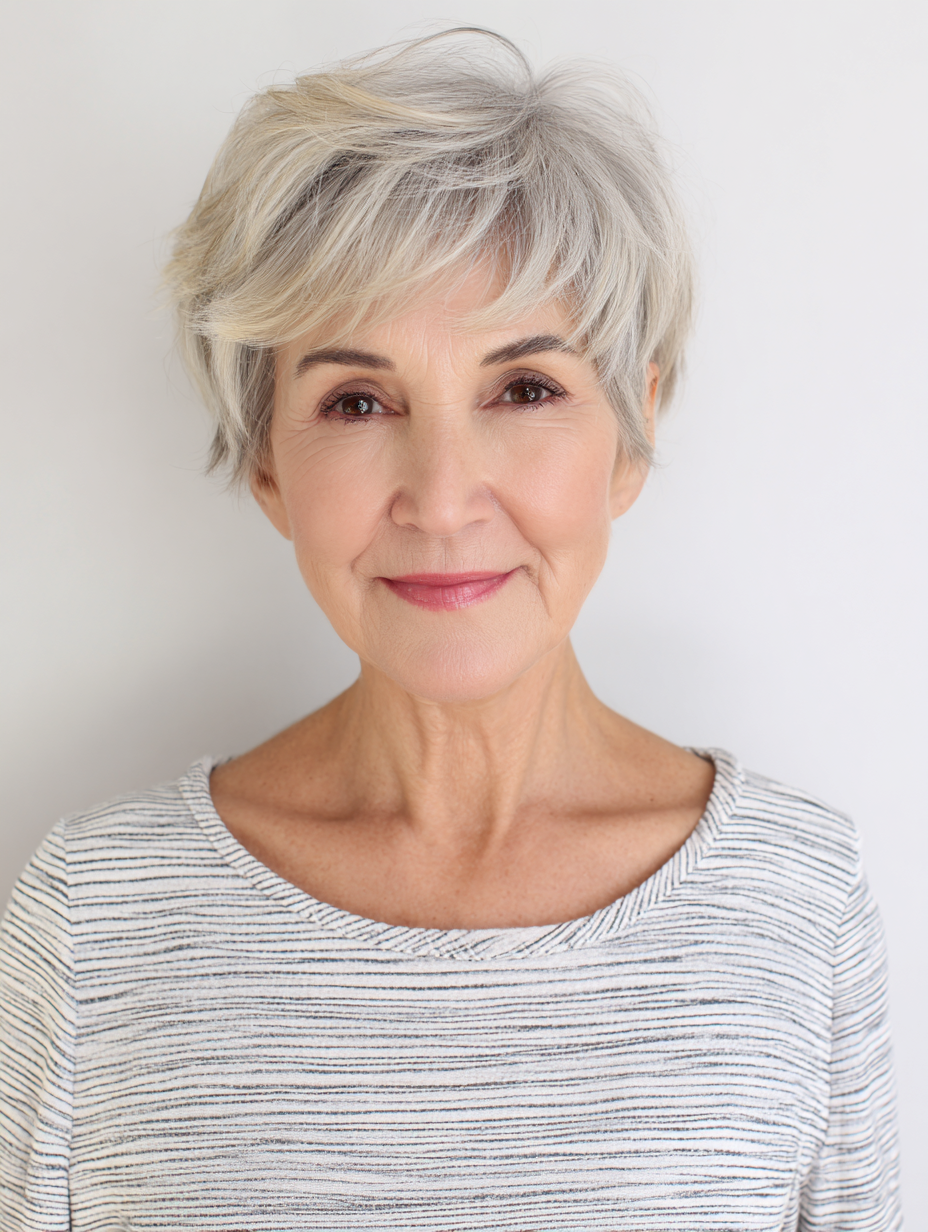
Natural finish means the cut is designed to look good air-dried without heavy styling. For fine hair, that is a meaningful claim — most “low-maintenance” cuts still require a blow dry to look intentional. This one does not, because the texture is built into the cut itself rather than added through styling.
Apply a small amount of light mousse to damp hair, scrunch lightly, and let it air dry. That is the whole routine.
Short Layered Cut with Side Bangs
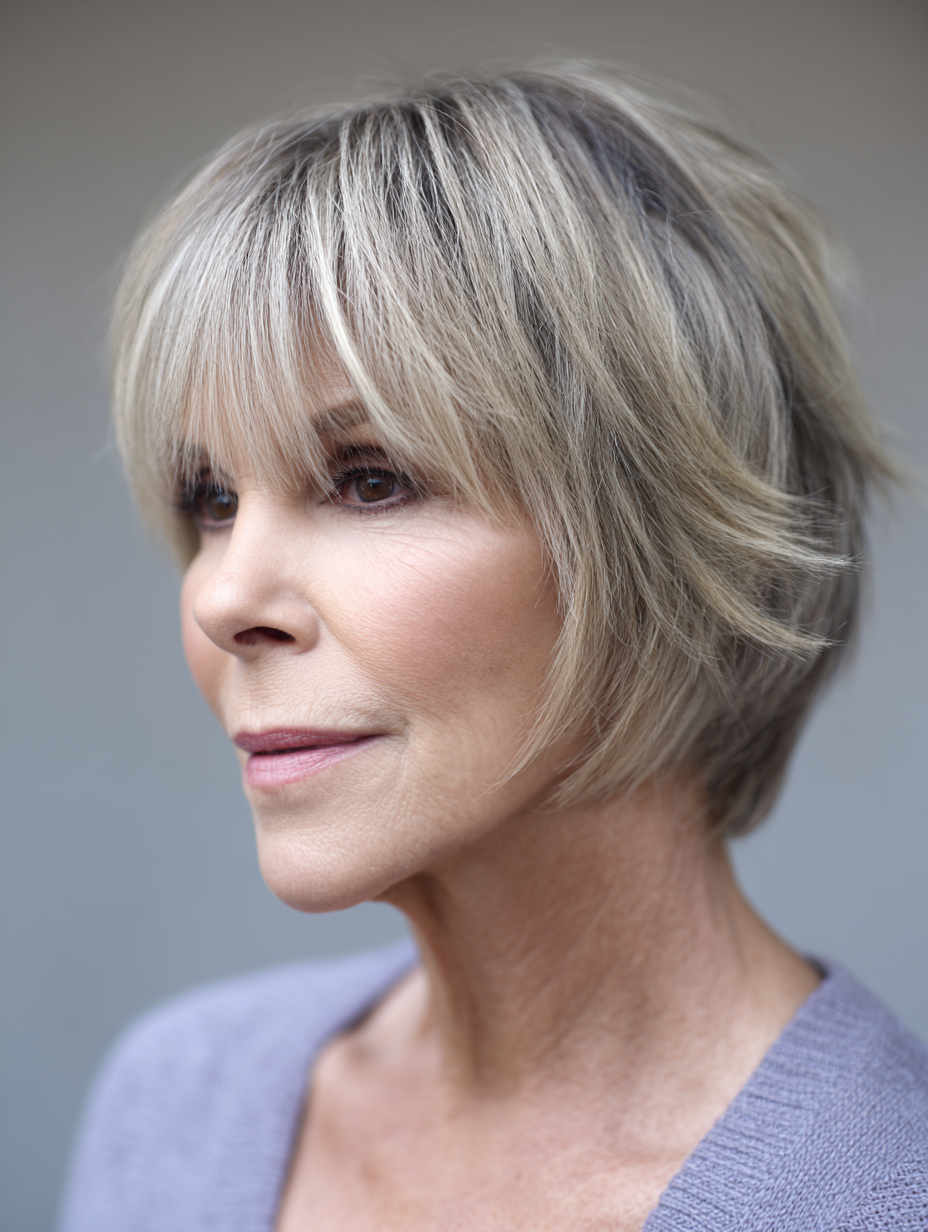
Side bangs are the most forgiving fringe option for fine hair. They sweep across the forehead at an angle, which means they cover any thinning at the hairline without requiring the density that straight-across bangs need to look intentional.
A blow dry across the bangs (not down, across) keeps them from settling flat against the forehead.
Low Maintenance Short Crop
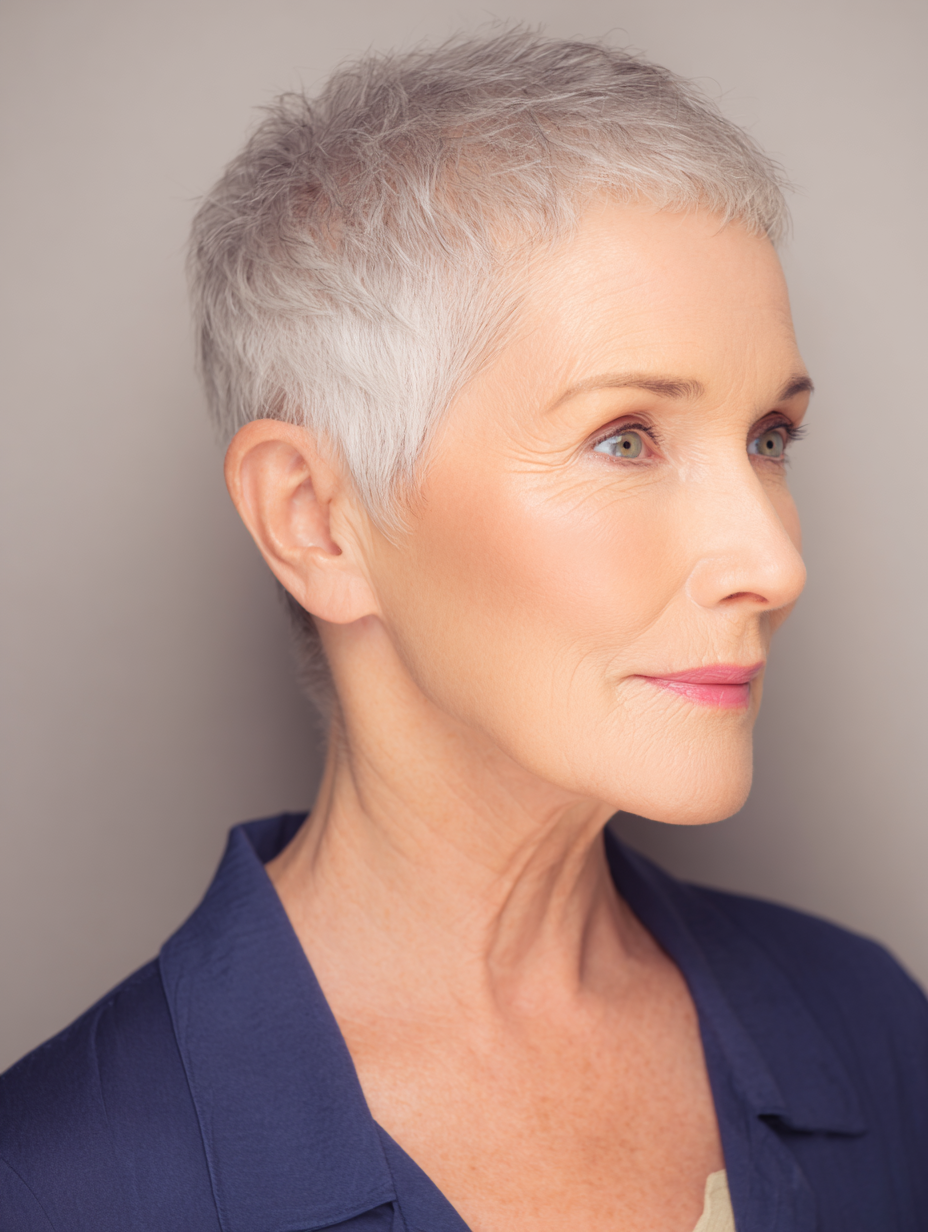
The low-maintenance crop is exactly what it sounds like — a shape designed to look good with minimal daily intervention. The cut does the work; you do not have to. The trade-off is more frequent salon visits, since the shape relies on a clean silhouette that grows out faster than longer cuts.
Six-week trims are the norm for this style. Anything longer and the shape starts to lose its definition.
Short Tousled Pixie for Fine Hair
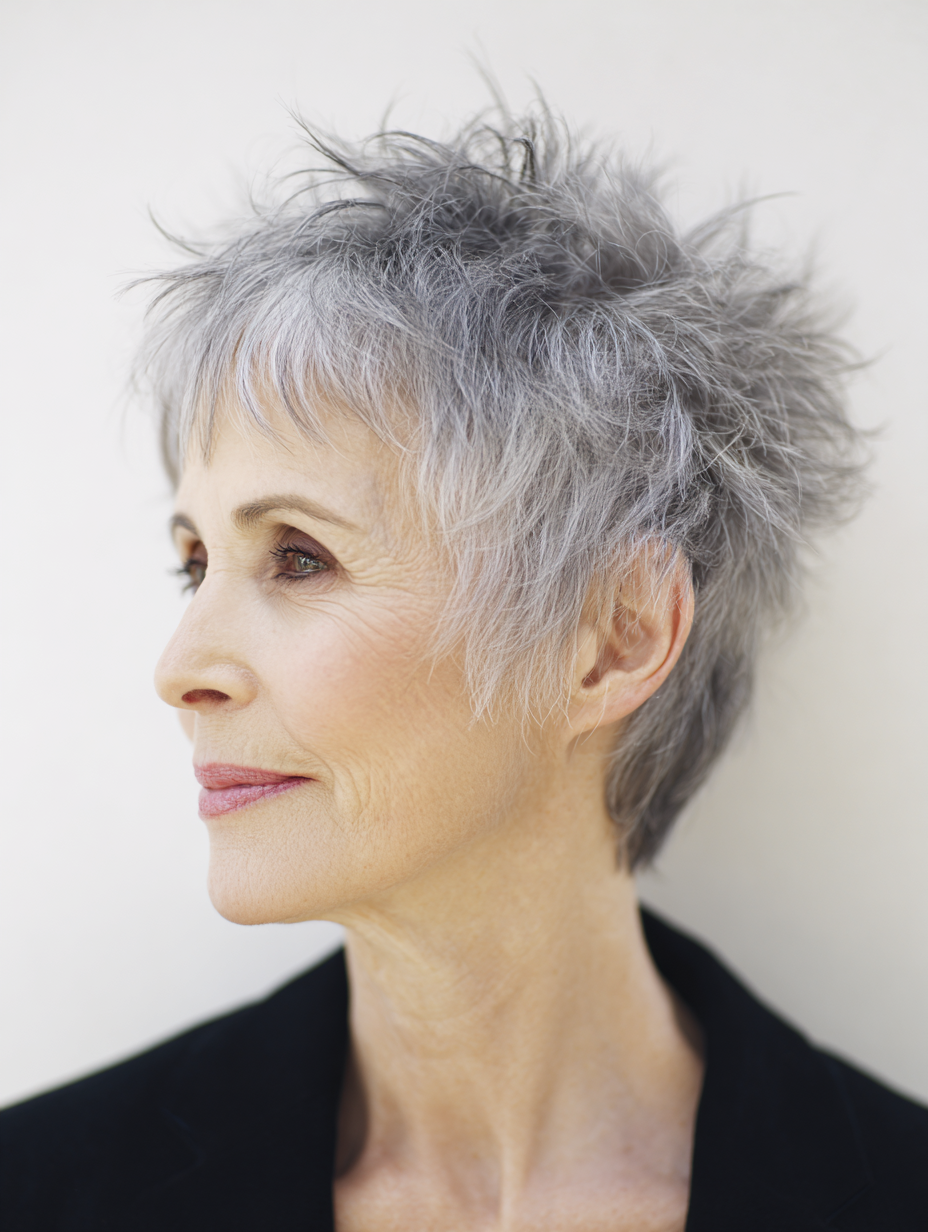
A tousled finish — slightly mussed, intentionally undone — works on fine hair specifically because it disguises the flatness that fine hair settles into when left smooth. The tousle creates the illusion of volume even when the actual density is unchanged.
Finger-styling beats brushing for this one. A boar bristle brush will smooth the texture right back out.
Chin Length Bob with Soft Layers
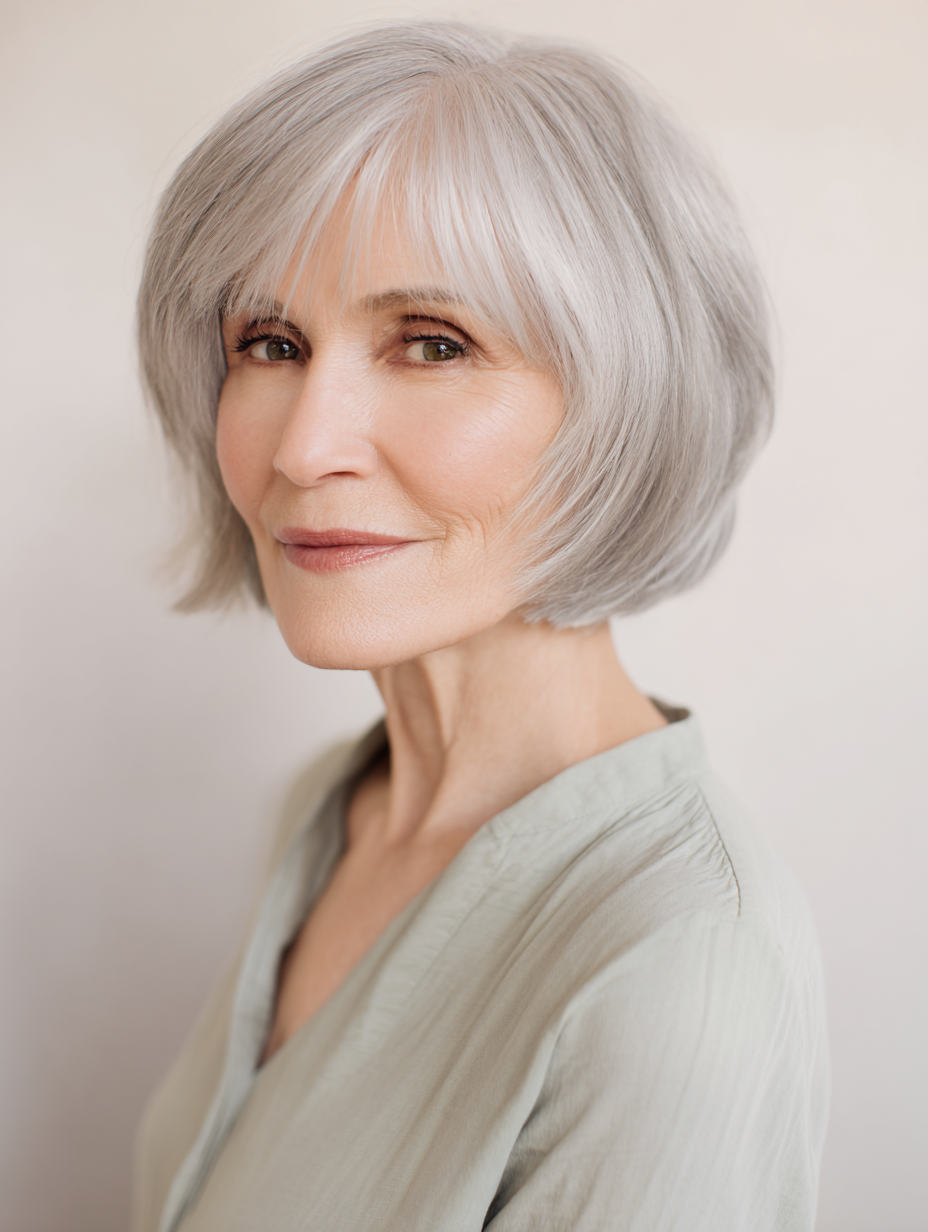
Chin-length is the shortest you can go while still having “real” length to work with. The bob sits at or just below the jaw, with soft internal layering that prevents the cut from looking flat without removing density at the perimeter.
Especially flattering for women who feel like very short cuts age them. This one keeps femininity in the silhouette while still giving fine hair the lift it needs.
Short Crop with Feathered Crown
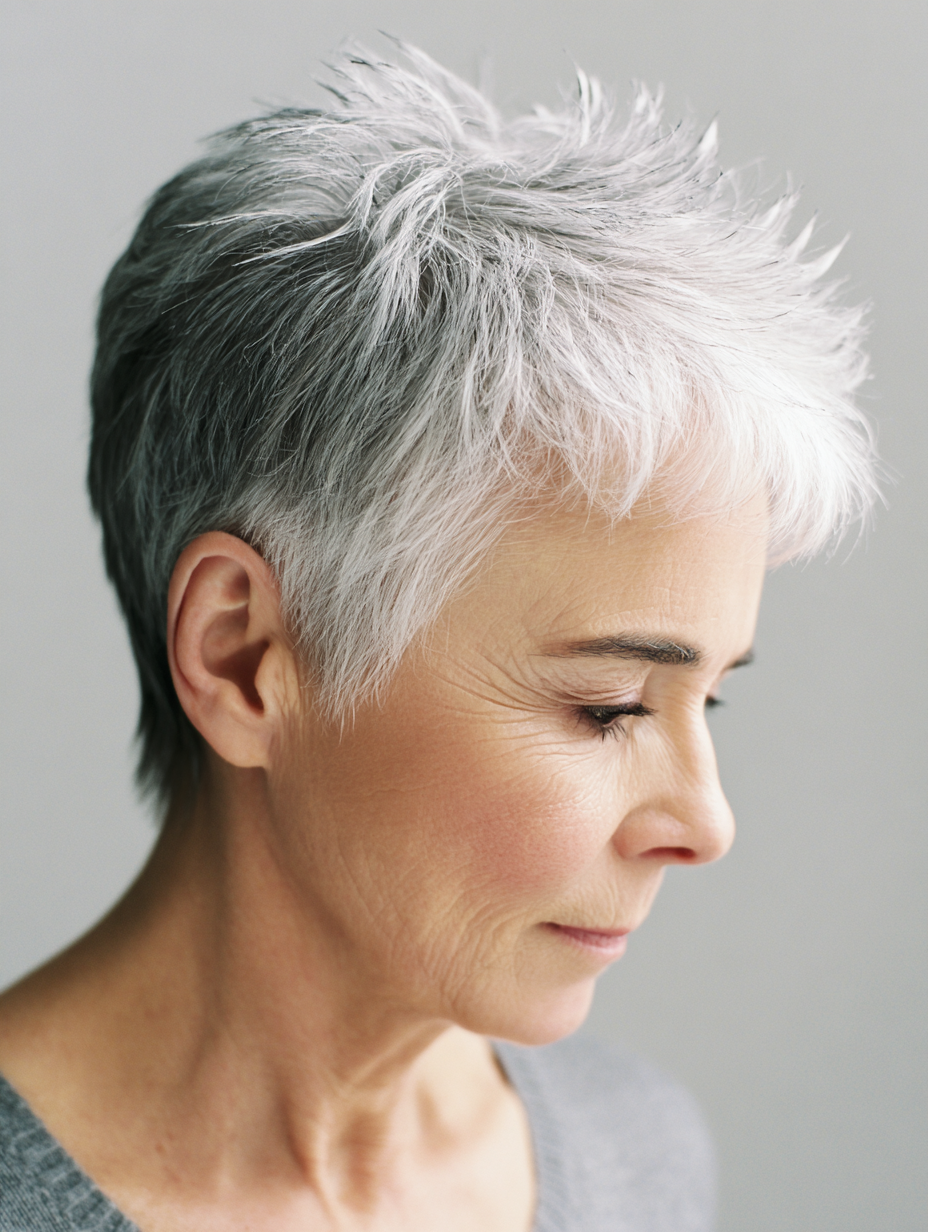
The feathered crown is the technical detail here — the top is cut at a slight angle so individual pieces lift naturally rather than lying flat. Stylists call this “weight line removal” and it is the difference between a cropped cut that looks flat and one that looks fuller.
Worth asking your stylist about specifically: “Can you remove the weight line at the crown?” They will know exactly what you mean.
Soft Boyish Cut with Volume
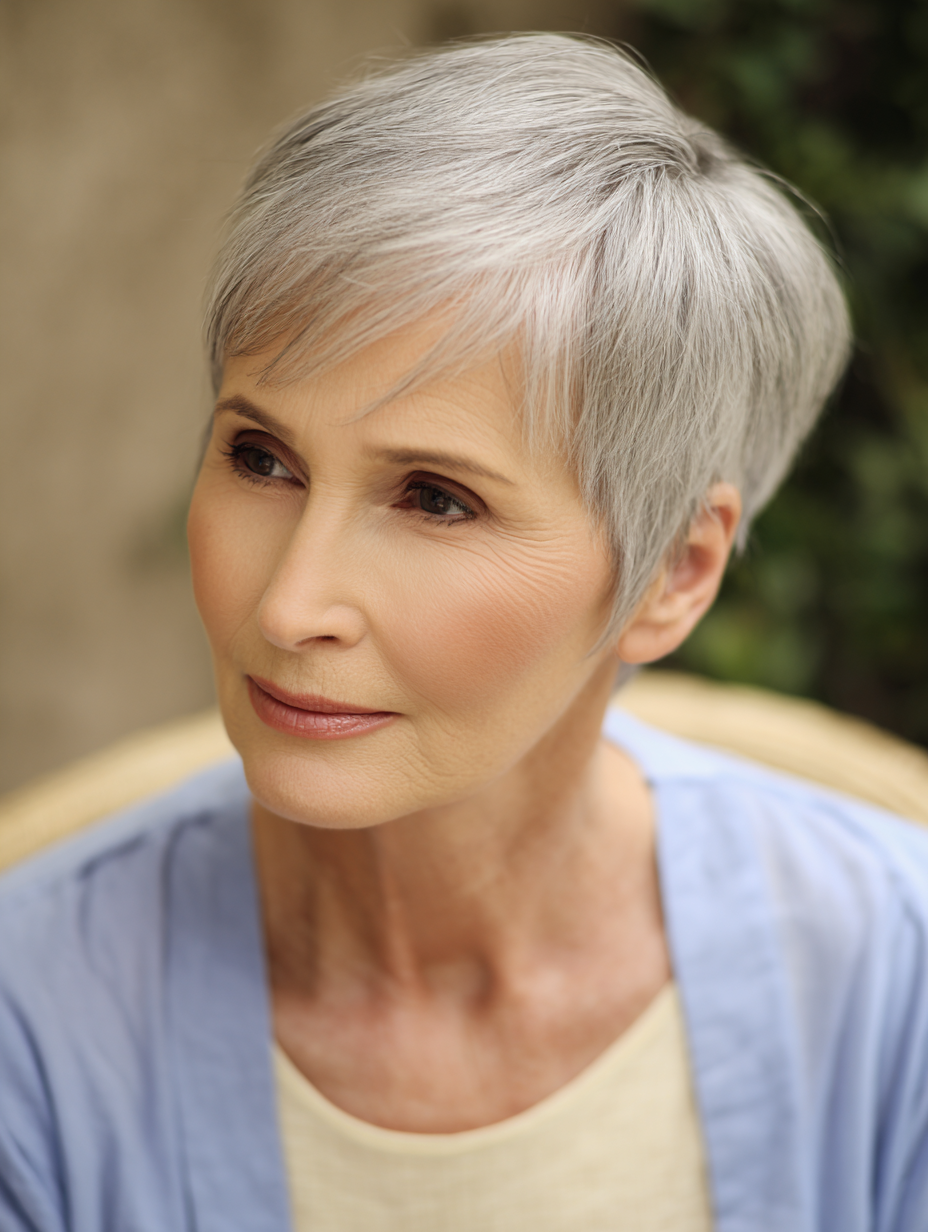
The boyish cut is shorter than a pixie but softer than a true crop. On older women with fine hair, it can be surprisingly elegant — the shape highlights bone structure and frames the face cleanly without any of the maintenance that longer styles demand.
Helen Mirren has worn versions of this cut for years and it still looks contemporary. That is the test of a shape that is working.
Short Elegant Cut with Side Texture
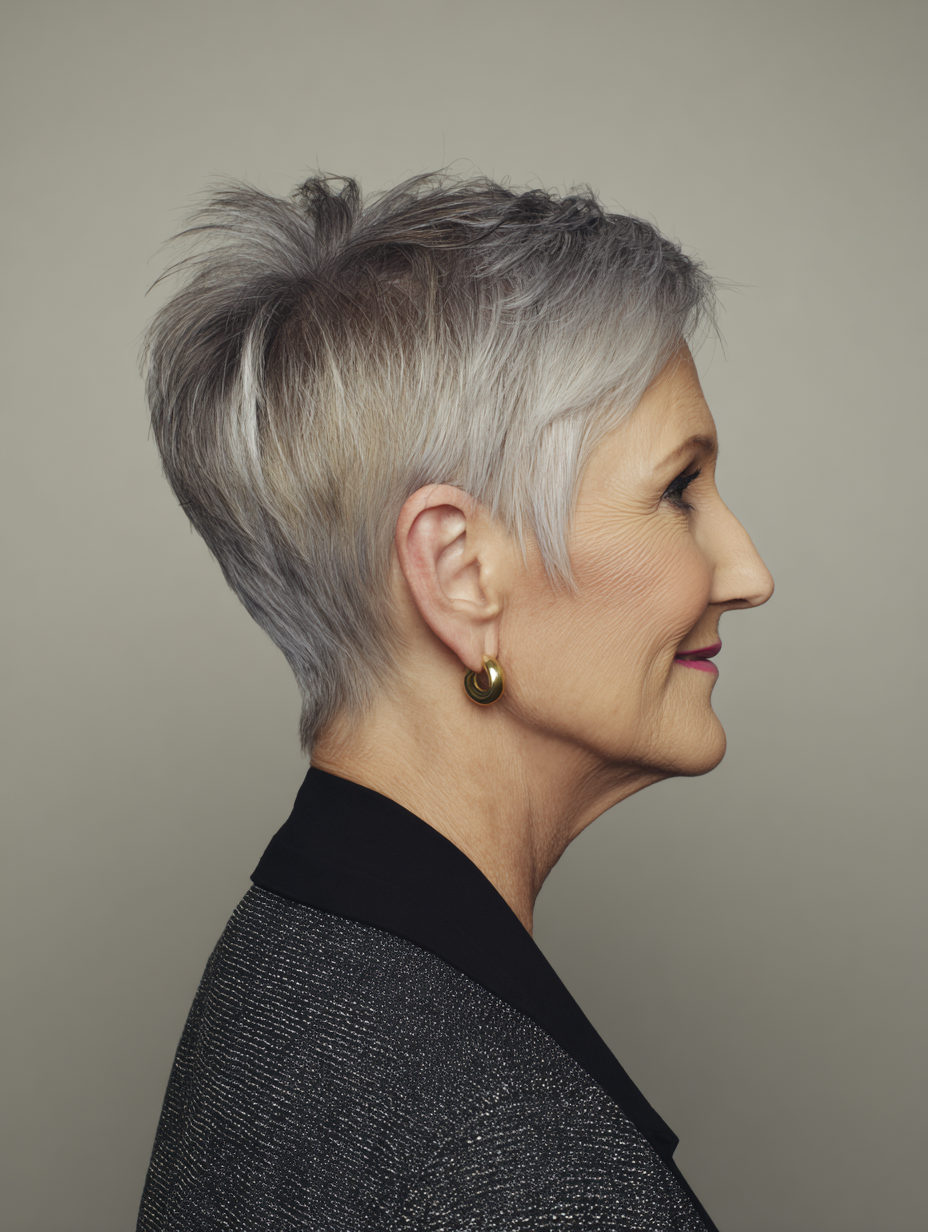
The final cut on this list focuses on the sides rather than the top. Side texture — subtle layering through the temples and ears — prevents fine hair from clinging flat to the scalp around the face, which is where thinning often shows first.
A flexible-hold spray applied at the sides, then ruffled with the fingers, is enough to keep the texture intact through the day.
