
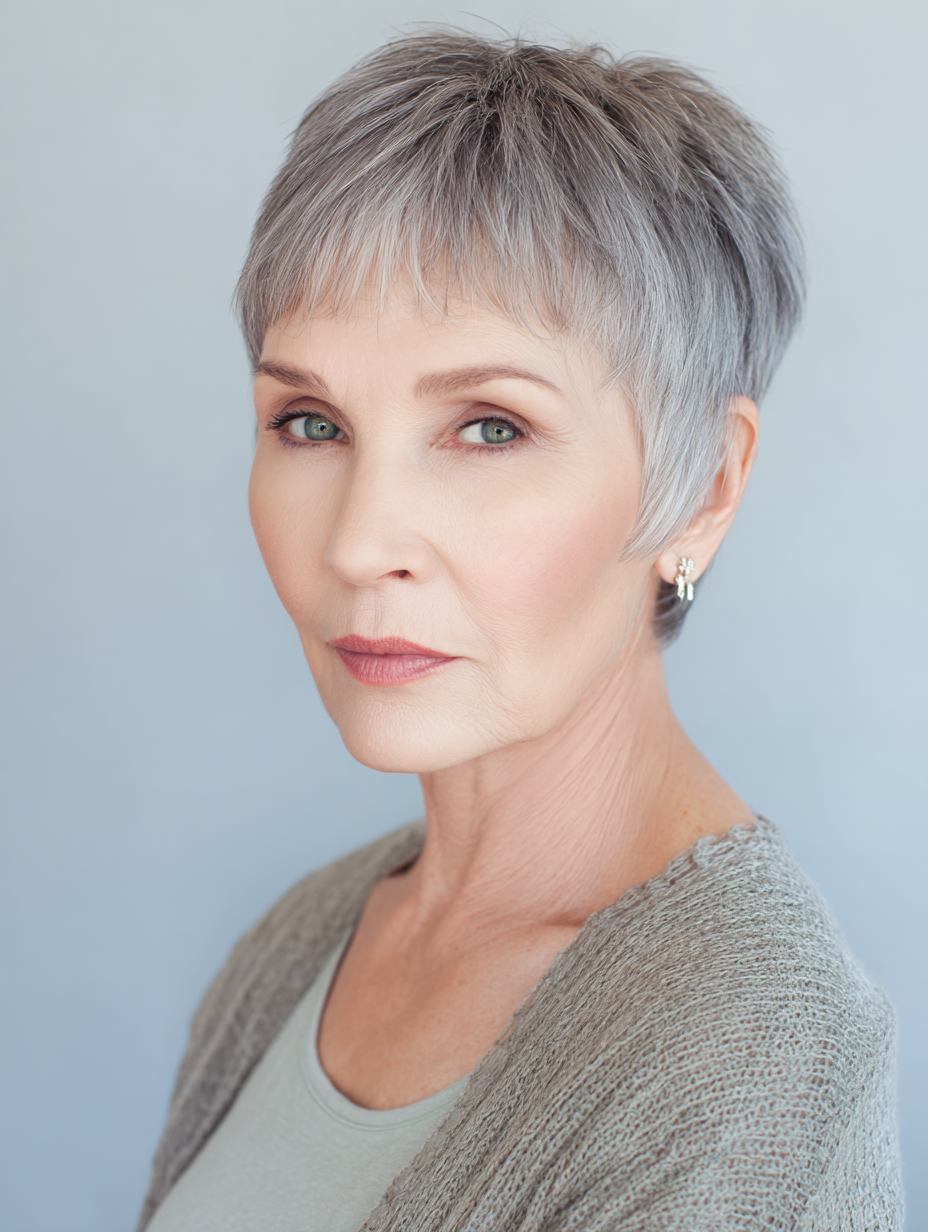
That is why the right short cut can take years off, while the wrong one — usually the wrong one is too uniform, too short on the sides, or too aggressively layered — makes thinning look more obvious, not less. The 25 cuts below are organized around that idea: shapes that put weight where fine hair needs it, and remove it where it does not.
Before You Choose This Hairstyle
Short cuts on fine hair flatter most face shapes, but the variations matter more than the category. Oval and softly square faces have the most flexibility. Round faces want a touch of crown lift and slightly longer pieces near the chin to add vertical balance. Heart-shaped faces look strongest with chin-length pieces that fill out the lower face. Long or oblong faces benefit from soft side volume rather than tall crown height, which can stretch the face further.
Density matters more than texture. Fine, thin hair gets the most lift from short cuts because the shorter length removes the weight that drags it flat. Coarse or thick hair can wear these shapes too, but the cutting strategy flips — the goal becomes weight removal rather than building fullness, which usually means more internal layering and a less stacked silhouette.
Plan on a few minutes of styling each morning, mostly at the roots. Trims every 6 to 8 weeks keep the silhouette crisp, since the shape itself is doing most of the work. A more detailed style guide appears at the bottom of this article.
25 Short Hairstyles for Women Over 60 with Fine Hair
Soft Layered Pixie for Fine Hair Over 60
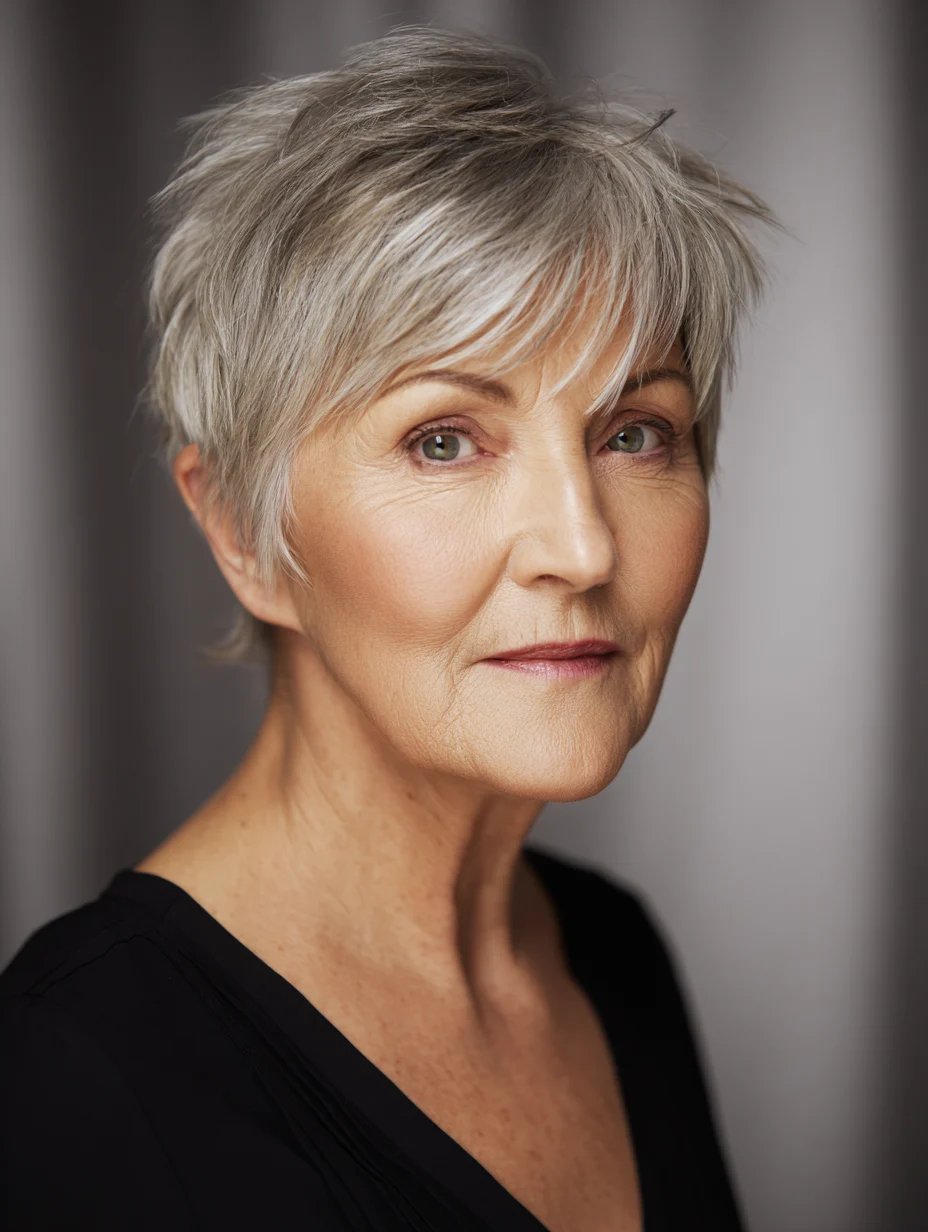
Ask your stylist for a pixie with the weight kept on top and the sides only lightly tapered — not buzzed. The shape works because most of the lift happens at the crown, where fine hair sits flattest with age. Soft layers through the top create movement without sacrificing density at the perimeter.
This is the cut I recommend most often for women new to short hair. It looks intentional but does not read as a “senior” haircut, and it grows out gracefully into a longer pixie or short bob if you decide to change direction.
Classic Short Bob with Feathered Ends
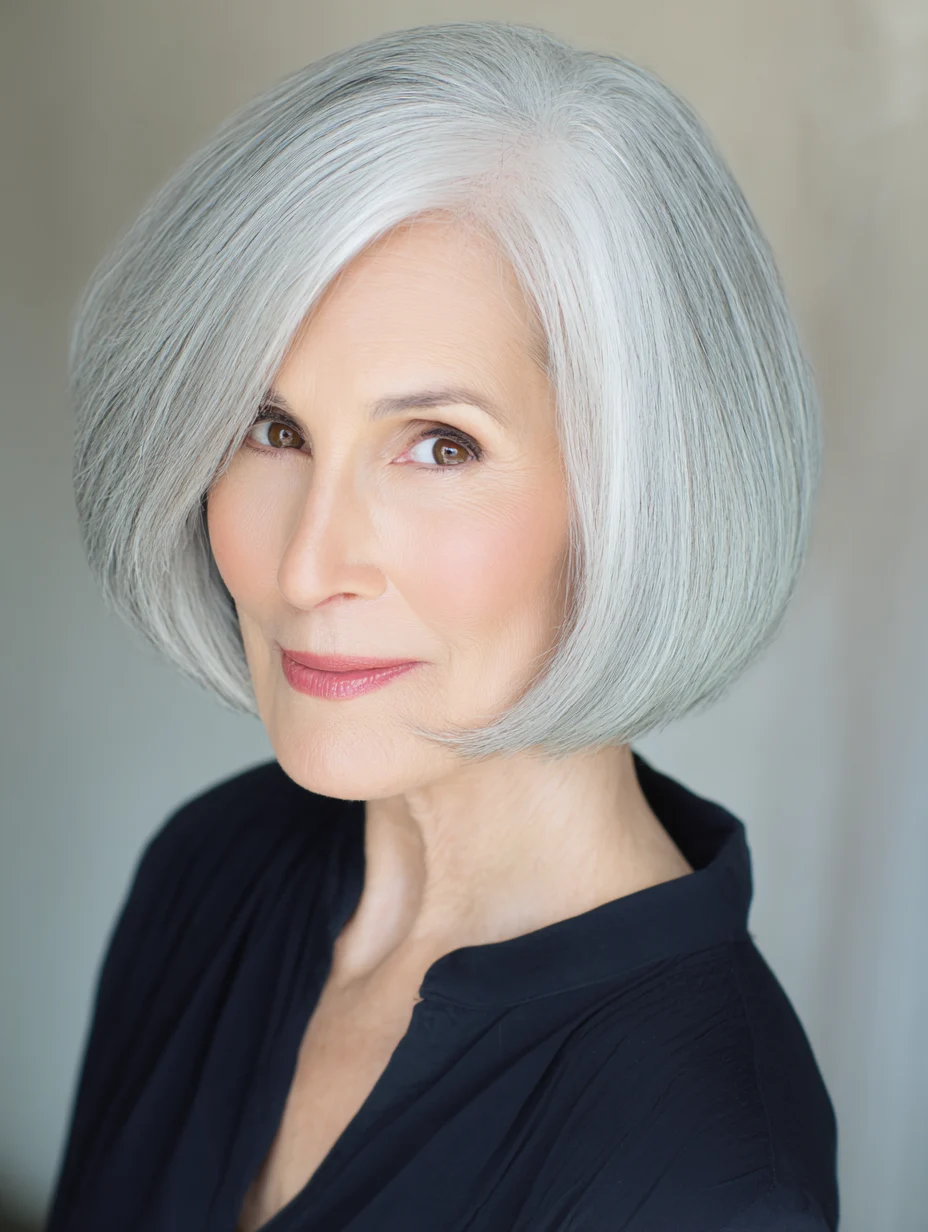
The bob sits at the jawline and stays mostly one length, with the ends gently feathered using point-cutting rather than full layering. The blunt-ish perimeter is what makes this work — blunt ends always read as fuller on fine hair than wispy ones do, even when the actual density is identical.
It is the cut that transitions easiest between a school run and a work meeting. A round brush and a low-heat blow dry are usually enough.
Tapered Crop with Subtle Volume
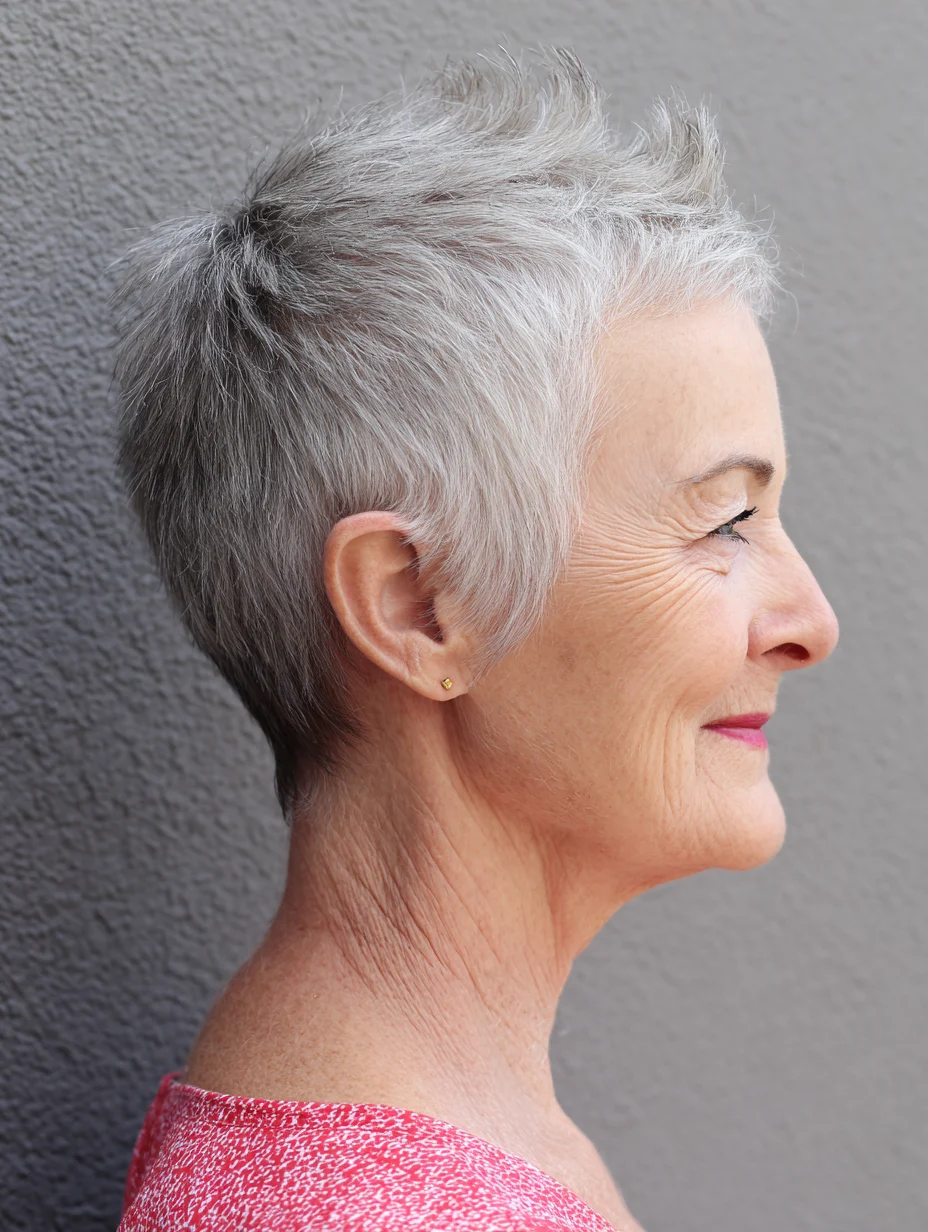
A tapered crop removes weight from the sides and nape and keeps the visual focus on the top. For fine hair, that is exactly the right trade — the parts of your head where density is least missed get cut close, while the crown stays full enough to lift.
Pairs especially well with glasses, since the clean sides keep the frames from competing with hair volume. Most women find the morning routine drops to under five minutes.
Short Shag with Wispy Layers
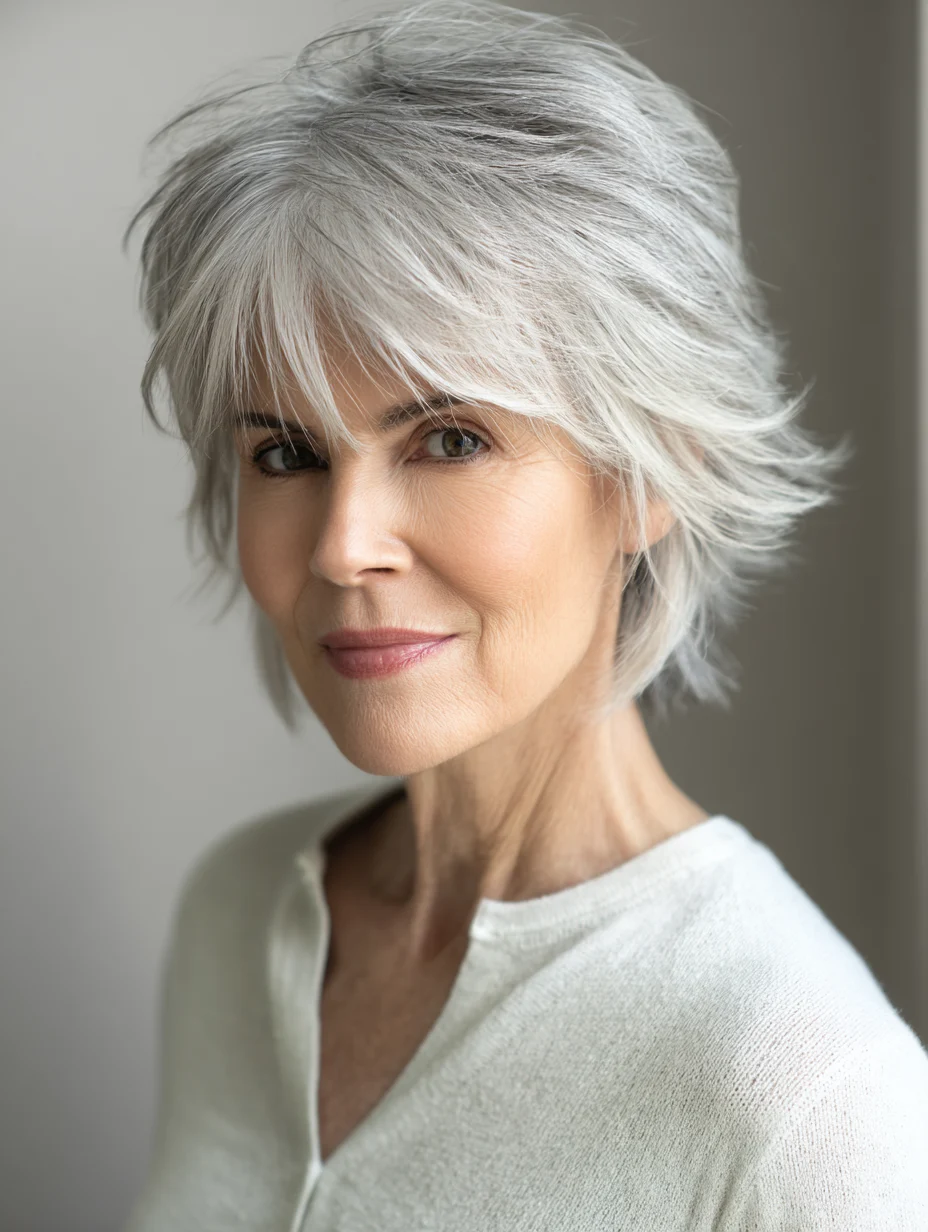
Shag cuts get a reputation for being too youthful, but the over-60 version is softer — fewer disconnected layers, more blended ones, and a perimeter that stays connected rather than choppy. The structure builds fullness around the crown and the temples, two areas where fine hair shows thinning first.
Skip heavy styling cream. A pea-sized amount of light mousse worked through damp hair before air-drying is usually all the shag needs.
Rounded Bob for Fine Hair Over 60
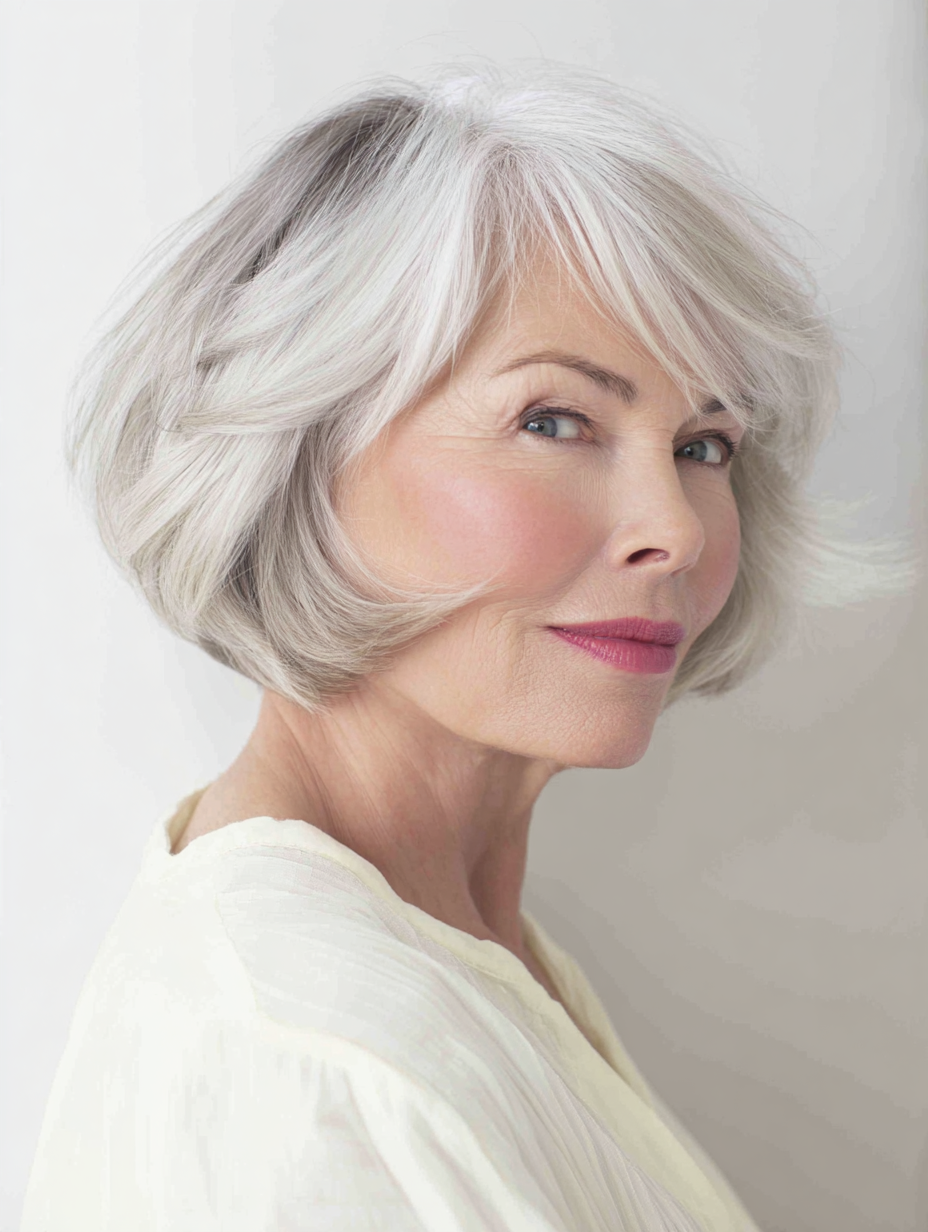
The rounded bob curves slightly inward at the ends rather than sitting straight. That curve does two things: it builds visible volume at the sides, and it draws the eye inward toward the face rather than down toward thinning ends. Pair it with a soft side fringe for extra coverage if your hairline has receded slightly.
This is one of the lowest-maintenance cuts on the list. It looks polished even on day-three hair.
Textured Pixie with Side-Swept Bangs
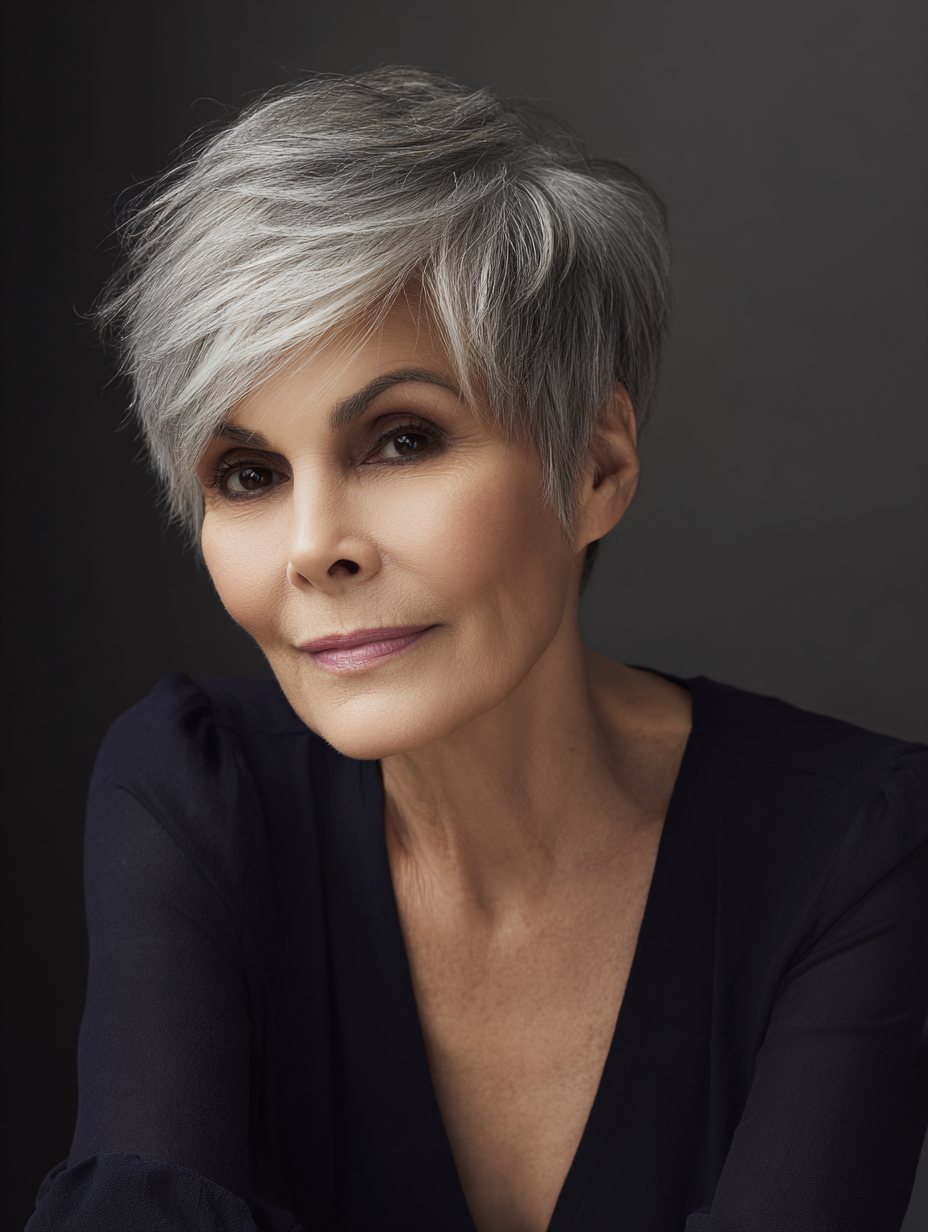
Side-swept bangs do quiet work on this cut: they break up the forehead horizontally, which softens vertical lines, and they give you somewhere to redirect attention if your part has widened over time. The pixie keeps the sides short enough to show off jewelry and earrings.
Slightly tousled finishes age better than slick ones on fine hair — slicked-down short cuts emphasize scalp visibility, which is the opposite of what you want.
Short Layered Bob with Light Graduation
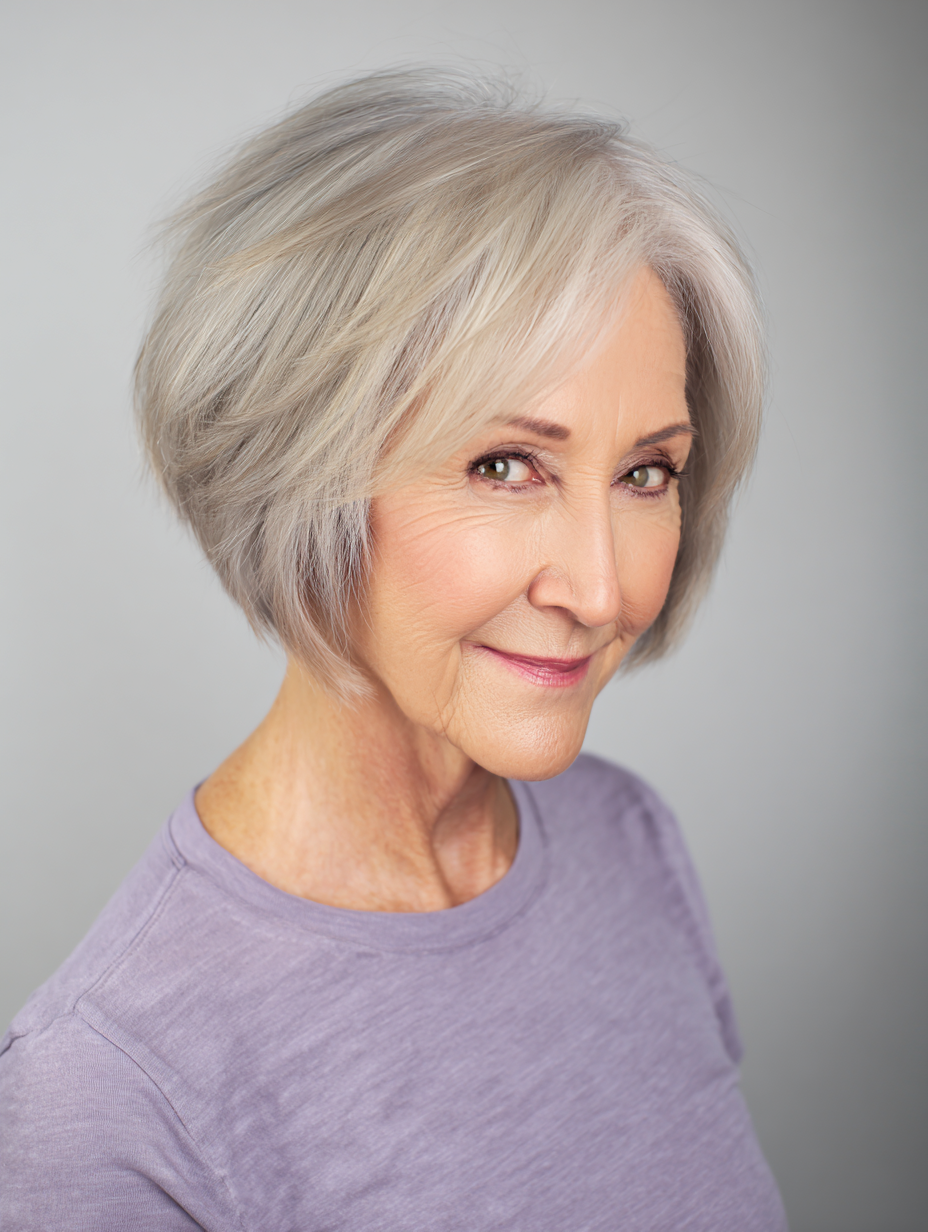
Light graduation means the back is cut just slightly shorter than the front, building a soft stacked shape at the nape. On fine hair, this is the gentlest way to add visible volume without it looking like an obvious ’90s stacked bob.
A side part adds further lift. Center parts on this cut can flatten the crown — worth knowing before you book.
Cropped Cut with Crown Lift

This cut is short throughout, with extra length deliberately left at the crown to be styled upward. The lift is the entire point — it creates the illusion of fuller hair through silhouette alone, no products required.
Daily styling is finger-combing the crown upward as it air-dries, then a brief shot of cool air from the dryer. Two minutes total.
Soft Short Bob with Side Part
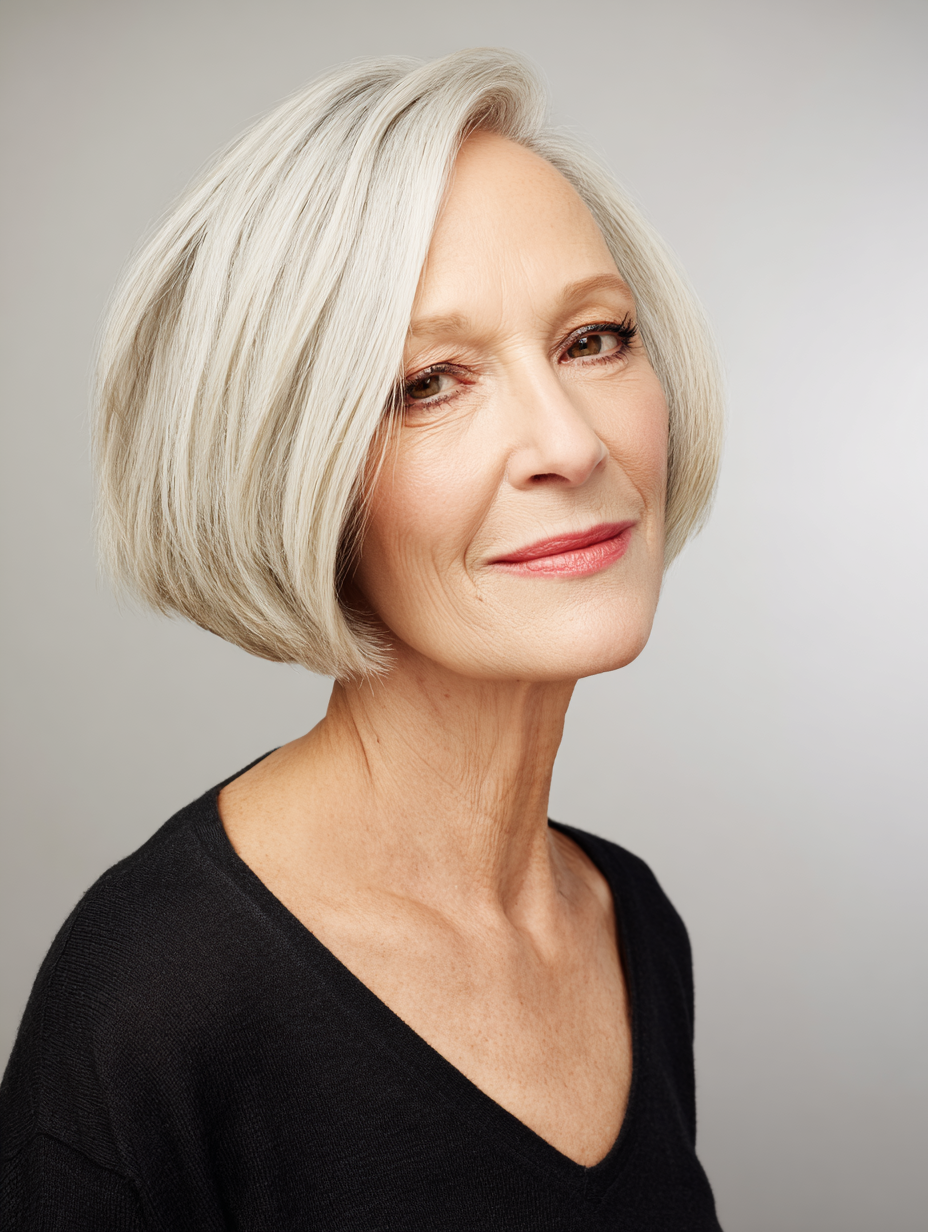
The side part is the unsung hero of fine hair after 60. It instantly adds visible volume on the heavier side, breaks up symmetry that tends to highlight thinning, and shifts attention horizontally rather than downward. Pair it with a gentle layer through the mid-lengths.
If your part has stayed in the same place for years, switching it can take a week or two of training but the volume payoff is immediate.
Short Pixie Bob for Fine Hair
Sometimes called a “bixie” — bob and pixie hybrid — this cut keeps the back short like a pixie but leaves the top long enough to curve toward the chin like a bob. The result reads as fuller than either parent shape because the eye sees length and structure at the same time.
Especially good with glasses. The shape draws focus toward the face rather than across it.
Short Feathered Cut with Natural Flow
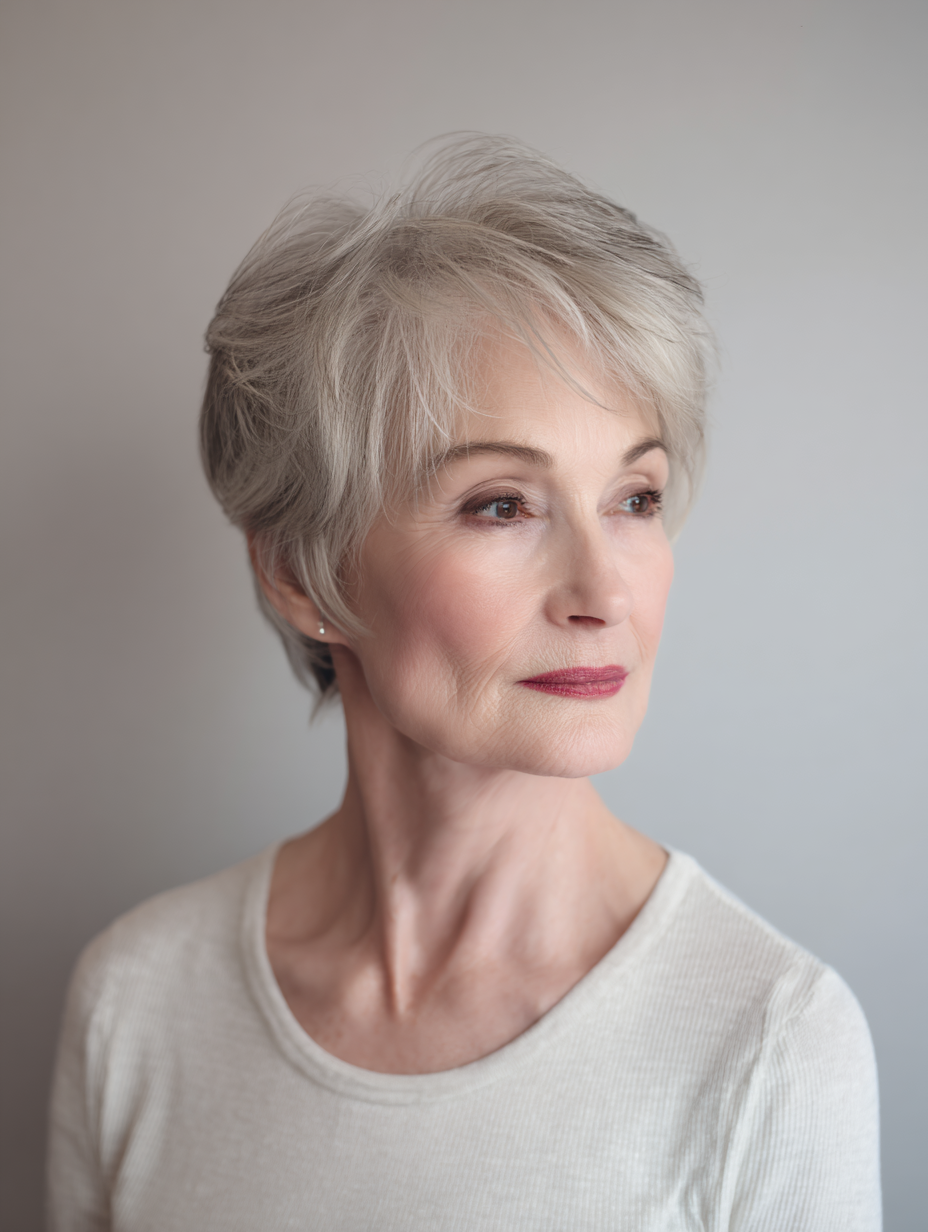
Feathered cuts use the scissors at an angle to soften ends rather than cutting straight across. On fine hair, this prevents the ends from looking thinner than the lengths above them — a common issue with blunt cuts that are not shaped properly through the perimeter.
The cut works particularly well with natural gray that is coming in unevenly, since the feathering blends color transitions visually.
