
Pixie with Side-Swept Bangs
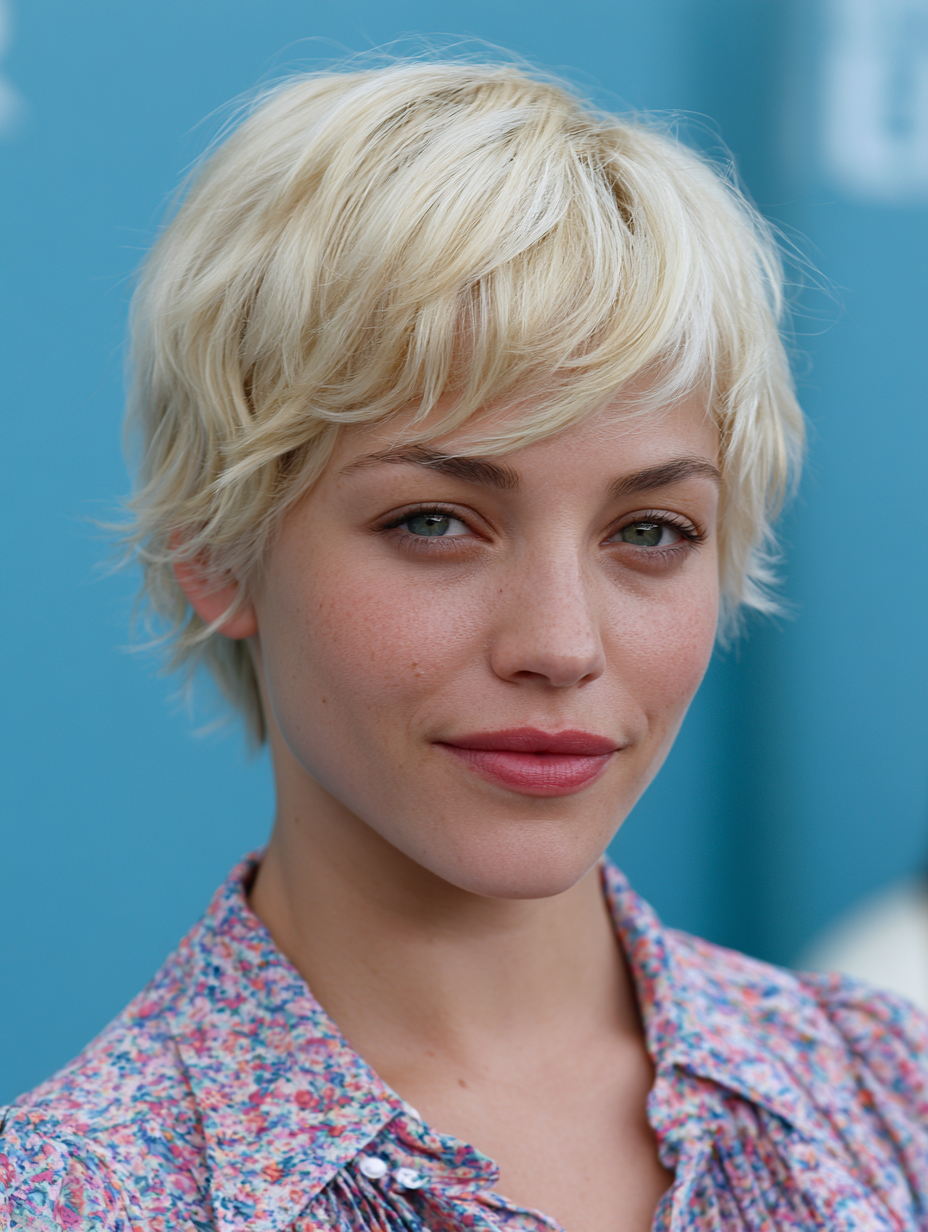
The bangs sit longer than typical, sweeping diagonally across the forehead.
Thick hair gives the bangs enough body to hold their shape without thin or stringy patches.
Ask your stylist to thin out the bangs from underneath so they lay flat rather than sticking out. The rest of the cut stays short and layered.
This style suits longer face shapes because the diagonal sweep adds width across the forehead. Trim the bangs every few weeks to keep the line clean.
Pixie with Curtain Bangs
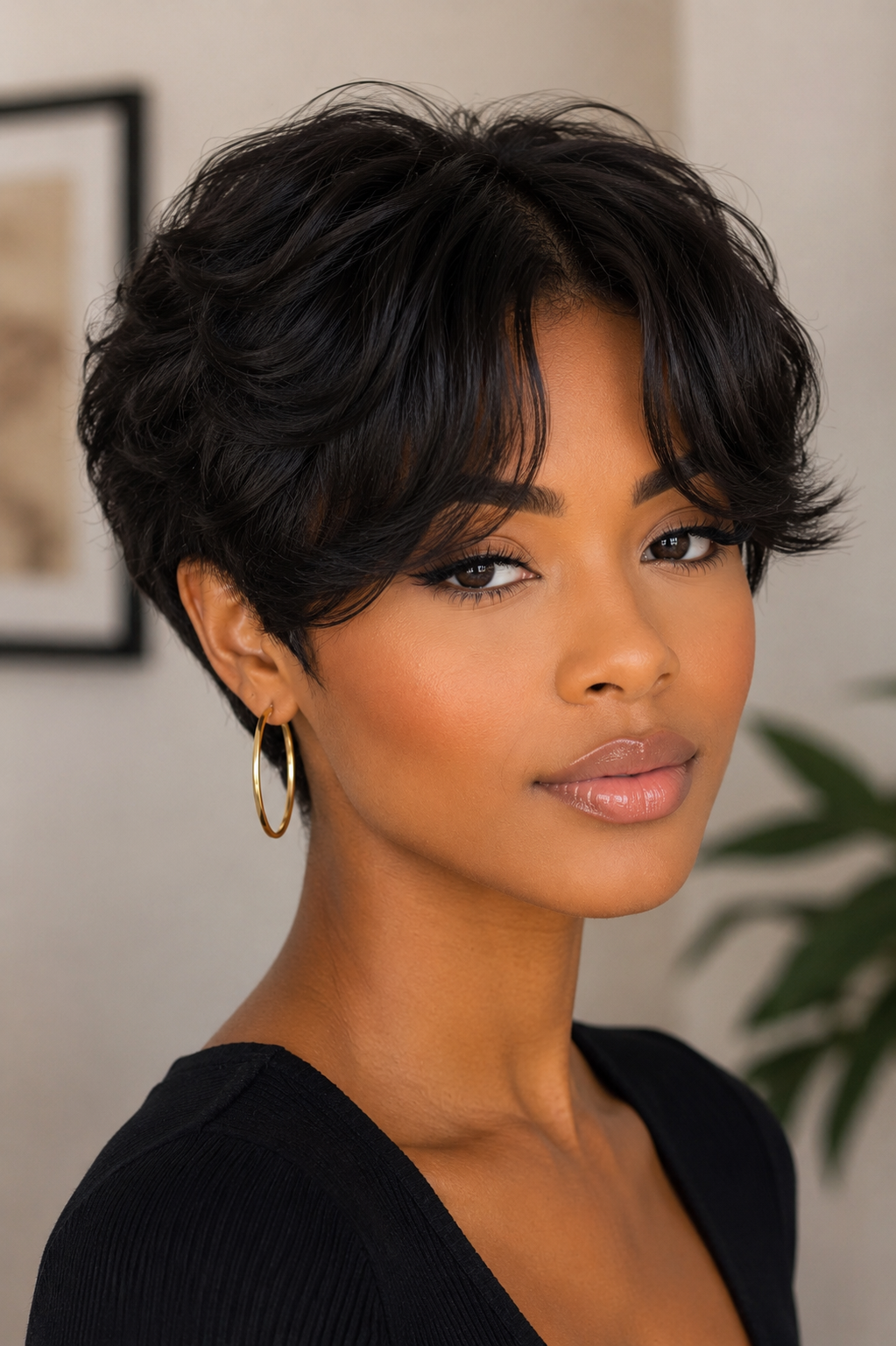
Curtain bangs frame the face on both sides, parted in the middle.
Thick hair gives curtain bangs the body and movement they need to look intentional rather than flat. The rest of the cut stays short and textured.
This shape suits oval and heart-shaped faces especially well. Style the bangs with a round brush and a quick blow-dry to set the curtain shape.
The look feels soft and feminine, balancing the boldness of a short cut.
Pixie Mohawk
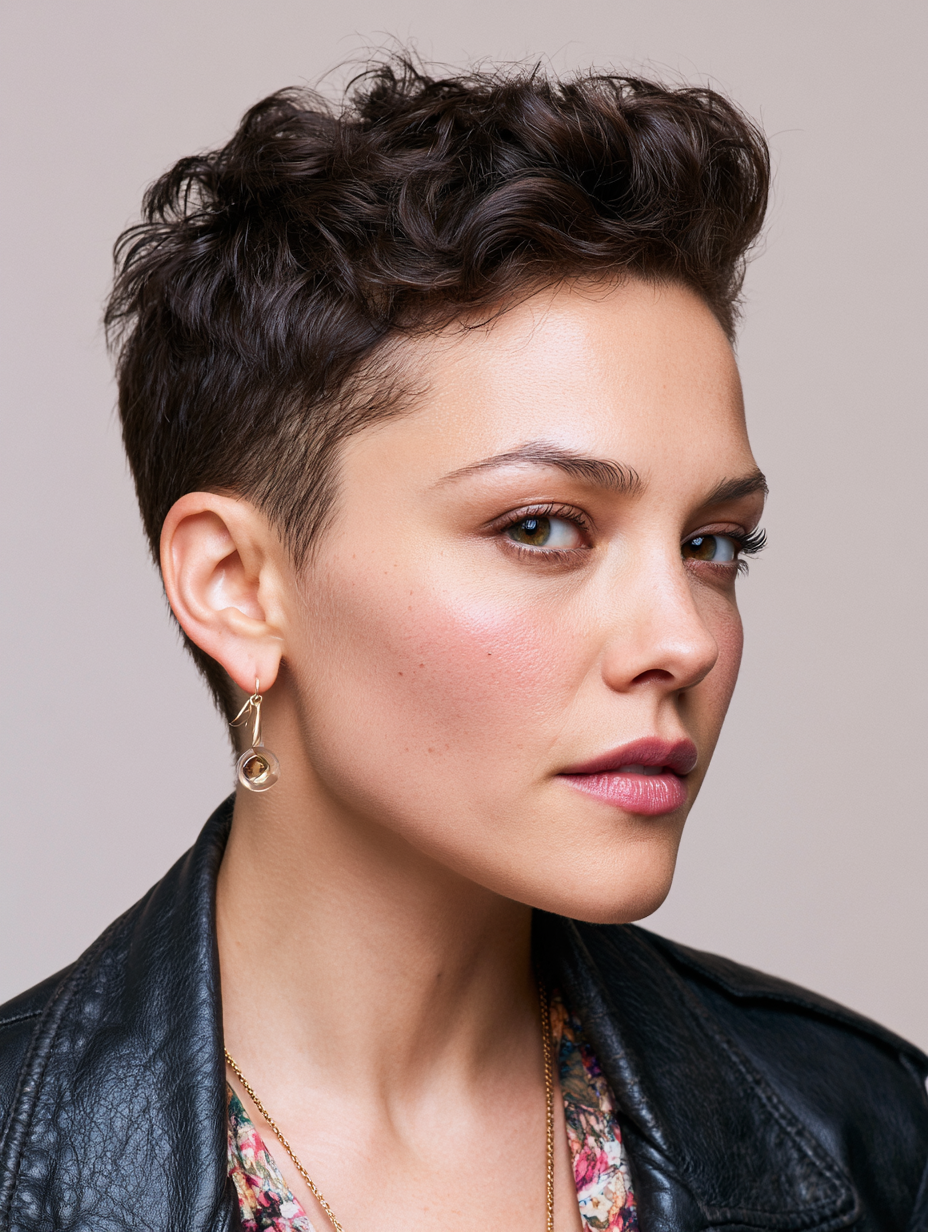
The sides taper or shave close while the top stays full from forehead to nape.
Thick hair holds the mohawk shape better than fine hair, since the density gives the top section natural height.
The width of the strip changes the feel, narrow leans punk, wider leans softer. Set the top with styling product to maintain shape through the day.
The cut grows out into a regular pixie within several weeks, so it’s a lower-commitment way to try something dramatic.
Frohawk Pixie
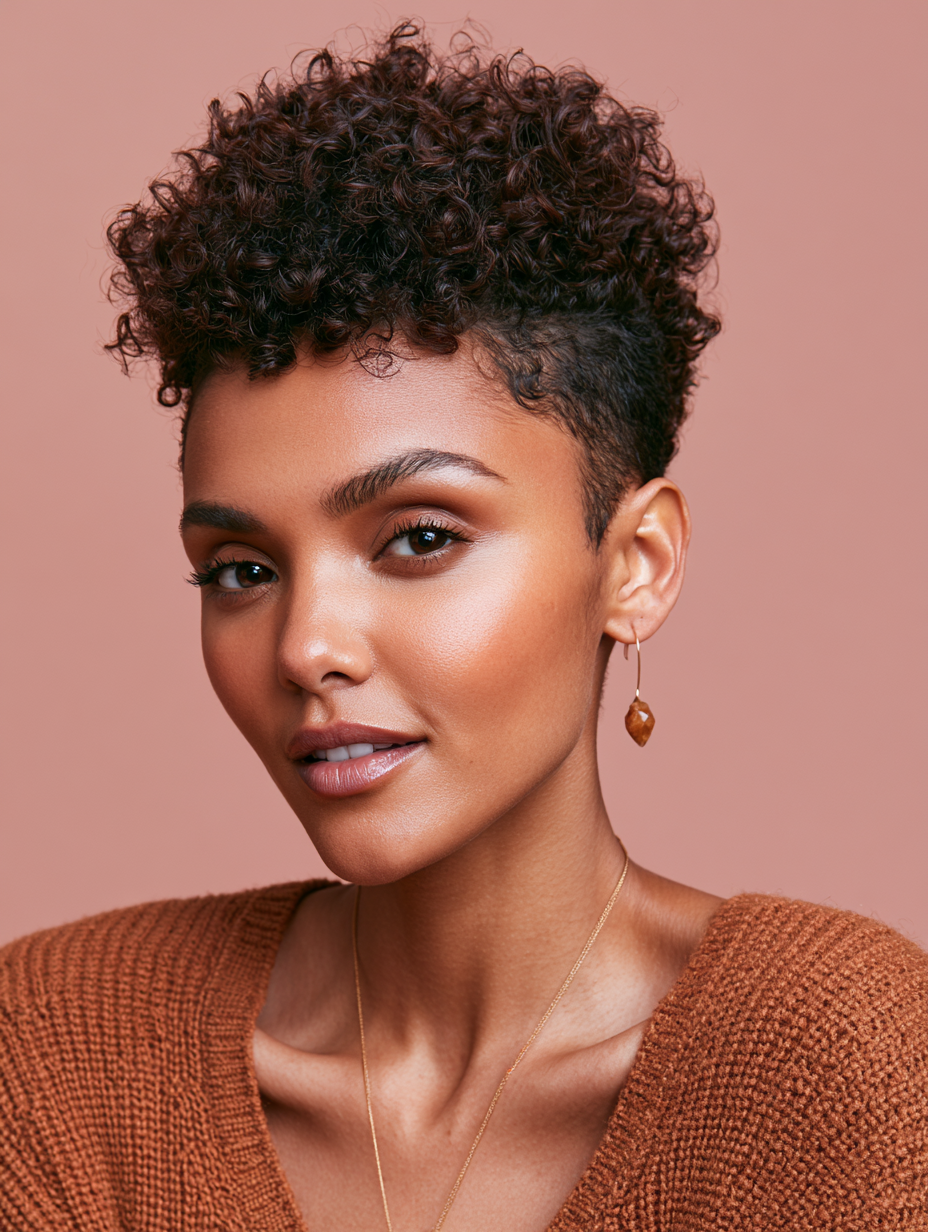
The sides taper close while the top stays full and brushed upward into a soft mohawk shape.
Different from the shaved mohawk, this version keeps everything attached and creates height through styling.
Thick coily and curly hair holds frohawk shape naturally, while straighter textures need product help. Use a denman brush to lift the top section, then pick out volume with an afro pick.
The shape elongates round faces and adds presence without looking too edgy.
Pixie with Shaved Designs
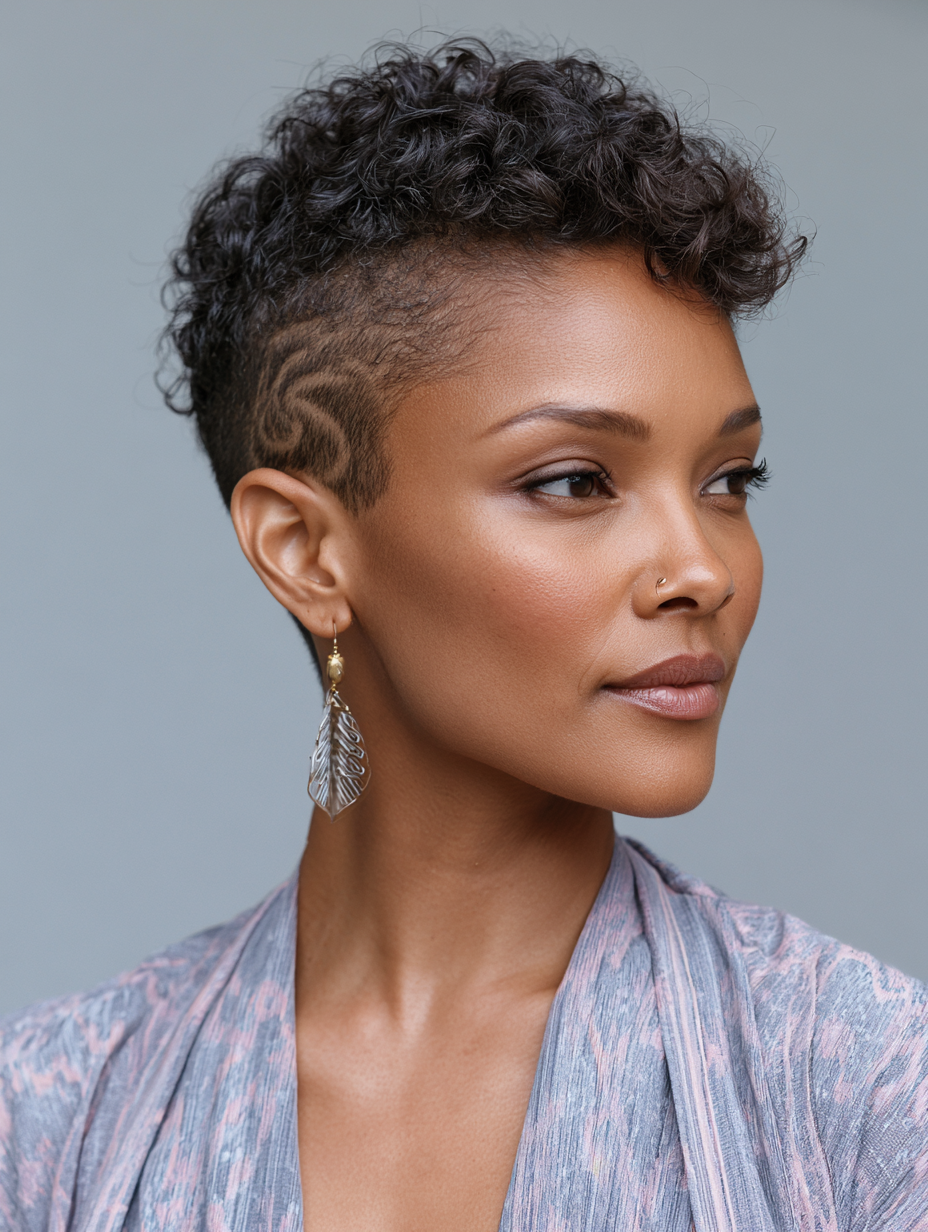
Razor-cut designs on the shaved sides or back turn a basic pixie into something distinctive.
Geometric lines, a single shaved part, or a wave pattern work across textures.
Thick hair gives the contrast more impact, since the dense top section sits next to the precision of the shaved design. Maintenance runs every couple of weeks at the barber chair to keep the designs sharp.
Pair with statement earrings to draw attention to the shaved area.
Pixie with Disconnected Layers
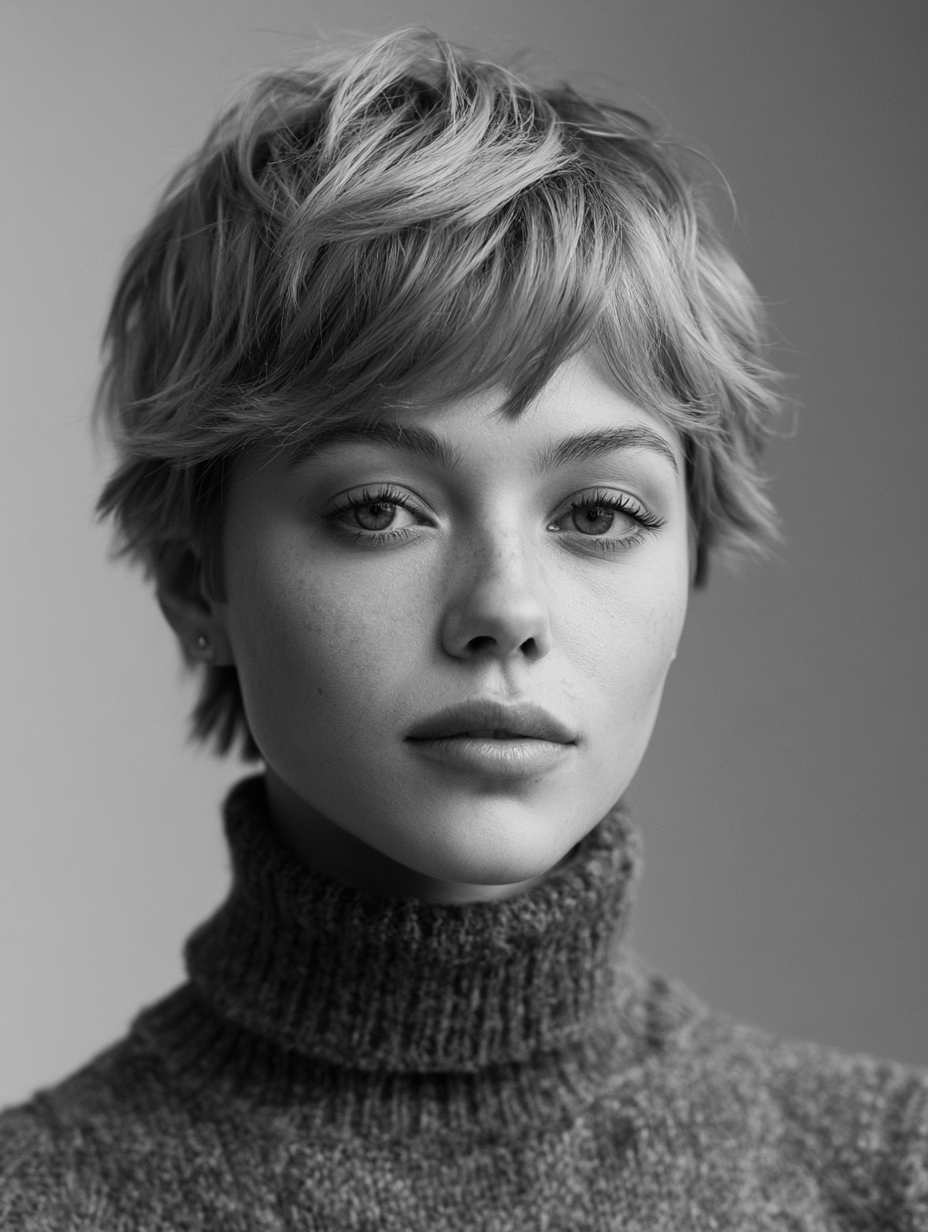
Different from standard layering, disconnected layers have visible length differences rather than blended transitions.
The top stays significantly longer than the sides, with a clear break between sections. This removes density dramatically while keeping a defined shape.
The cut works best on straight or wavy thick hair where the disconnection looks architectural rather than messy.
Style with a small amount of pomade to define the separation between layers. The look feels modern and editorial.
Slicked-Back Pixie
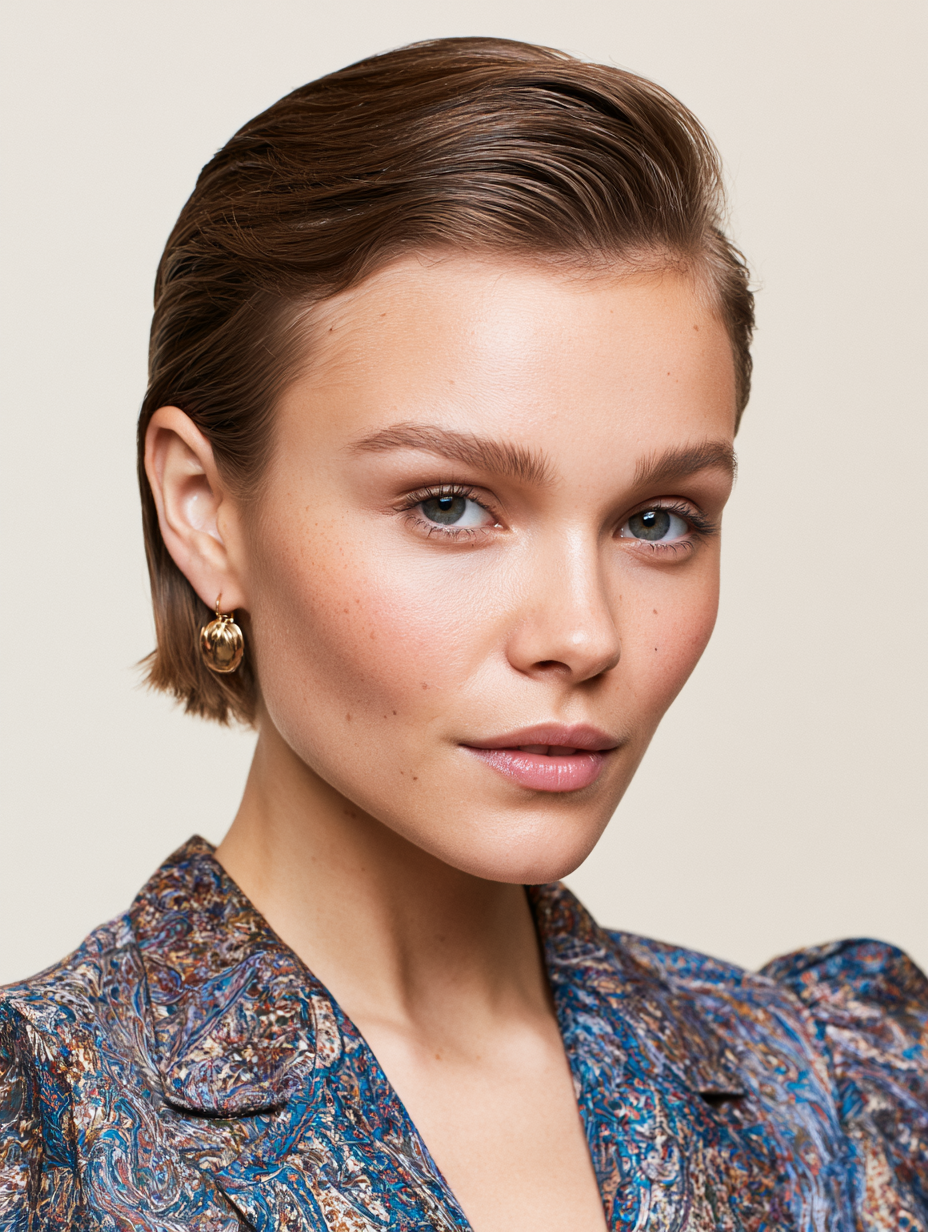
A medium-hold gel or styling wax smoothed back over thick hair creates a sleek finish.
Thick hair holds the slicked shape longer than fine hair, since the density anchors the product. The cut stays around three to four inches long throughout.
This style works on straight or relaxed thick hair where the strands lie flat under product. The finished look comes across as polished in professional settings.
Apply product to damp hair, comb back, and let it air-dry or sit briefly under a hooded dryer.
Pixie with Volume at the Crown
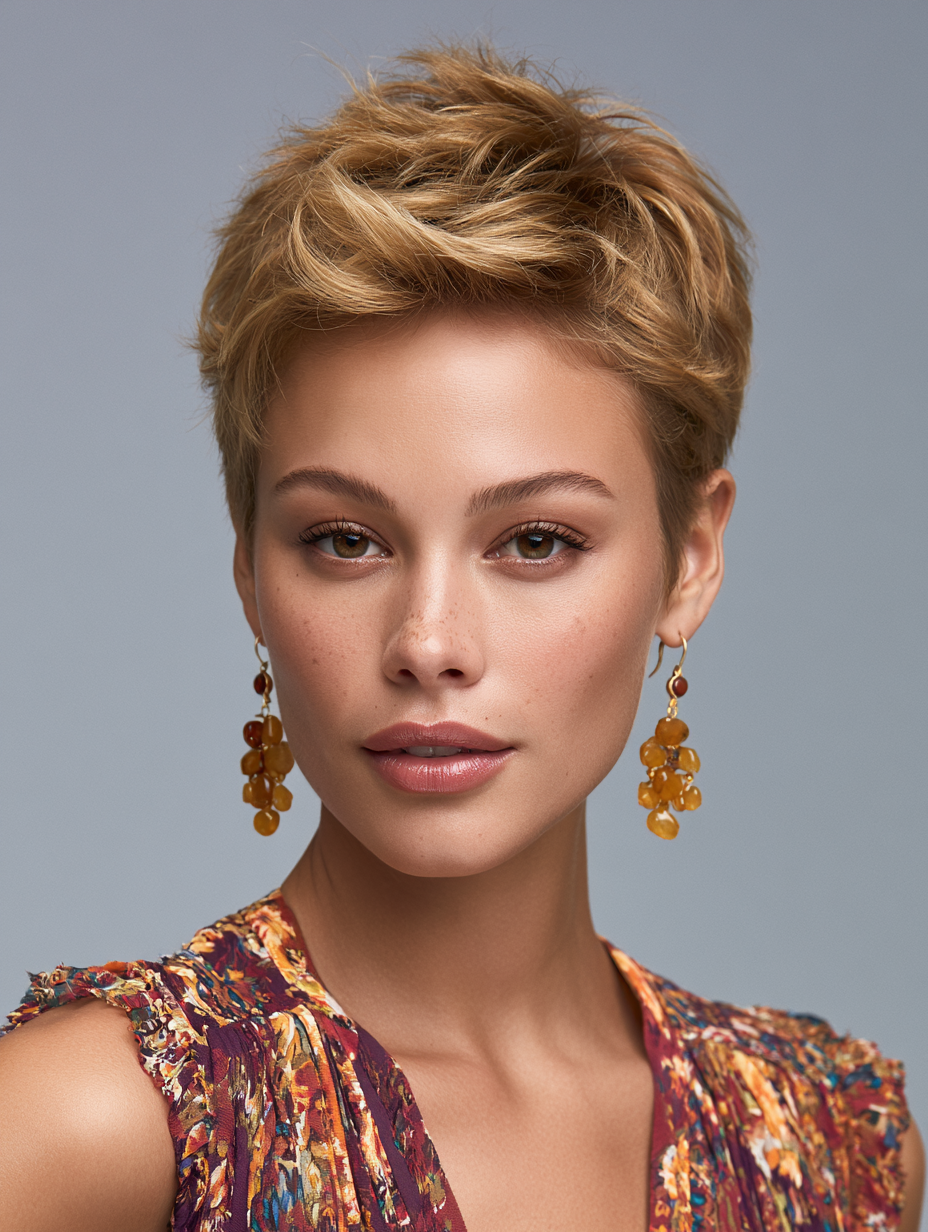
Different from the tapered pixie, this version concentrates length and styling at the crown for height.
Thick hair makes this easier to achieve, since the density supports the volume without collapsing. Ask your stylist to leave extra length at the crown specifically.
Use a volumizing mousse at the roots and lift the section with a round brush during blow-drying.
