
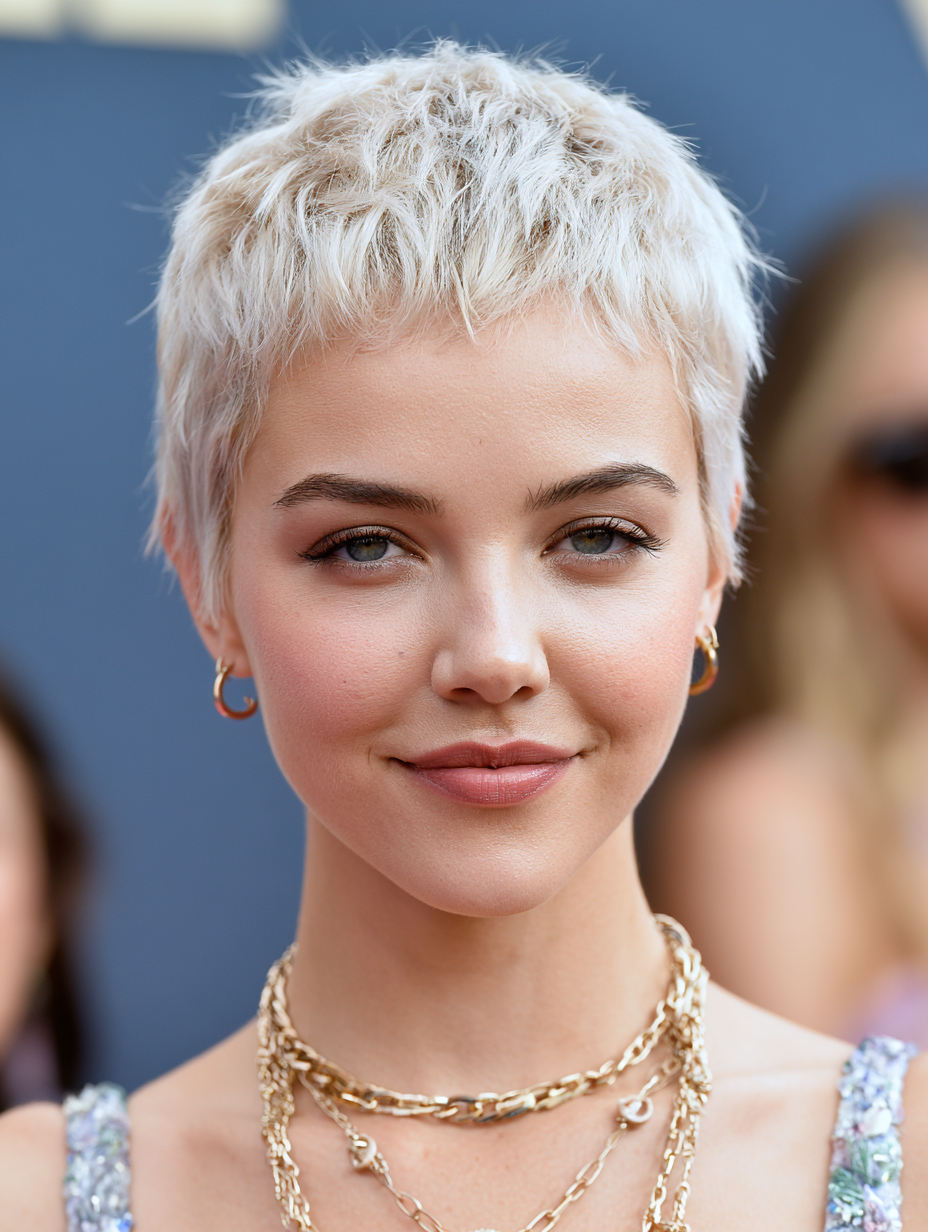
The cuts below all account for density. Some lean into the volume, others tame it through layering or tapering. All work at true pixie length, roughly one to four inches, across straight, wavy, curly, and coily textures.
22 Short Pixie Haircuts for Thick Hair
Heavily Layered Pixie
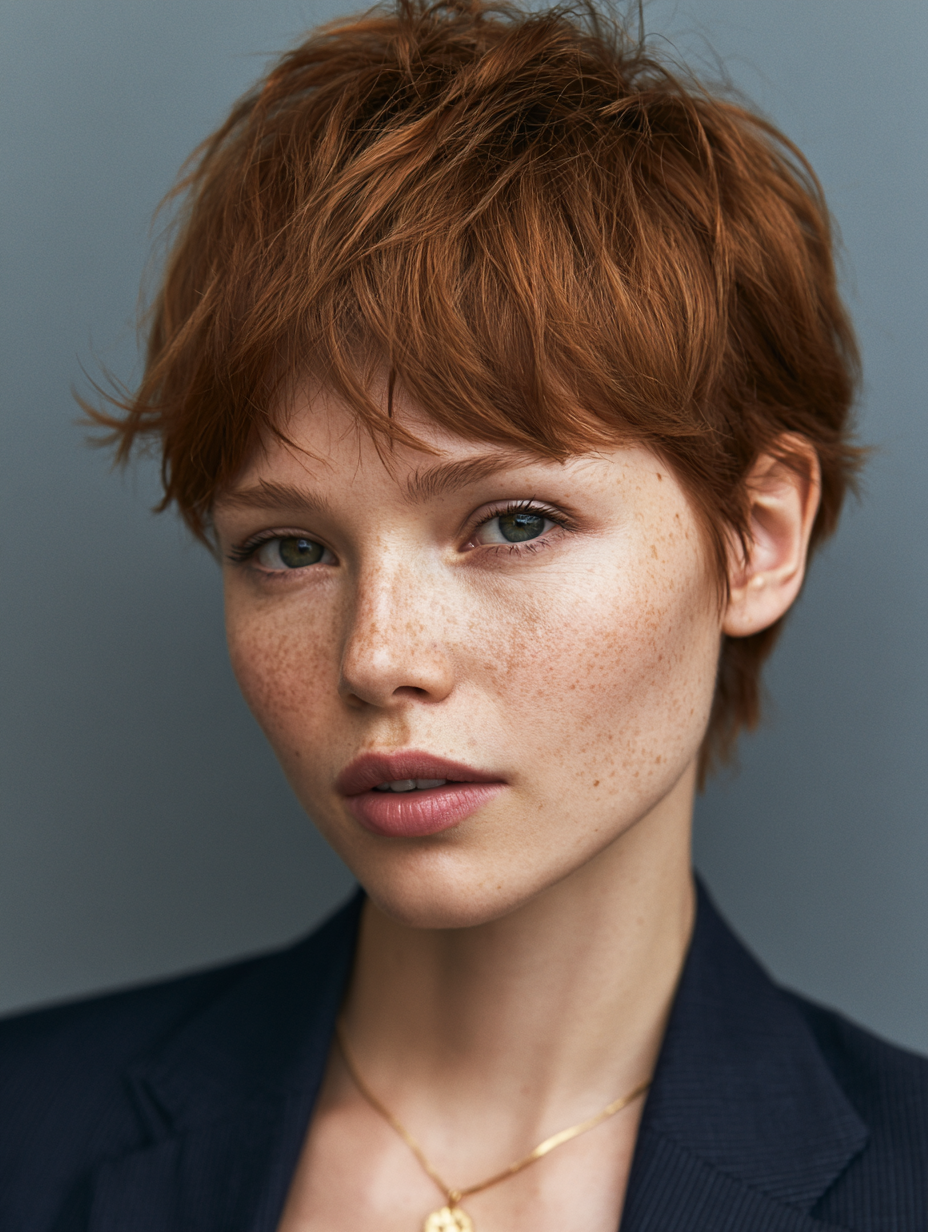
Layers throughout the cut remove internal weight without changing the silhouette.
Ask for layers cut with point-cutting rather than blunt scissor work, since blunt edges on thick hair create visible steps.
The finished cut moves and shifts rather than sitting in one solid mass. This works across most textures, especially straight and wavy thick hair.
A light styling cream finishes the look without weighing the layers back down. The shape grows out gracefully without needing constant reshaping.
Tapered Pixie with Volume on Top
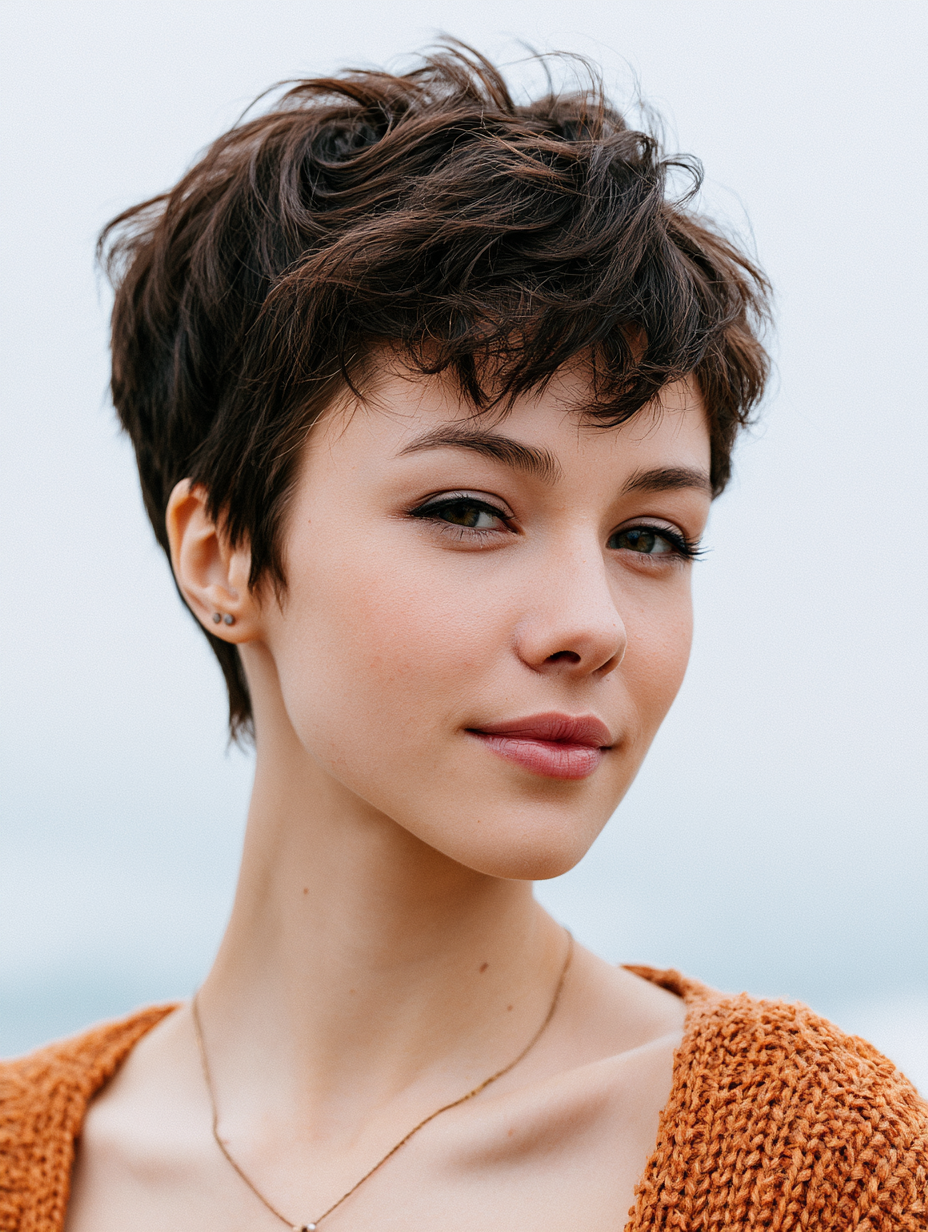
The sides and back taper close to remove bulk where thick hair sits heaviest.
Length stays on top, usually two to three inches, giving you height and movement. This silhouette suits round and square faces because the volume on top elongates the proportions.
Ask for the taper to start higher on the sides than a standard pixie, since thick hair needs more removed to avoid the helmet effect.
The cut looks structured without looking severe.
Choppy Pixie
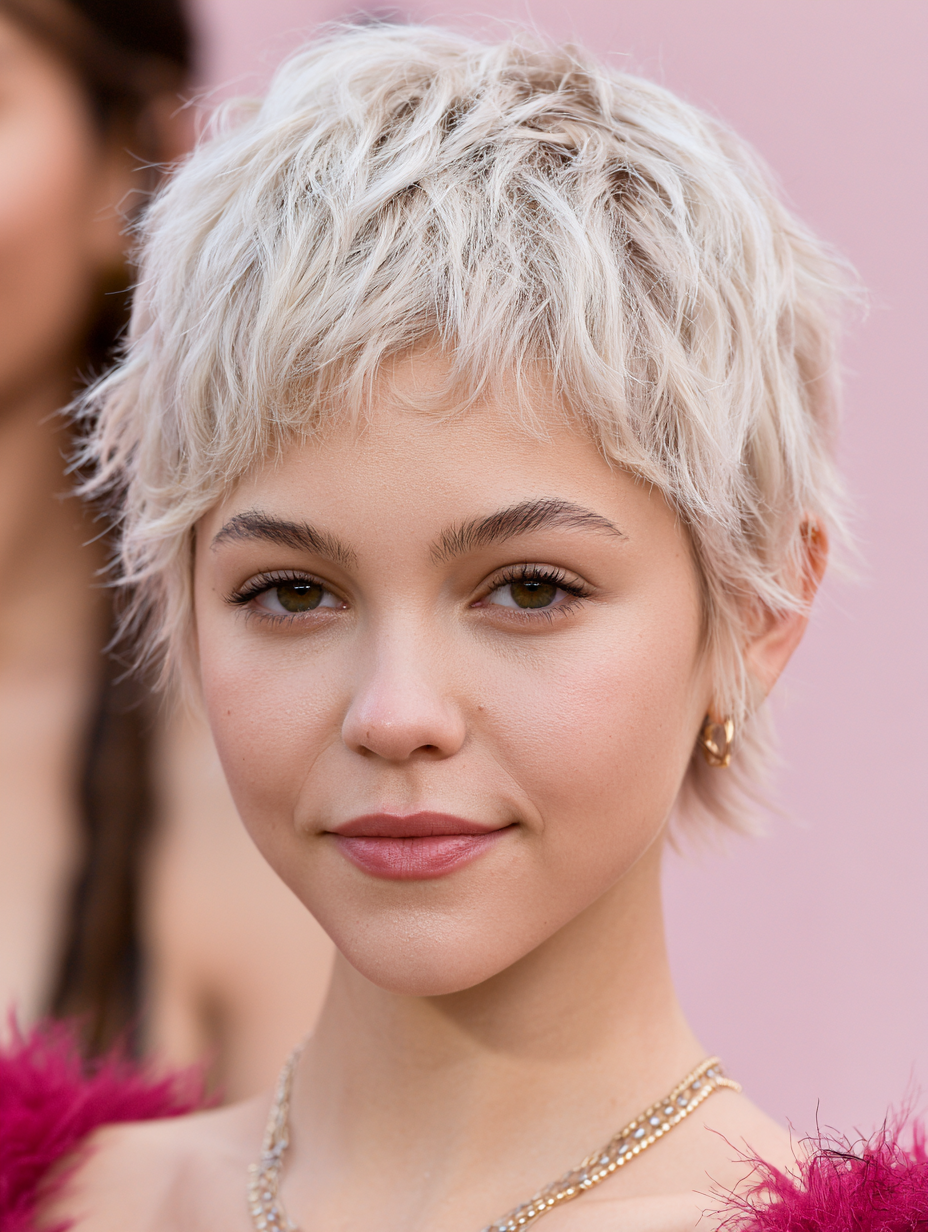
Choppy refers to the cutting technique, not a separate style.
Stylists use point-cutting and slide-cutting throughout to create irregular ends that break up the density. The finished cut looks lived-in rather than precise.
This works especially well on thick straight or wavy hair where blunt lines emphasize bulk. Apply a small amount of texture spray or light pomade with your fingers to define the choppy ends.
Skip this cut if you want a sleek, polished finish, since the texture is the whole point.
Undercut Pixie
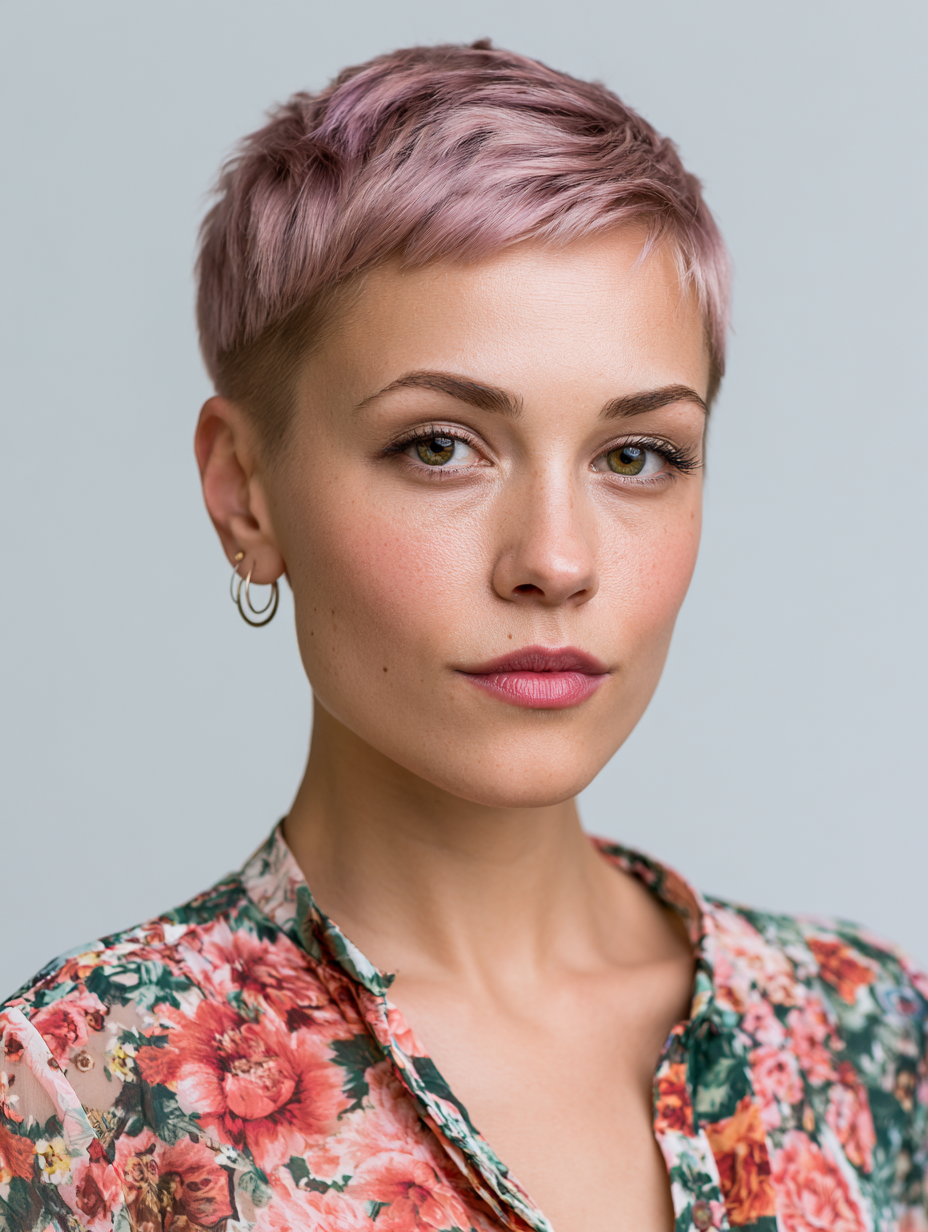
A section underneath the surface gets cut significantly shorter or shaved, hidden by the longer top layer.
This removes density without changing how the cut looks from the front.
Thick hair benefits more than any other texture from an undercut, since the hidden section eliminates bulk you can feel but not see. Ask for the undercut to extend behind the ears or across the nape.
The longer top section falls more naturally over the shortened underneath, lying flat instead of pushing outward.
Long Pixie with Internal Layers
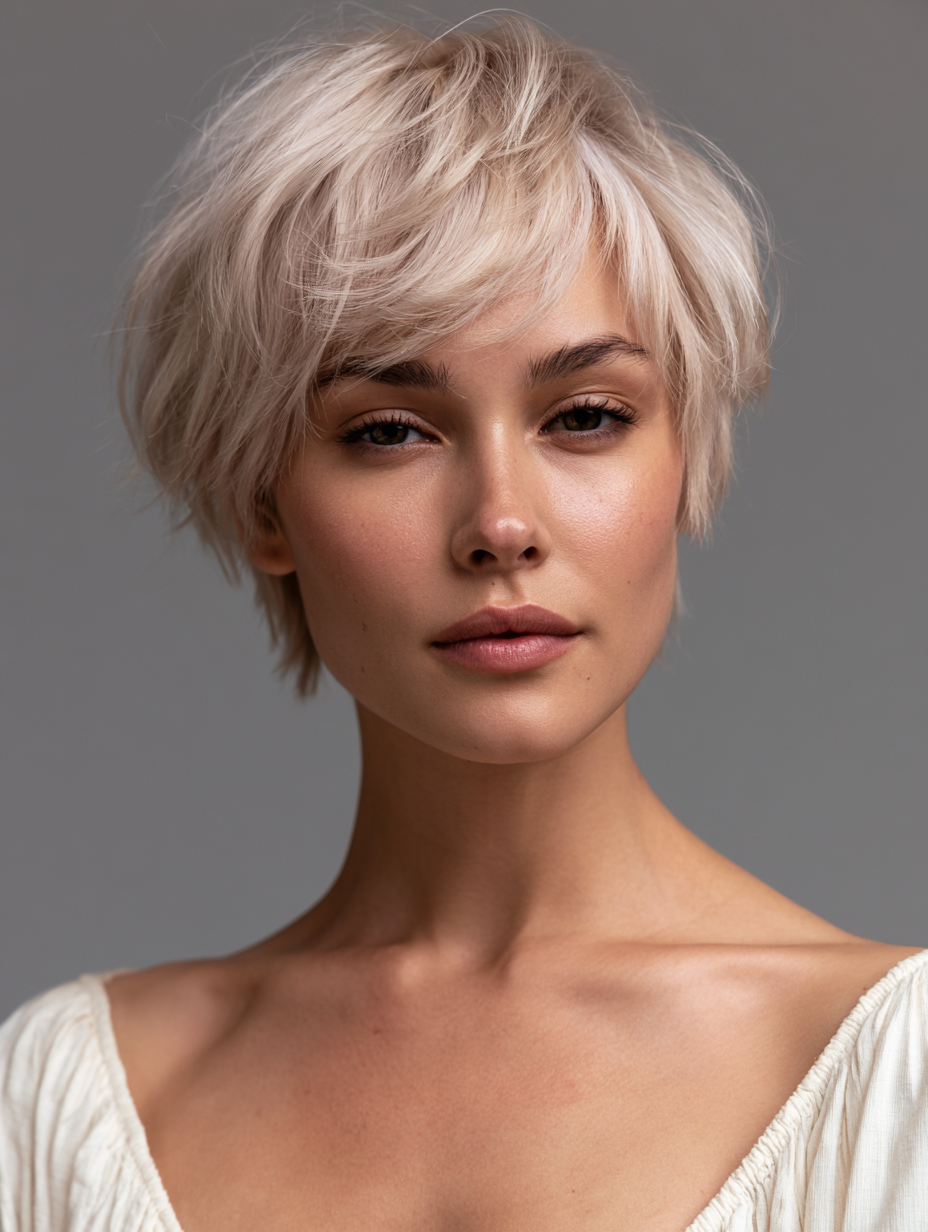
The longer pixie interpretation, around four inches throughout, with heavy internal layering.
The visible length stays consistent while the layers underneath remove weight. This suits thick hair that the wearer doesn’t want cut too short.
The shape transitions easily to a bob during growth-out phases. Use a leave-in cream and a light serum to finish the ends.
A blow-dry with a round brush gives the layers shape, while air-drying lets the natural texture come through.
Tapered Coily Pixie
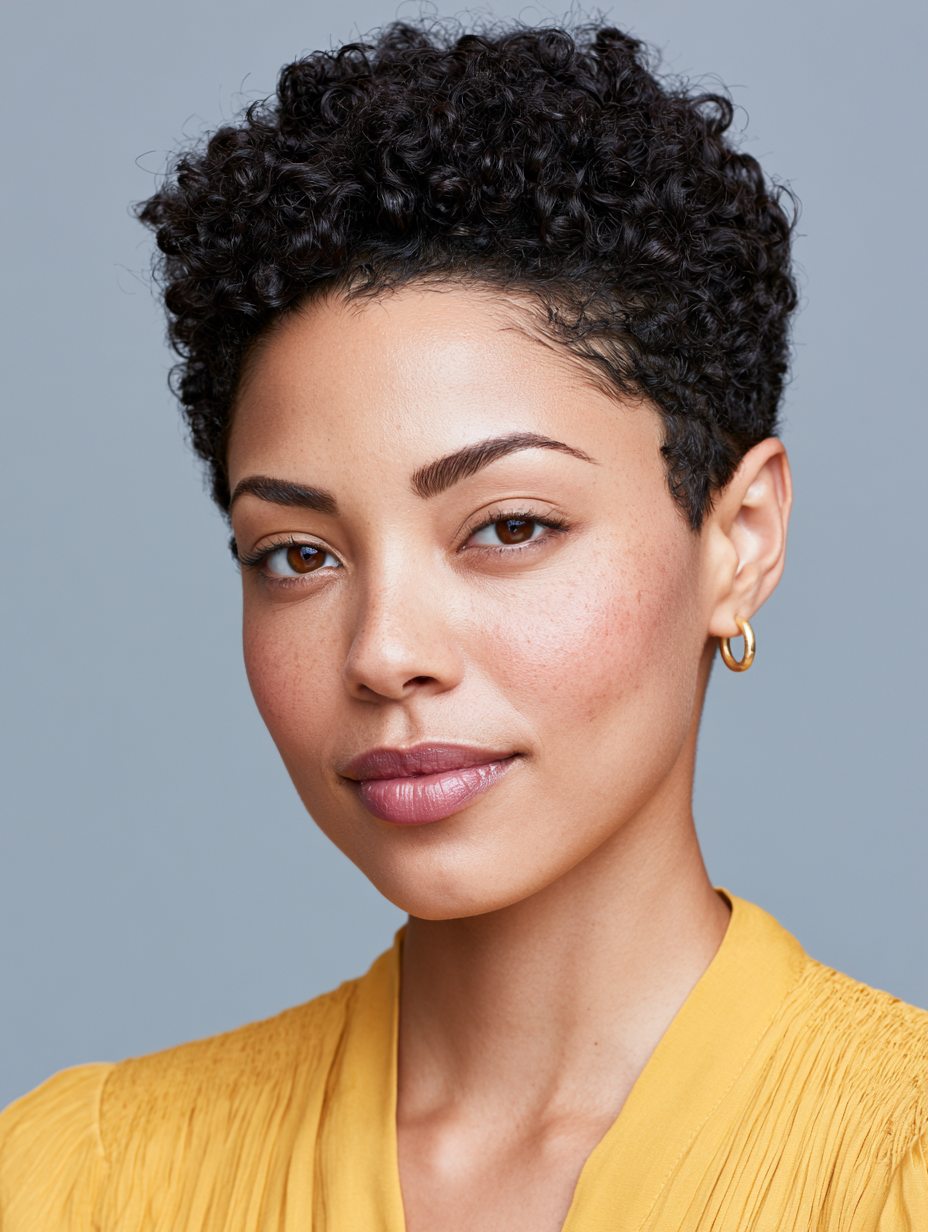
Coily thick hair packs density into a smaller visual footprint, so the cut needs to address bulk at the roots.
Ask for a low taper that fades from short sides into coiled length on top. The taper handles the dense root area while the top stays full enough for curl definition.
Apply a curl cream or custard on damp hair and let it air-dry.
The shape sharpens features and grows out without losing its structure between salon visits.
Asymmetrical Pixie
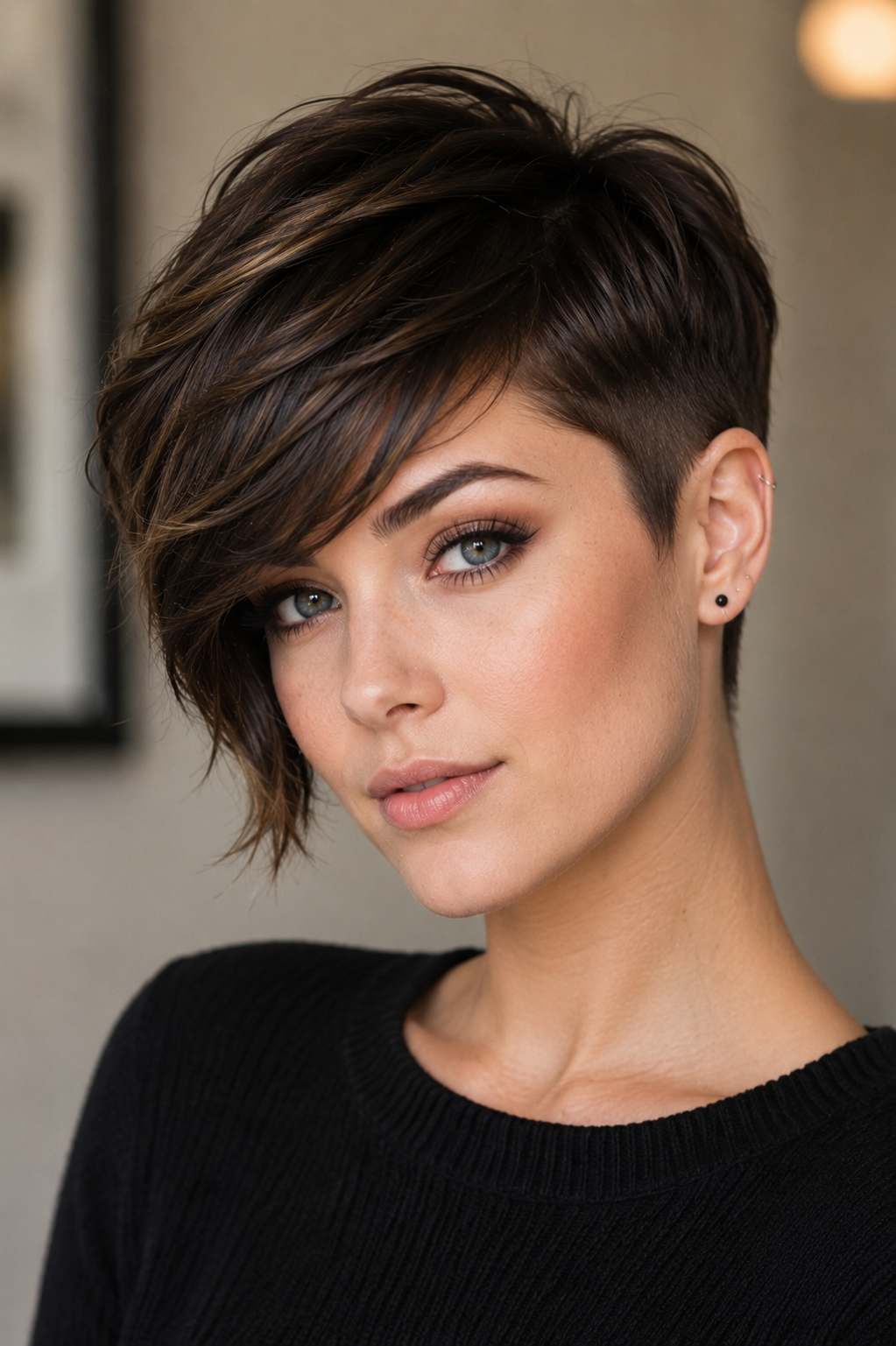
One side stays cropped close, the other falls longer in a diagonal line.
The asymmetry breaks up the visual density of thick hair and draws the eye across the face. Stylists usually layer the longer side to keep it from sitting heavy.
This works across textures but suits thick straight and wavy hair best, since the longer side falls cleanly without curling up.
Avoid this cut if you pull your hair back often, since the imbalance gets awkward.
