
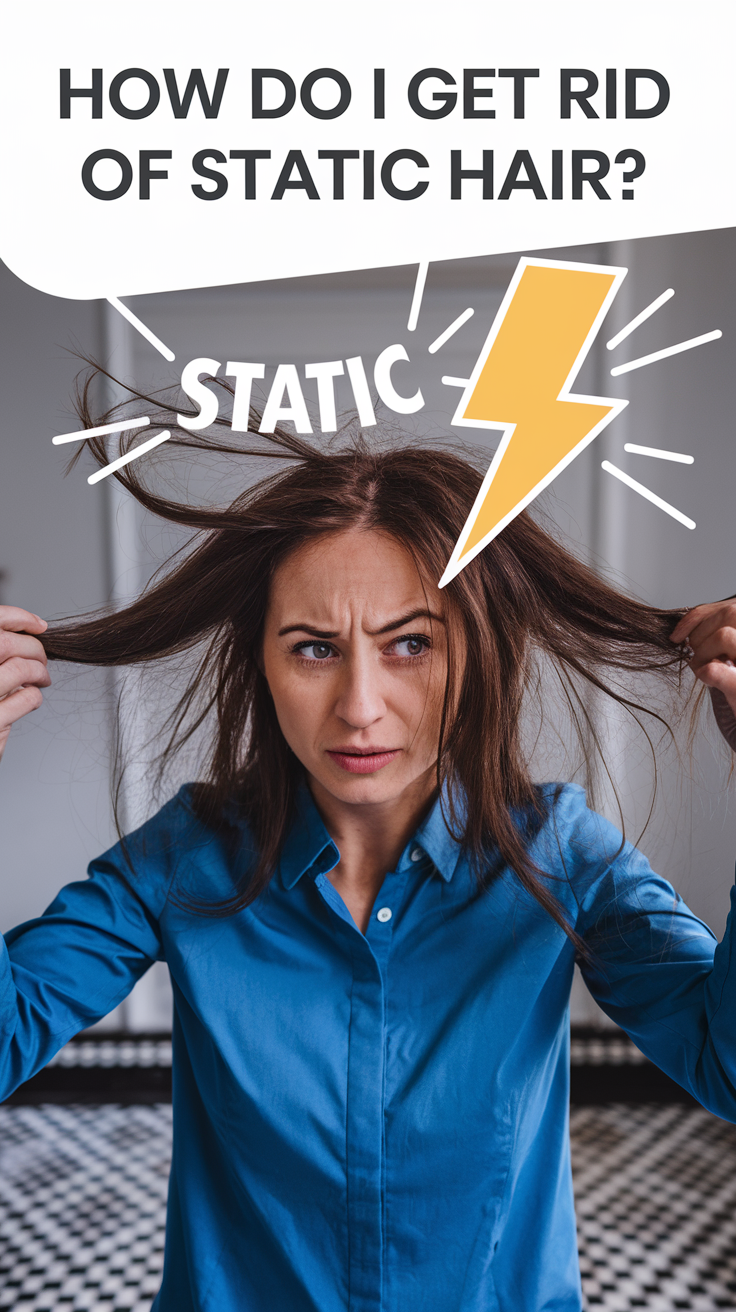
Static hair occurs when your strands accumulate an electrical charge, typically from friction or dry air. When electrons are transferred between materials like your hair and synthetic fabrics, the imbalance causes strands to repel each other, creating frizz and flyaways. Winter air, being cold and dry, further exacerbates this by stripping moisture from hair, leaving it more prone to static buildup.
Common Causes of Static Hair
| Cause | Why It Happens |
|---|---|
| Dry Air | Lacks humidity, causing dehydration in hair. |
| Synthetic Fabrics | Generate static electricity through friction. |
| Lack of Moisture in Hair | Makes hair more prone to static charges. |
Static is especially common in fine, damaged, or over-processed hair because these types lack the protective barrier of natural oils.
How to Get Rid of Static Hair
1. Hydrate Your Hair
Moisturizing your hair reduces dryness, which is one of the main causes of static.
- Shampoos & Conditioners: Choose formulas with hydrating ingredients like glycerin or hyaluronic acid. Avoid products with sulfates that strip oils.
- Deep Conditioning: Use a hair mask weekly to replenish moisture. Look for masks containing honey, argan oil, or keratin.
DIY Tip: Mix 2 tablespoons of coconut oil with 1 tablespoon of honey for an easy homemade anti-static mask.
2. Choose the Right Tools
Static hair can often be minimized by using the correct tools:
| Tool | Why It Helps |
|---|---|
| Ionic Hair Dryer | Emits negative ions to neutralize static charges. |
| Natural Bristle Brushes | Reduce friction and help distribute natural oils. |
| Microfiber Towels | Create less friction than standard towels. |
Switch to a silk or satin pillowcase to reduce overnight friction and wake up with smoother hair.
3. Anti-Static Products
Products designed to combat static can provide instant results:
