
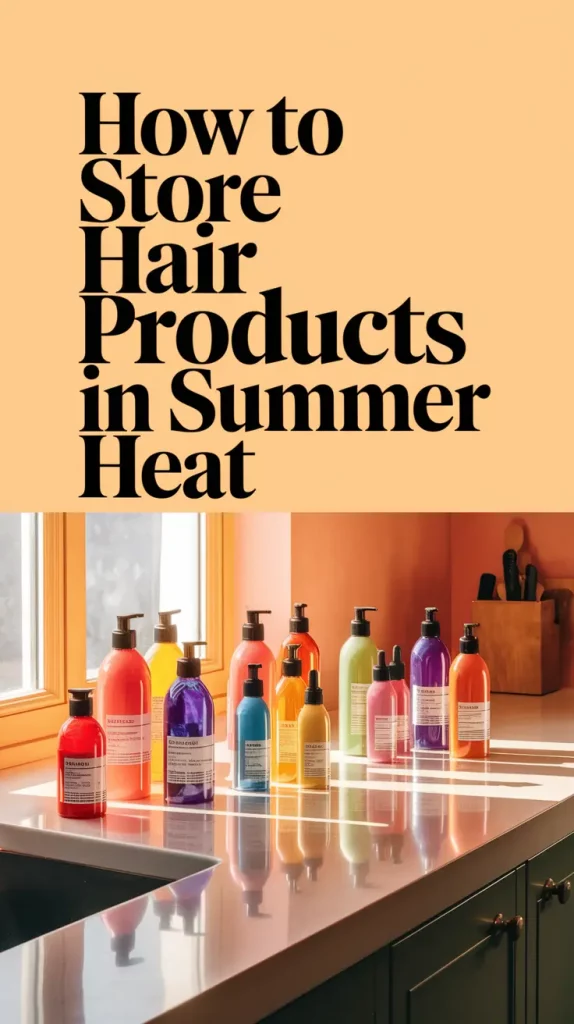
Have you ever wanted to use your favorite hair cream when it was hot out, only to notice it had separated, was runny or smelled differently? I have. One July afternoon, it happened and I can still feel how sticky my bag was. That was when I realized that summer heat is tough on both our hair and the products we use.
If you’ve noticed that your curl cream feels different in August than it did in May and your oils start smelling odd halfway through summer, it’s not just in your mind. Some of our favorite hair care products with natural ingredients are more sensitive to heat than we might expect.
This article is for anyone who wants their products to work as well in the heat as they do in spring. I’ll walk you through what I learned (the messy way), the science behind it, and the simple changes that made a big difference. You don’t have to change everything—just store your food differently.
Why Summer Heat Wrecks Hair Products
What surprised me is that products can become unsafe before you notice any difference in their appearance or smell. I used to think as long as it wasn’t expired, it was fine. But heat plays by its own rules.
Heat breaks things down
When it’s too hot, the creamy mix of water and oil in conditioners, masks and leave-ins can separate. This changes the texture and makes them less effective. Oils found in nature can become rancid if exposed to light and warmth which may cause them to smell unpleasant or make your skin uncomfortable.
Summer speeds up spoilage
Many hair products (especially those with fewer preservatives) are sensitive to light and heat. Your hair oil is similar to salad dressing in that heat can make it break down, degrade or spoil more quickly.
What to watch out for
- Runny or separated consistency
- Unusual odors
- Product feels greasy instead of creamy
After learning this, I realized heat wasn’t only something that bothered me. It was quietly ruining my results—and my money.
Where NOT to Store Hair Products in Summer
I thought nothing of it when I first left my hair spray in the bathroom. That was my default. Before it began to clog, spray funky and smell like floral vinegar, everything was fine.
Hot zones in your home
- Bathrooms: Humid and often warm, they accelerate breakdown.
- Windowsills or near sunlight: Direct sun = product disaster.
- Cars or handbags: Even worse. Temps can hit 130°F inside a parked car—that’s practically cooking your styling cream.
Hidden heat traps
Drawers next to radiators, countertops underneath skylights and purses by the window can cause your products to heat up.
