
They share a name, a length range, and a place on every mood board you’ve scrolled past in the last six months. That’s where the similarity ends.
The French bob and the Italian bob are built differently, styled differently, and ask different things of the person wearing them. Pick the wrong one and you’ll spend a year fighting your hair every morning. Pick the right one and you’ll wonder why you waited so long.
This guide breaks down what actually separates them, who each cut suits, and how to choose between them without second-guessing yourself in the salon chair.
What Makes a Bob “French”
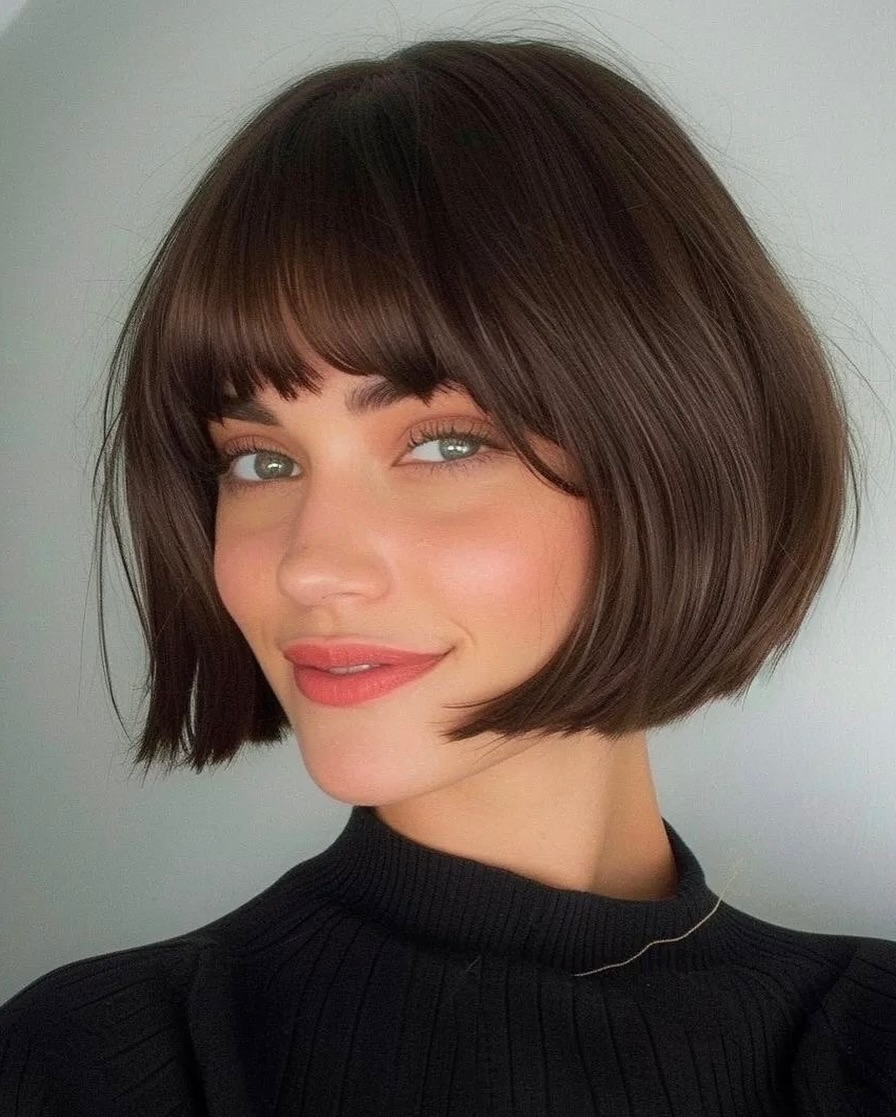
A French bob lives above the jawline. Sometimes it grazes the middle of the cheek, sometimes it skims the chin, but it never reaches the shoulders.
The cut itself is blunt. The ends stack cleanly so fine hair reads fuller and weightless rather than thin and limp.
Bangs are practically part of the uniform. Soft wispy fringe, piecey curtain bangs, or a blunt micro fringe all qualify. The point is that the bangs frame the face without looking labored over, the way a good outfit looks like you threw it on even though you didn’t.
The whole look traces back to the Flapper era, when women cut their hair short as an act of rebellion against everything Victorian and corseted. That spirit is still baked into the cut. A French bob isn’t trying to impress you. It’s cool, slightly undone, and moves with the person wearing it rather than performing for them.
Stylists call it low-maintenance, and they mean it. Air drying usually works. A mist of texturizing spray, a shake of the head, maybe a quick pass with a flat iron, and you’re done.
“The goal is undone and never over-styled,” says Wavytalk hairstylist Emma McJury. The cardinal rule with this cut is to never let it look perfect. Perfection kills the whole point.
What Makes a Bob “Italian”

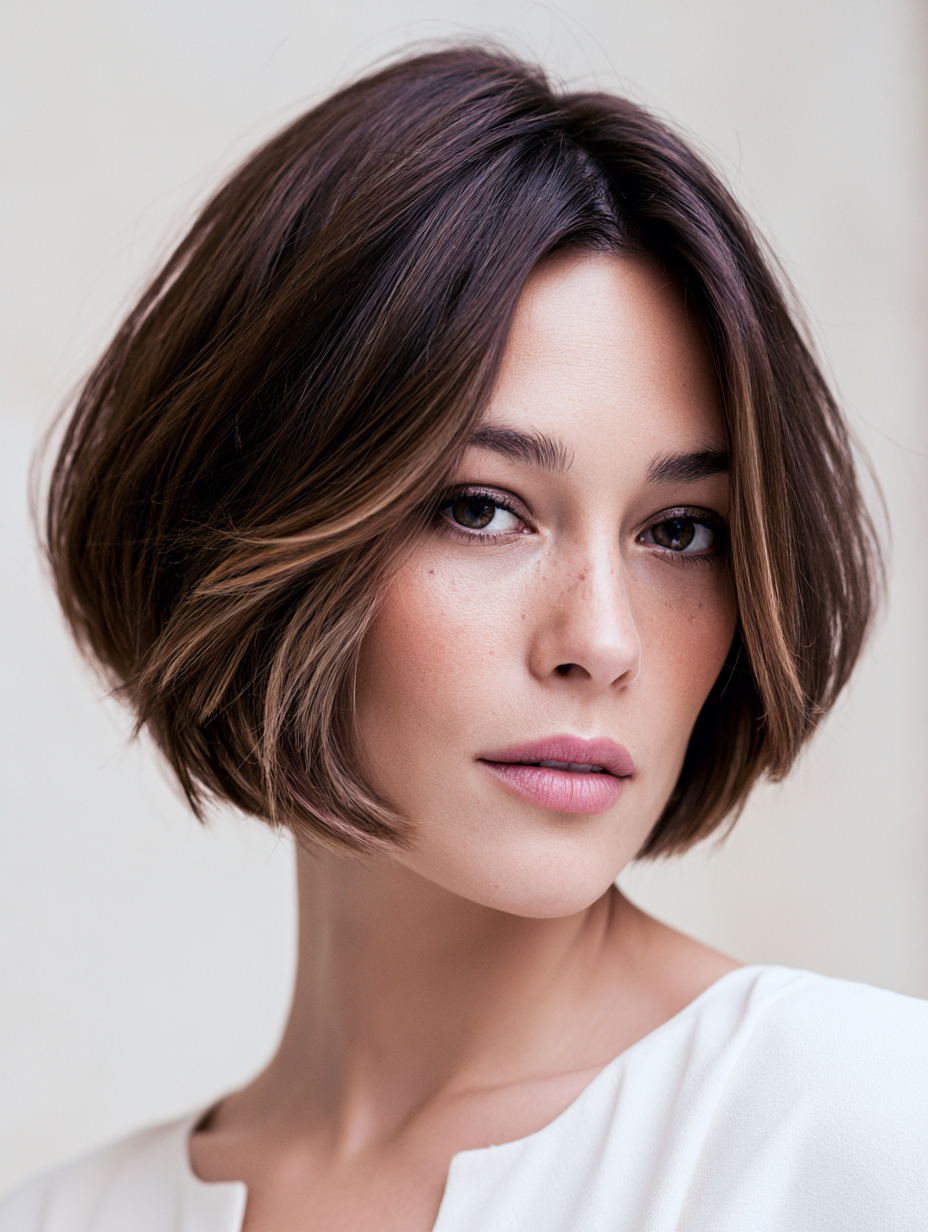
The Italian bob is a different animal entirely. It sits at chin level, along the jaw, on the neck, or grazes the top of the shoulders.
The ends are still blunt, but internal layers do quiet work underneath. They build the soft rounded volume that gives the cut its signature bounce.
This haircut does not hide in the background. It asks to be looked at. Think Monica Bellucci in the nineties, or Sophia Loren stepping out of a convertible in archival photos. The Italian bob is polished, glossy, and deliberately glamorous in a way that the French bob refuses to be.
