
Airy Textured Long Bob with a Blunt Cut
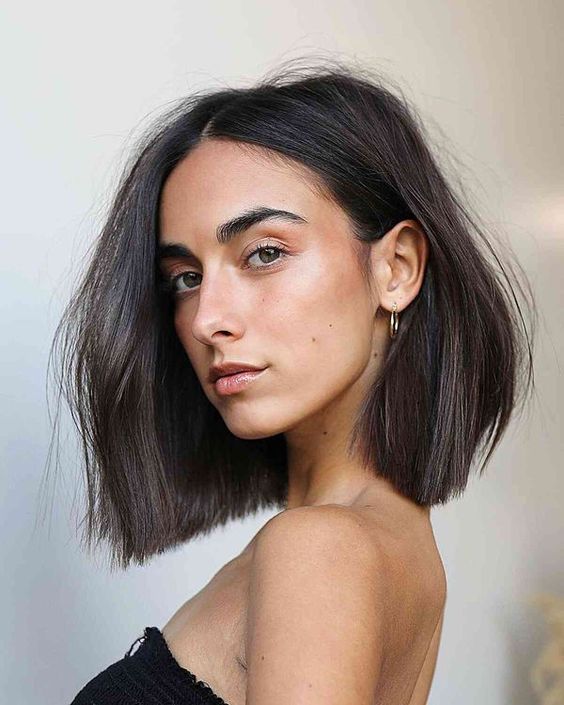
This last cut is the modern compromise — a blunt perimeter with subtle internal texture. The exterior reads as structured, the interior moves naturally. It sits at the intersection of every other lob on this list, which is why it photographs well across so many style contexts.
If you cannot decide which version to ask for, this is the safest starting point. From here you can move toward more layering, more bluntness, more angling, or more length on the next visit, depending on how the cut wears in your daily routine.
Style Guide for Long Bob Hairstyles
Choosing the right long bob comes down to where the length falls, how the perimeter is cut, and how much movement you want in the shape. This guide walks through each decision so you can land on a version that suits your hair and lifestyle.
What Is a Long Bob
A long bob is a one-length or lightly layered haircut that falls between the chin and the collarbone. It sits longer than a classic bob but shorter than mid-length hair, which gives it structured shape without the commitment of a true short cut.
The defining feature is that the perimeter is the focal point. Whether the ends are blunt, softly textured, or angled, the line of the cut is what makes the lob recognizable.
Lob vs Classic Bob
A classic bob usually sits at or above the jawline, which creates a sharper, more defined frame around the face. A lob sits longer and feels more relaxed, with a softer relationship to the face.
The lob is generally easier to grow out, easier to style in multiple ways, and more forgiving when you want to put your hair up. The classic bob makes a stronger style statement but locks you into a more specific shape.
Blunt Lob vs Layered Lob
A blunt lob keeps the ends weighty and straight across, which makes the hair look denser and more polished. This version flatters fine hair particularly well because the weight at the perimeter creates the illusion of fullness.
A layered lob removes some of that weight to add movement and softness through the ends. Layering suits thick, wavy, or curly hair where the goal is to release some volume rather than build it.
Hair Texture Considerations
Straight hair shows the lob shape clearly and benefits from either a blunt or softly textured perimeter.
Wavy hair looks beautiful in a lob with light layering that lets the wave pattern emerge naturally.
Curly hair works in a lob too, but the length should be measured with the curl pattern in mind — shrinkage will pull the cut shorter once it dries, so most stylists add 1 to 2 inches when measuring damp.
Thick hair almost always needs internal weight removal so the lob does not turn into a triangular shape.
Face Shape and Length Choices
Where exactly your lob falls makes a big difference. A chin-grazing lob feels close to a classic bob and adds emphasis around the jaw. A collarbone lob feels softer and more flexible.
Round faces look balanced with a lob that falls below the chin and angles slightly forward. Square faces benefit from soft layers around the jaw to break up angles. Long faces look better with a shorter lob that sits closer to the chin to avoid extending the face further.
Center Part vs Side Part
Parting changes how the lob frames your face. A center part feels modern and open, suiting oval and heart-shaped faces particularly well. A side part adds asymmetry and softness, which can flatter round and square faces by breaking up symmetry.
Switching parts is one of the easiest ways to change how a lob looks day to day without restyling the whole shape.
Bangs and the Lob
Bangs give the lob a different personality. Curtain bangs are the most popular pairing because they blend into the longer length and frame the face without looking heavy.
Blunt bangs make the lob feel more polished and graphic. Side-swept or wispy bangs add softness without commitment. Skipping bangs keeps the lob simple and lets the perimeter line do the work.
Styling and Maintenance
Lobs are flexible to style. Air-drying with a light cream gives a relaxed, lived-in finish. A blow-dry with a round brush creates a smooth polished look. Curling with a wand or flat iron adds bend and movement.
Trims every 8 to 12 weeks keep the shape from looking heavy or shapeless. Color-treated lobs may need slightly more care to keep the ends from looking dry.
Growing It Out
Lobs grow out into mid-length hair fairly easily, which makes them a low-pressure choice if you are not sure about commitment.
The shape softens as it lengthens, and you can always reshape with light layering to keep things from looking flat during the grow-out phase.
