
Worth knowing before you commit: this length grows out unevenly. The crown grows fastest, the nape grows slowest, and the difference becomes visible within 3 weeks. Trims every 3 to 4 weeks are realistic if you want to maintain this exact shape.
V Shaped Crown Lifted Stunner
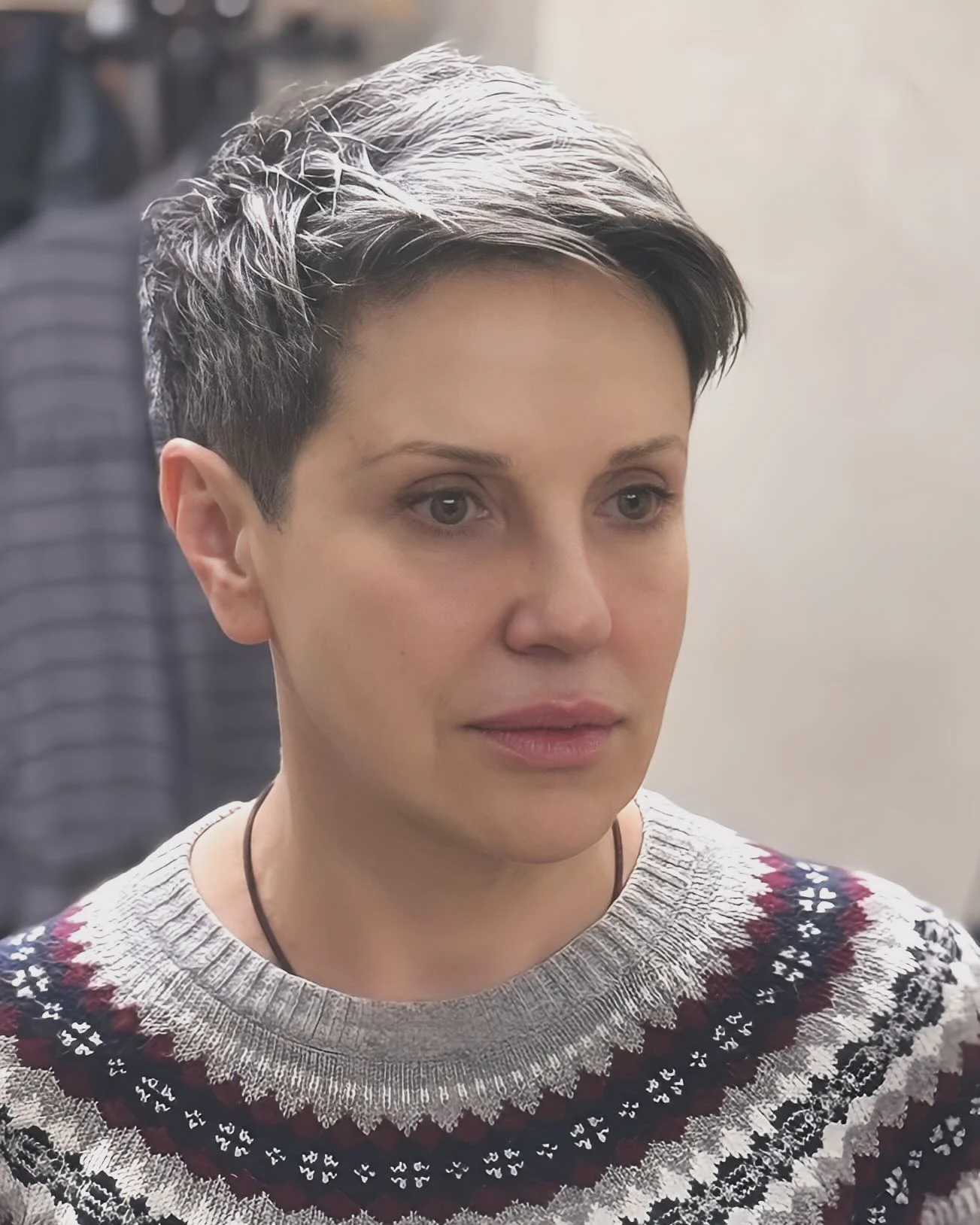
The “V shape” refers to the back of the cut. Rather than tapering evenly into the nape, the perimeter cuts at a slight downward angle that meets at a center point. This creates a small visual elongation at the back of the head, which can balance out a round face shape from the side profile.
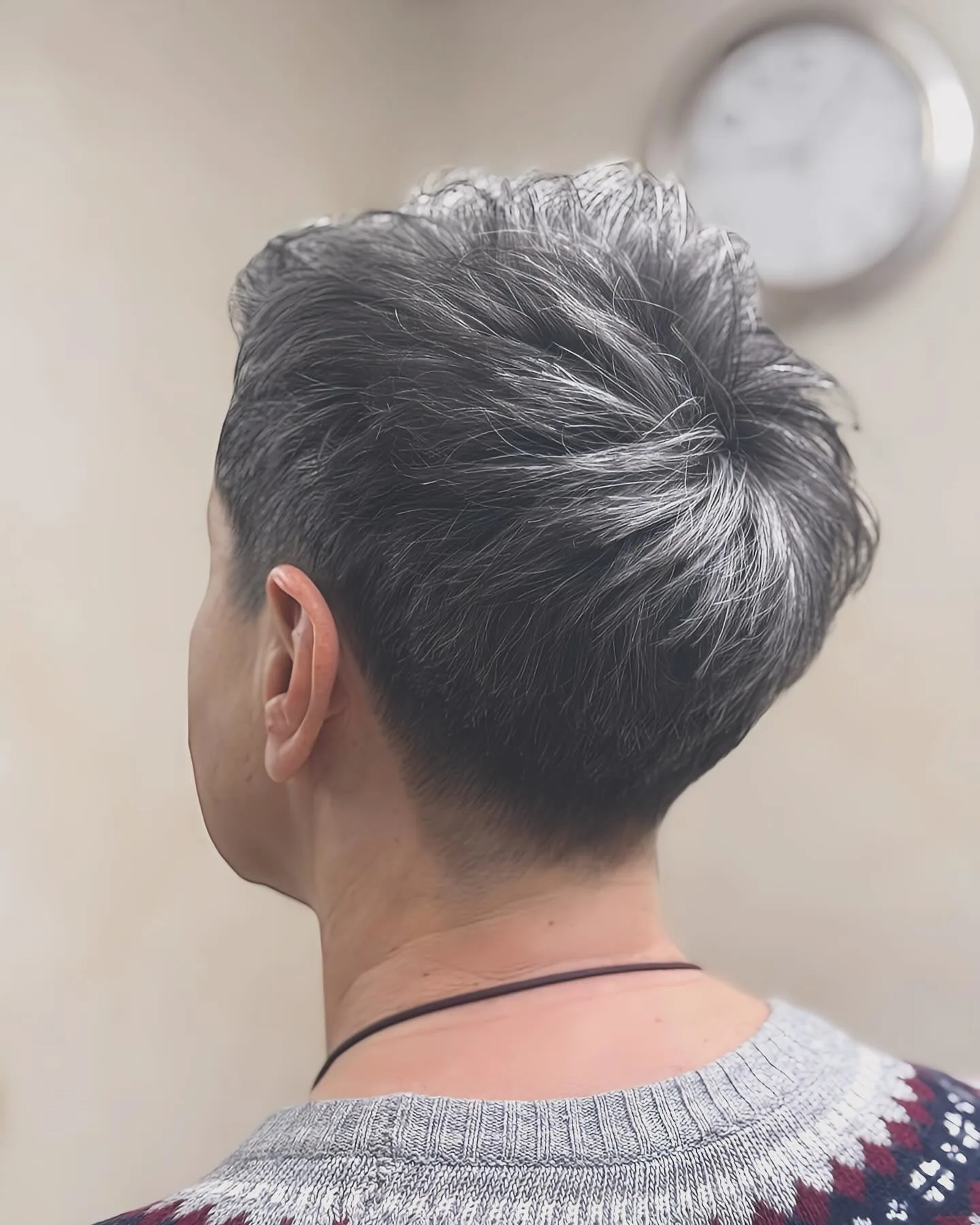
The lifted crown comes from a technique called “weight removal at the occipital bone.” Removing weight at the back of the crown allows the hair to stand up on its own, without daily backcombing or product. It is one of the cleverest cutting moves for women whose hair has lost natural body.
Choppy Bleach Blonde Pixie
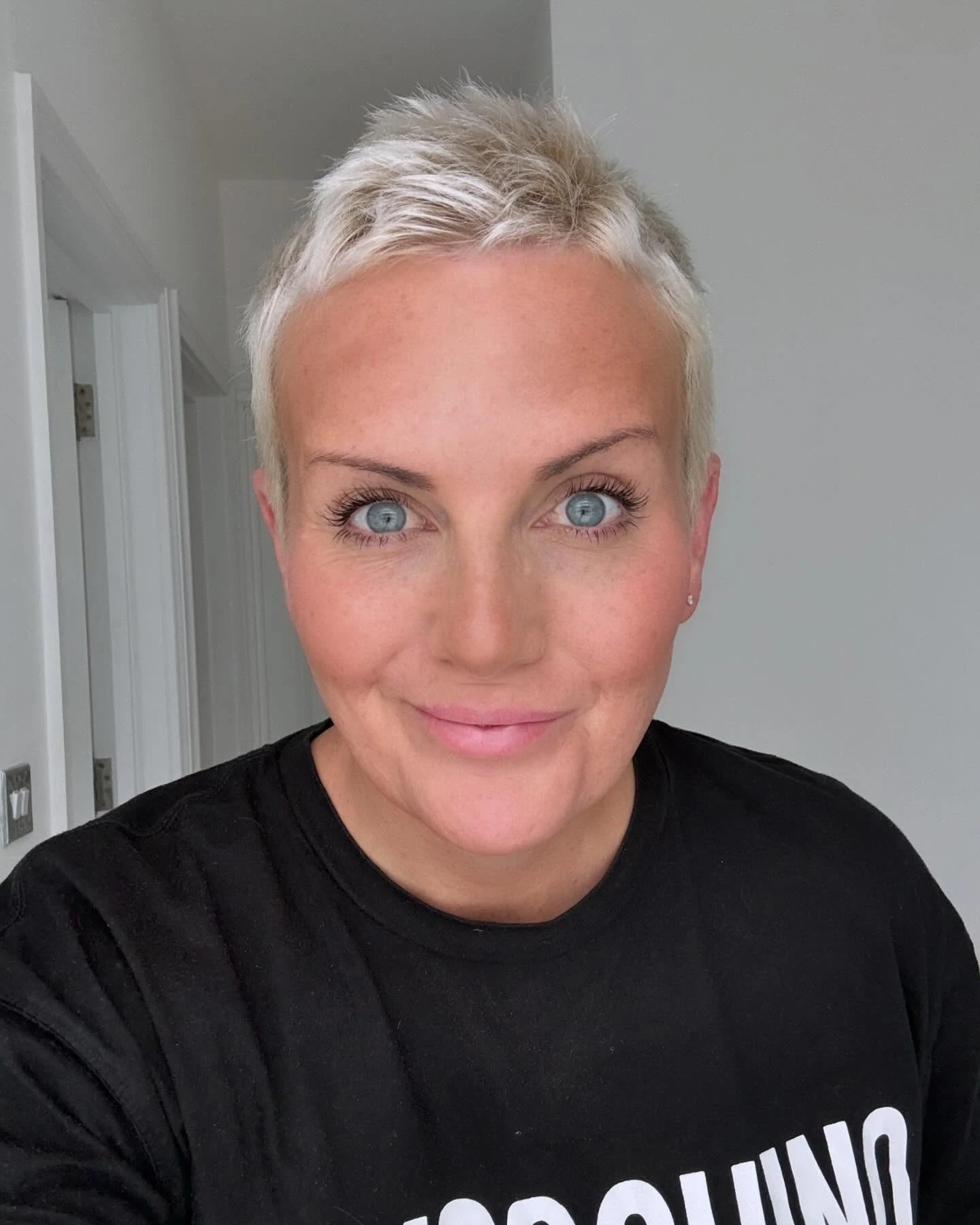
“Choppy” is a styling term that means “deliberately uneven.” The piecey definition you see in this cut comes from working a small amount of matte paste through dry hair with the fingertips, separating individual strands rather than smoothing them together.
One thing to know about bleach blonde at this length: the maintenance is more demanding than it looks. Toner needs refreshing every 4 to 6 weeks to keep brassy yellow tones from creeping back in. Worth budgeting for before you commit to going this light.
Short Layered Silver Pixie
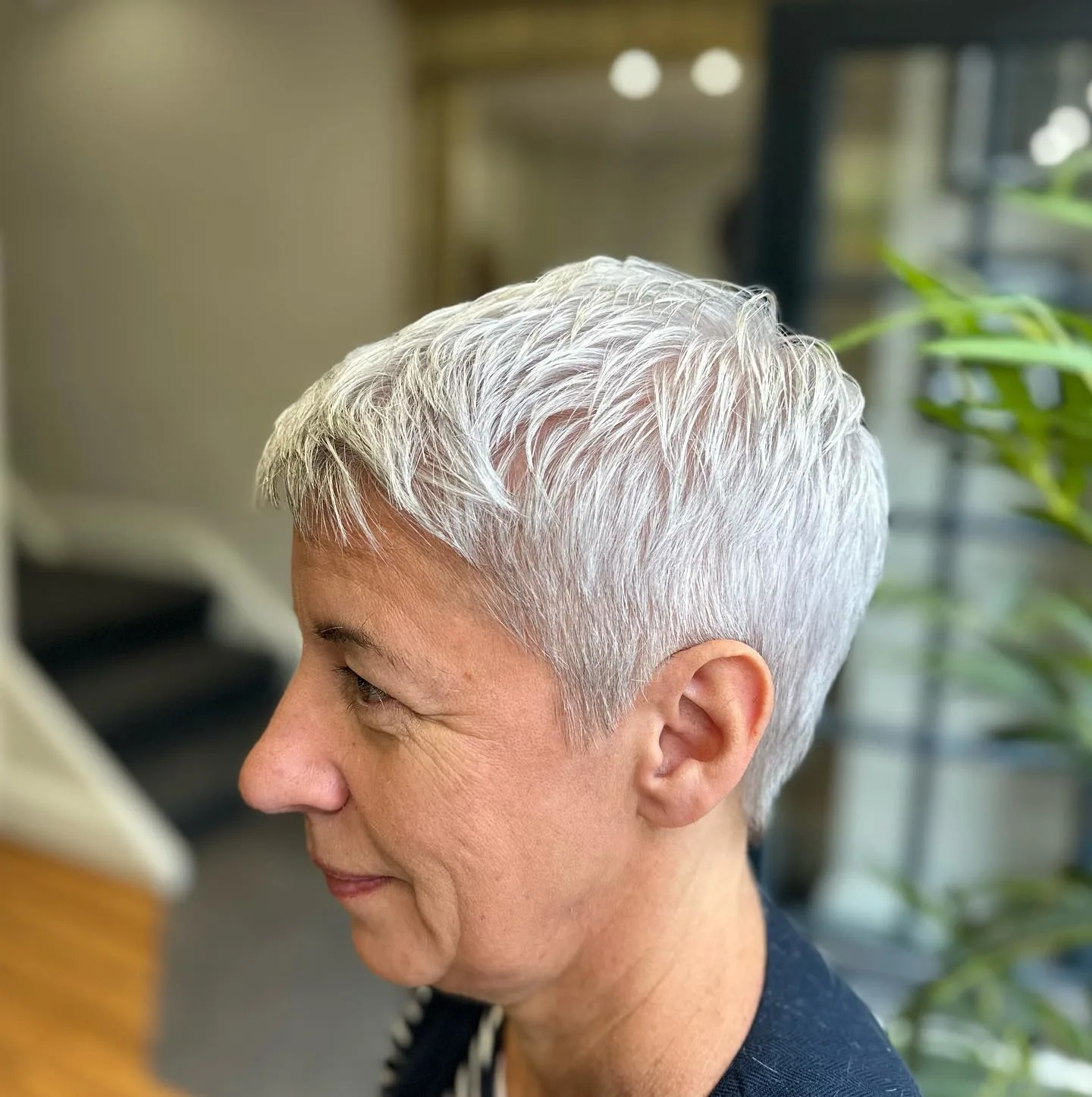
True silver, the cool toned platinum that some women over 60 have naturally, is the easiest grey color to work with. It reflects light efficiently, which makes the hair look fuller than it actually is. A shorter cut emphasizes this property, since less length means more of the hair is positioned where light can hit it.
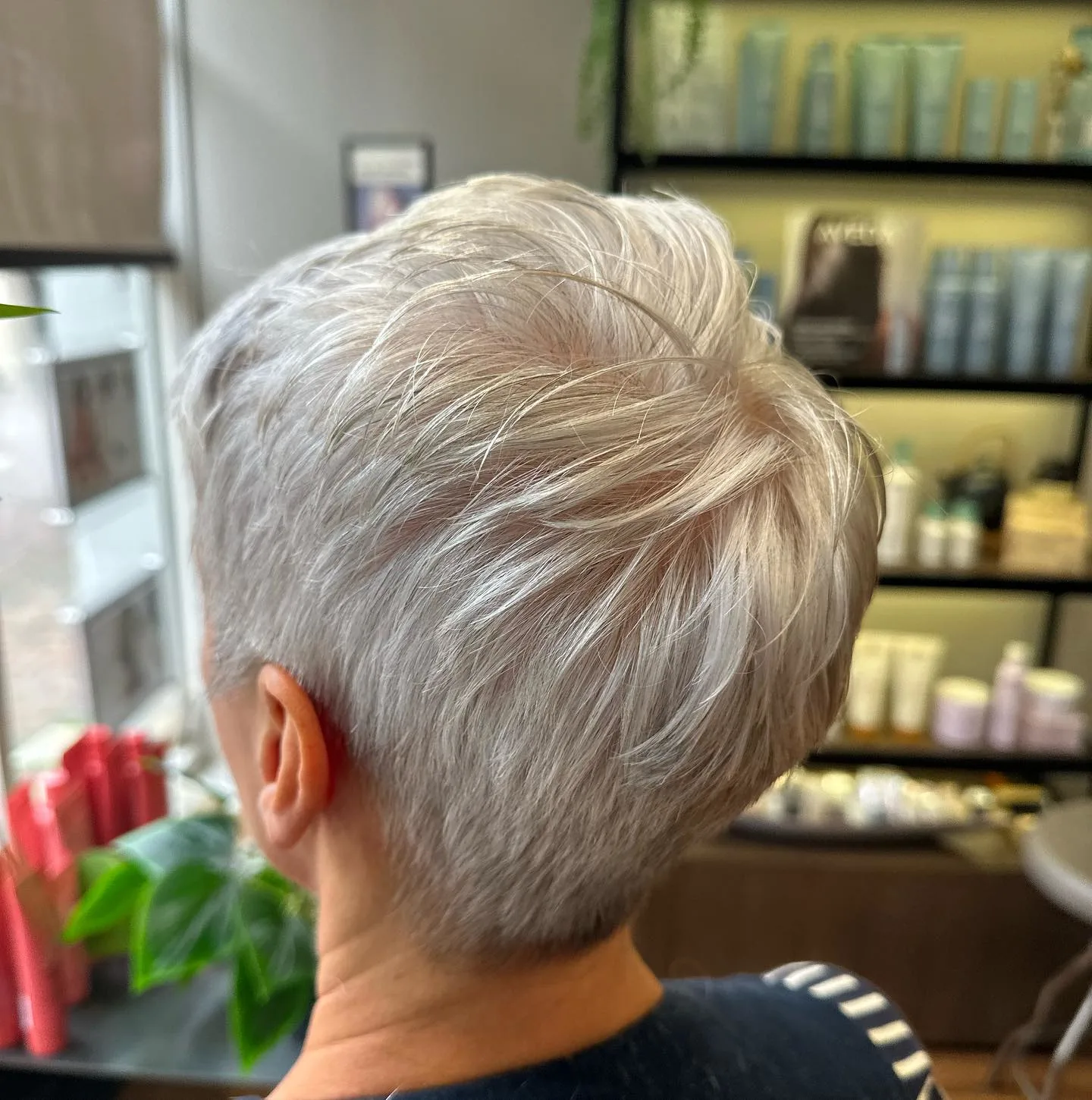
For women whose grey came in patchy or yellow toned, a purple shampoo used once a week is the lowest cost intervention to push the tone toward true silver. More frequent use can over correct and leave hair lavender, so once a week is the sweet spot.
Two Tone Tapered Pixie with Textured Top
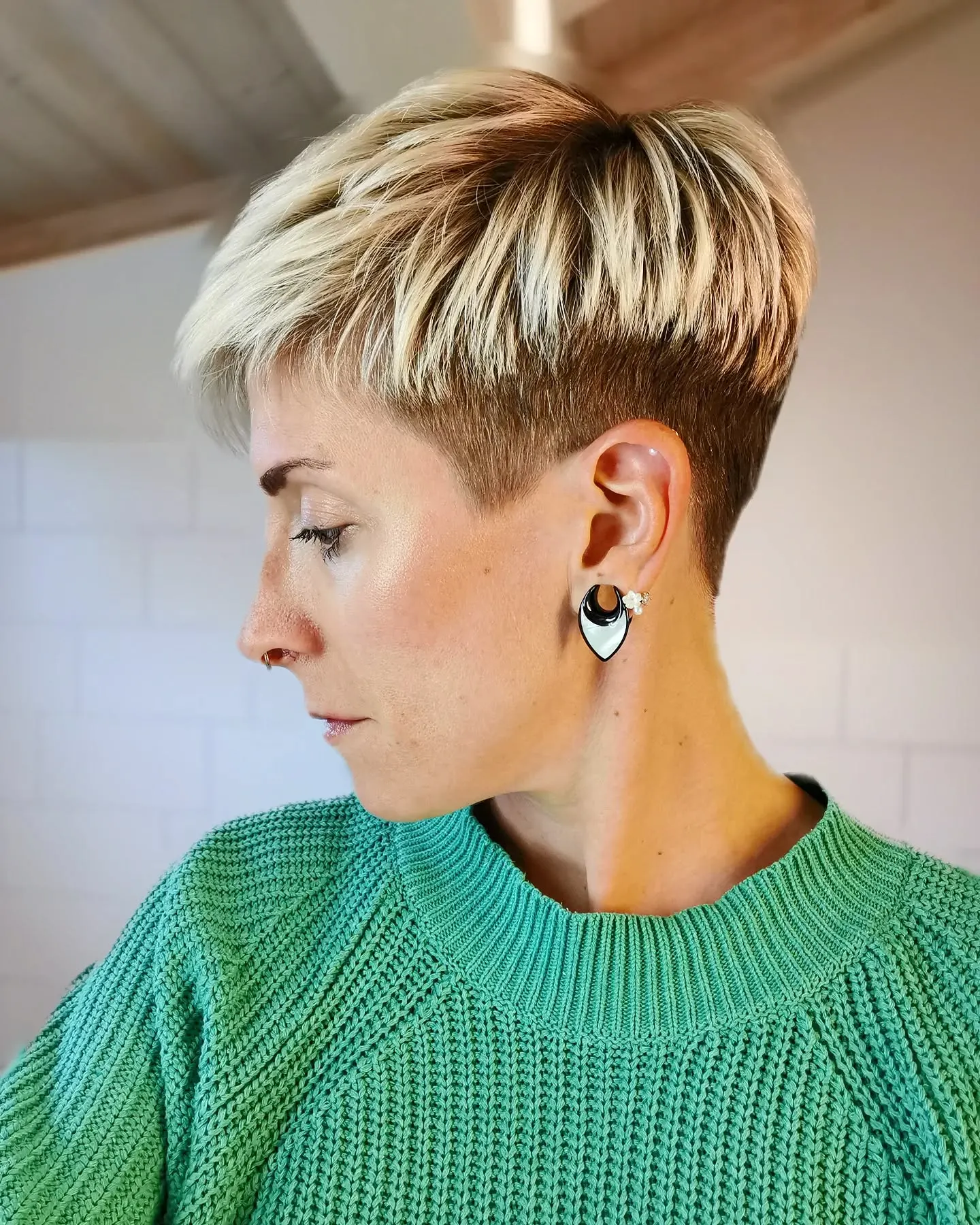
Two tone color is sometimes called a “shadow root” when the contrast is subtle, or a “blocking” technique when the contrast is sharper. Either way, the principle is the same: dark roots with lighter mids and ends create depth that flat color cannot achieve, especially on shorter cuts.
The micro fringe is a strong commitment. It works on this cut because the contrast color does the visual heavy lifting, but on a single tone version of the same haircut, it would feel too severe. Pair micro fringe with dimensional color, not solid tone.
Short Curly Pixie with Natural Texture
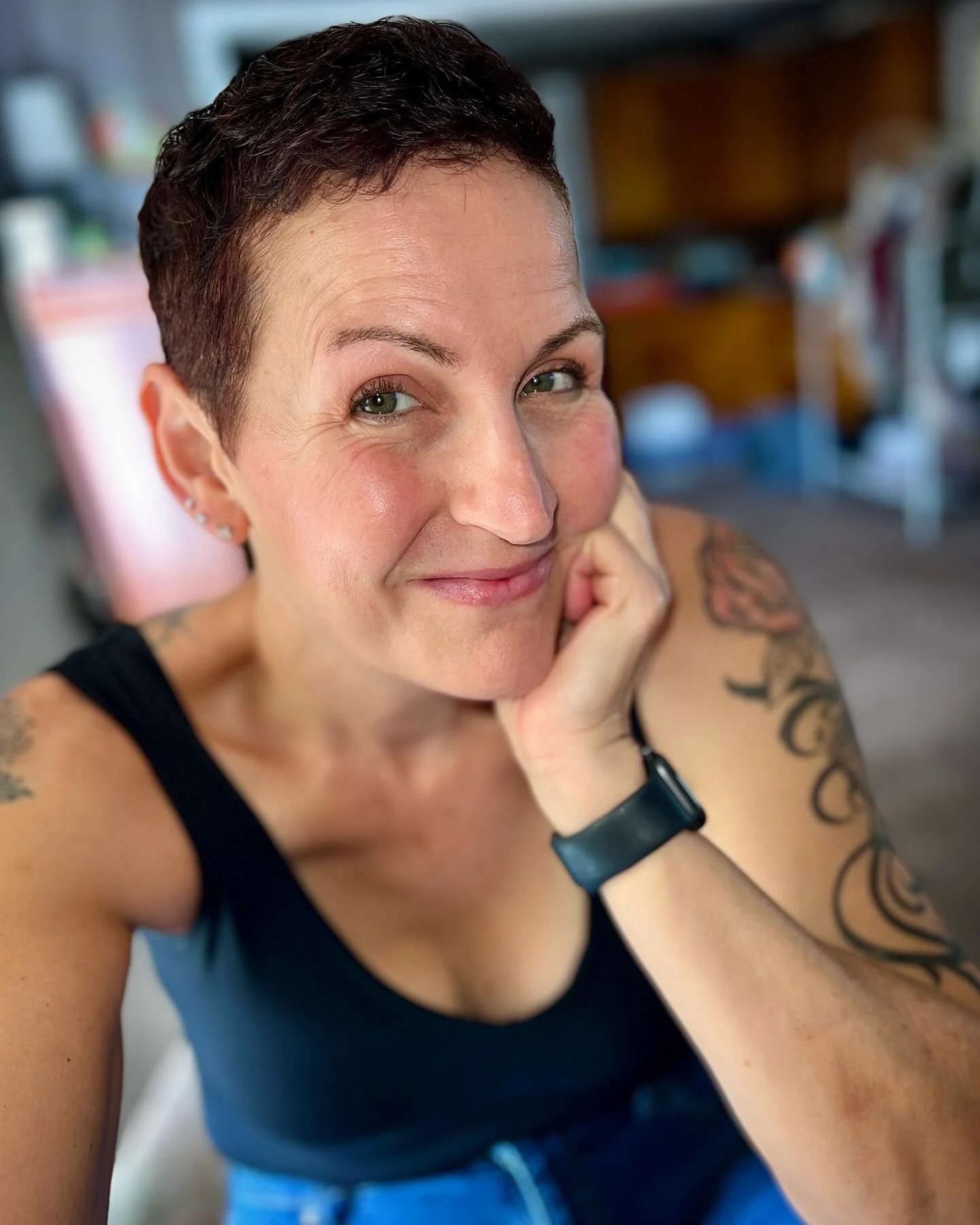
Cutting curly hair short requires very different skills than cutting straight hair short. The biggest difference is shrinkage. A curl pattern that looks like 6 inches when wet can dry to 3 inches, which means the cut needs to be measured with full understanding of how the curl behaves once it air dries.
Look for stylists who advertise specifically as “curly hair specialists” or who cut hair dry rather than wet for curly clients. Dry cutting on curly hair is the safest way to get a pixie that lands at the intended length once it dries.
Ultra Short Buzzed Pixie
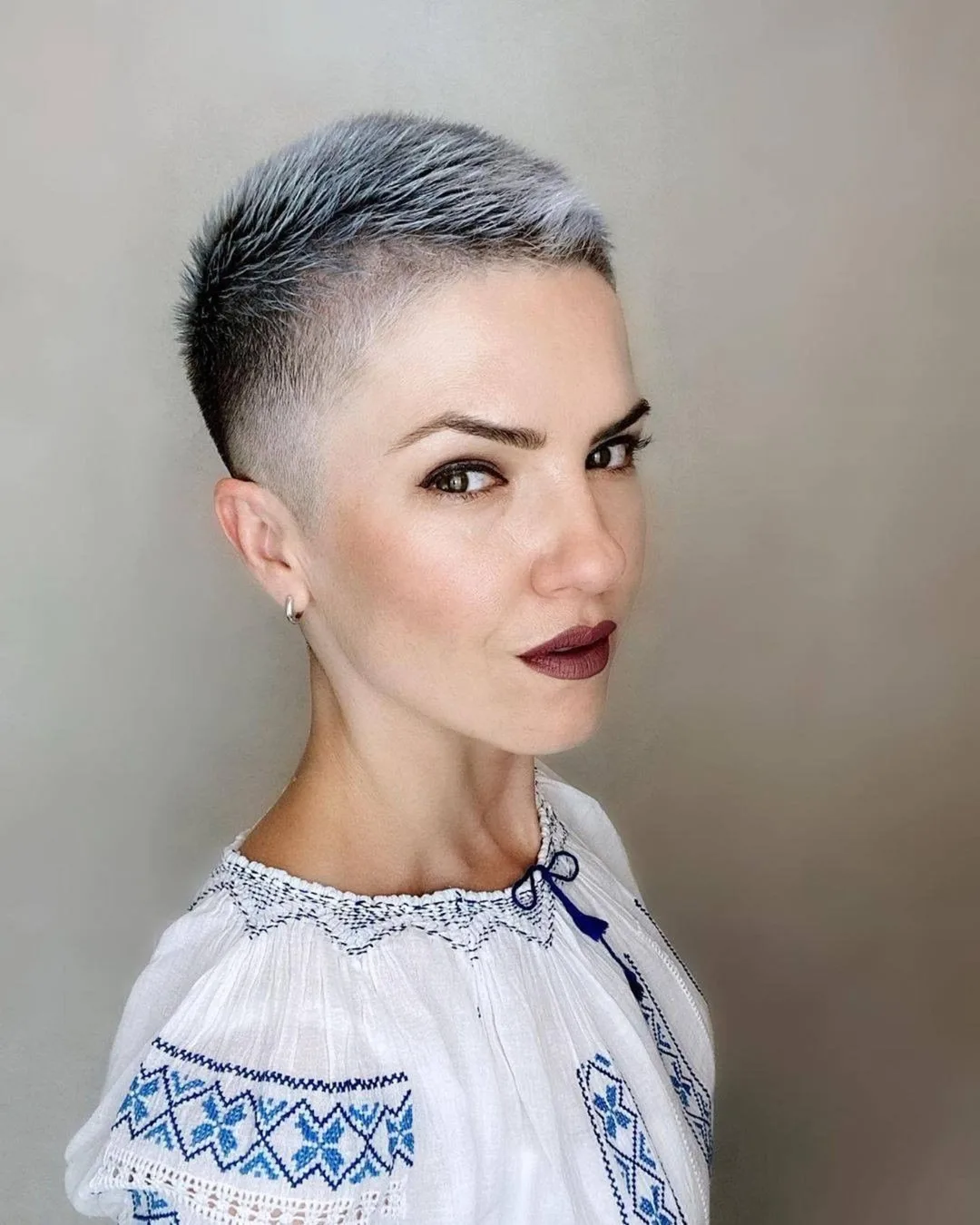
This is the most committed cut on the list. The ultra short buzz exposes the entire shape of the head, which means the cut works only when the head shape is suited to it. A consultation that includes the stylist running their hands over the scalp to feel for any irregular bone structure is a sign you are working with someone who understands this length.
The reward for committing is the lowest possible styling time of any haircut available. Wash, towel dry, done. Some women find they only style their hair on days they remember they have hair, which is the actual point.
Soft Close Cropped Pixie with Micro Fringe
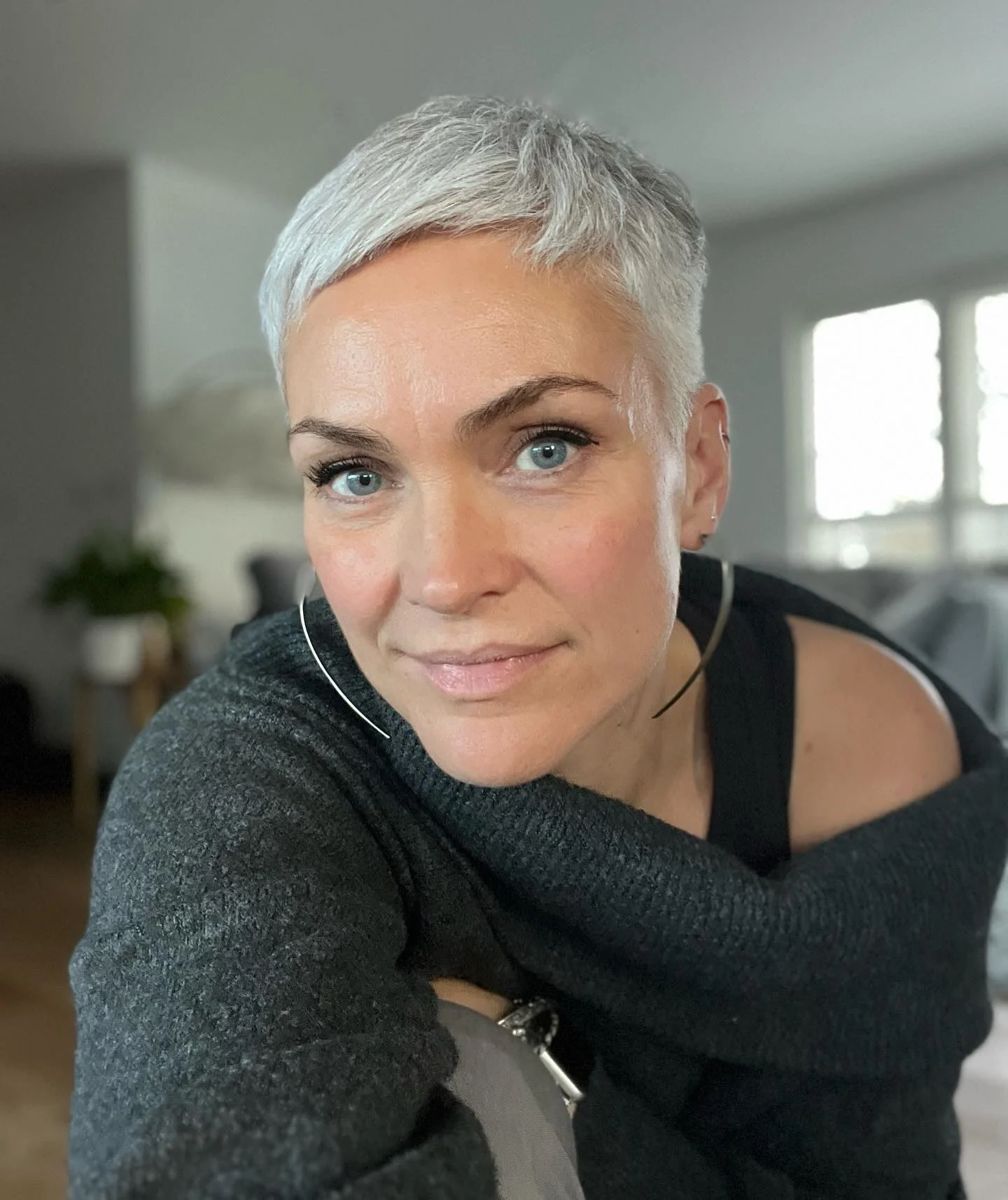
The micro fringe sits about an inch above where a standard fringe would land, somewhere on the upper forehead rather than just above the brows. This length was popular in 1960s mod cuts and came back as part of the Prada inspired runway looks of 2023.
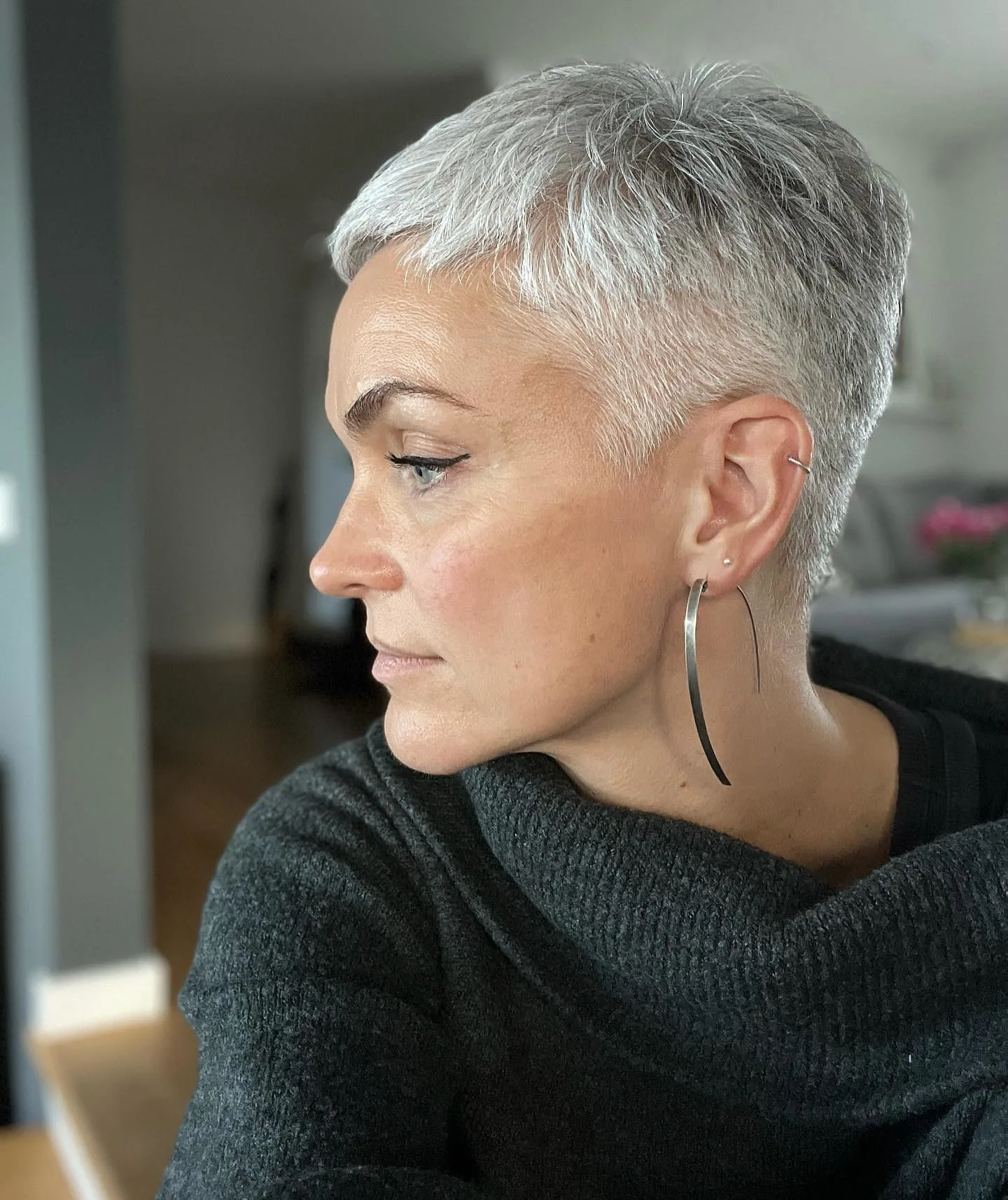
Worth knowing before you book: micro fringe works best on women with a high forehead. On a shorter forehead, the fringe can read as accidentally cut too short rather than deliberately styled. If you have always parted your hair off center to balance forehead proportions, this is probably not your fringe.
Bleach Blonde Cropped Pixie
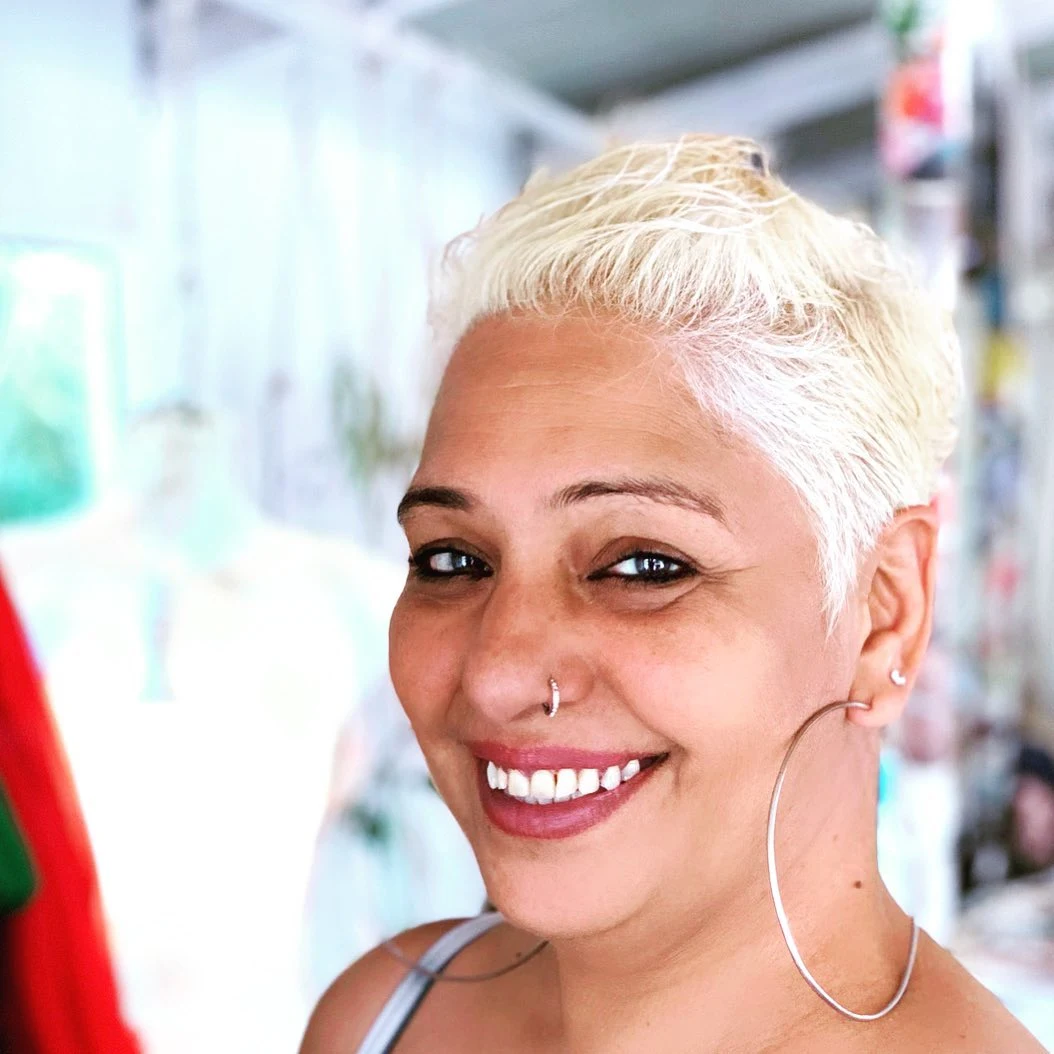
This version is shorter and more uniform than the choppy blonde pixie above. Where the choppy version uses piecey texture for visual interest, this version relies entirely on the brightness of the blonde tone to do the work.
The cut also pairs unusually well with statement jewelry, which is part of why it photographs so often with bold hoops or visible piercings. Less hair around the face leaves more visual room for accessories to register.
Blonde Textured Pixie with Tapered Sides
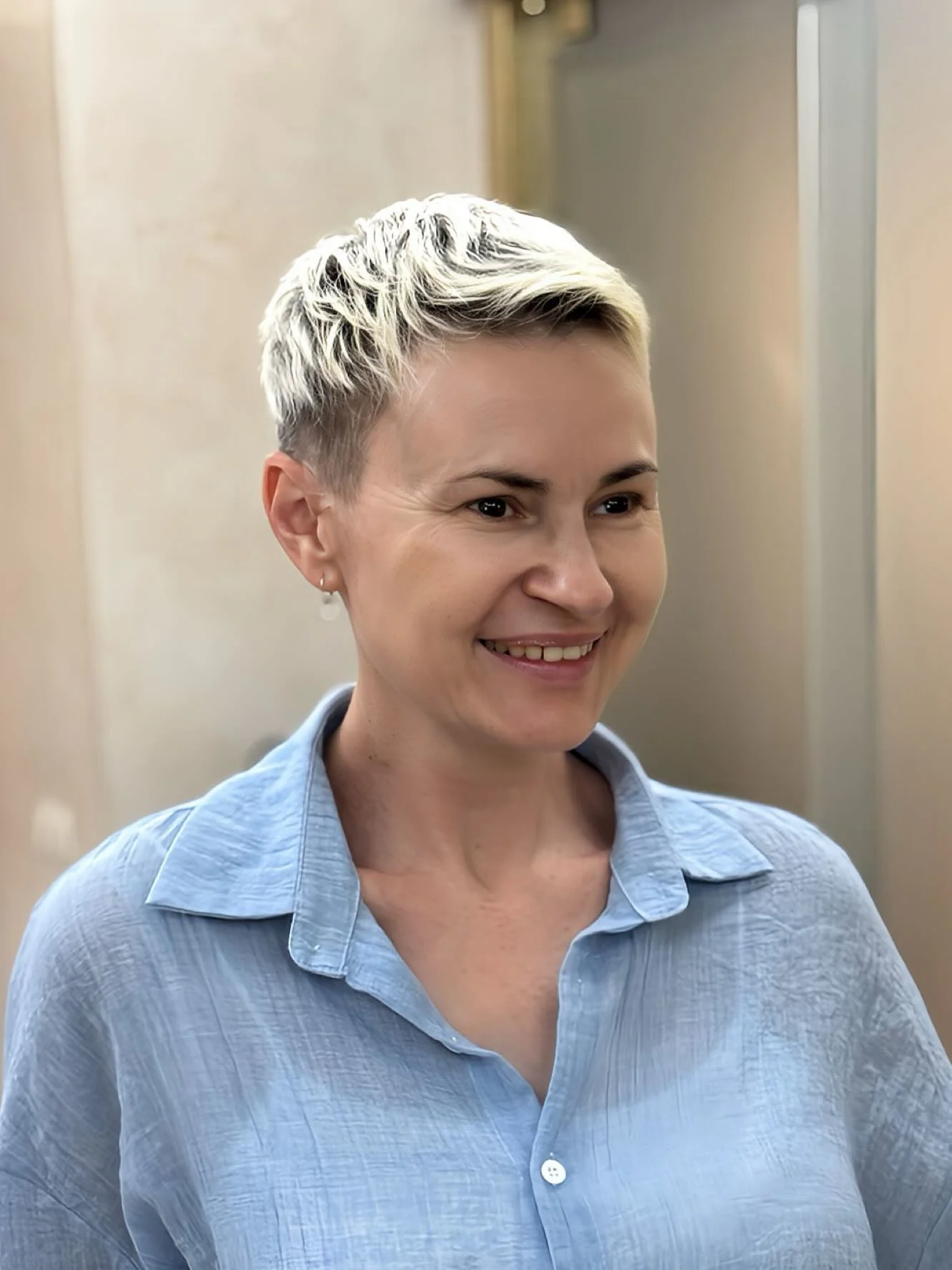
This is the version of the bleach blonde pixie that handles regrowth more gracefully. The intentionally darker roots are part of the look, not a maintenance failure, which means trips to the salon for color can be spaced 8 to 10 weeks apart rather than 4 to 6.

For women who want the bleach blonde look but have hesitated due to maintenance, this rooted version is the practical compromise. You get most of the visual impact of platinum with about half the salon visits.
Salt and Pepper Spiky Pixie

“Spiky” came back into the conversation around 2024 as part of the broader 1990s and 2000s style revival. The modern version is softer than the original, where stiff gel was used to create exaggerated points. Today’s spiky finish uses matte paste worked through dry hair with the fingers to lift small sections without making them stiff.
This finish works best on hair with some natural body. On very fine straight hair, the spikes will collapse within an hour. A texturizing spray applied at the roots before styling can help, but the cut itself needs to support the look.
