
Long Hair with Natural Straight Finish
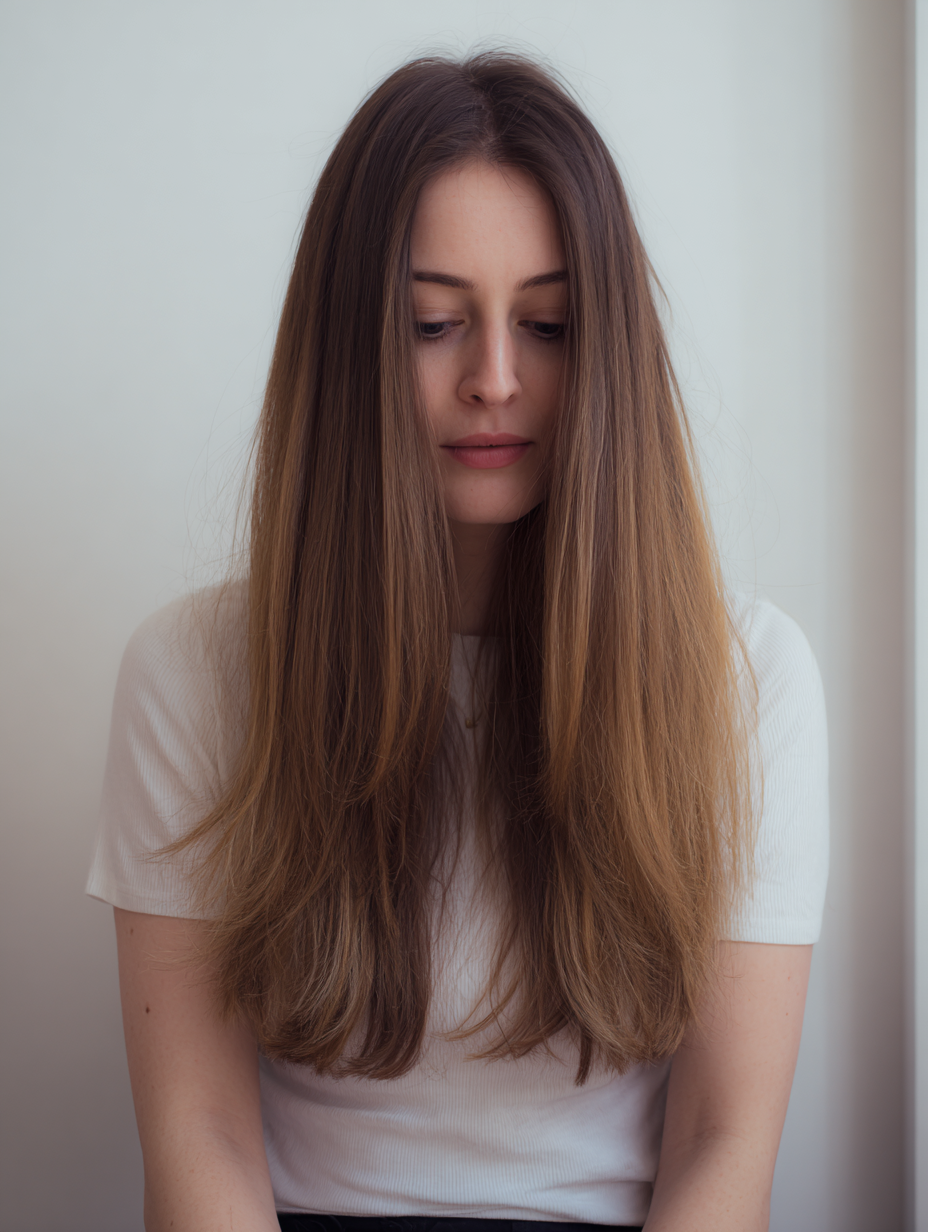
A natural straight finish can look polished and full when paired with the right cut.
Keeping the length even with minimal thinning helps maintain density, while clean ends prevent a sparse appearance.
This style works best with regular trims and lightweight smoothing products.
A slight bend at the ends adds softness, making the hair appear healthier and thicker while staying easy to manage daily.
Style Guide for Long Thin Hair
Choosing long hairstyles for thin hair requires a realistic understanding of how length, structure, and density interact.
Long hair can look beautiful on thin hair, but only when the cut works with your natural growth pattern instead of relying on styling tricks alone.
This guide breaks down the key factors that matter most, so you can choose a hairstyle that looks fuller, styles more predictably, and fits into real daily routines.
What Is Thin Hair?
Thin hair refers to low hair density, meaning there are fewer strands growing on the scalp overall.
This is different from how thick or thin each strand feels between your fingers. With thin hair, the scalp can become visible more easily, especially at the crown or part.
When worn long, the weight of the hair often makes density issues more noticeable, which is why cut structure matters so much.
Common Challenges with Long Thin Hair
Length adds weight, and weight pulls volume down.
This is one of the biggest challenges with long thin hair. Roots tend to fall flat, while ends can look wispy or uneven.
Styles that look full at first may collapse within hours. Breakage also stands out more because there is less surrounding hair to disguise thinning areas.
Without the right cut, long thin hair can look tired rather than polished.
Hair Texture and Density Explained
Texture refers to strand thickness, fine, medium, or coarse. Density refers to how many strands you have overall.
Thin hair always describes density, not texture. Someone with medium texture hair can still have thin density.
For long hairstyles, density determines how full the style looks, while texture determines how well hair holds waves, bends, or layers.
Understanding both helps avoid choosing cuts that remove too much visual weight.
Thin Hair vs Fine Hair Explained
Fine hair means each strand is small in diameter, but density may still be high.
Thin hair means there are fewer strands, regardless of strand size. Many people assume they have thin hair when they actually have fine but dense hair.
This distinction matters because fine but dense hair can handle more layering. Truly thin hair needs more conservative layering to avoid see through ends and flat sections.
Layering Explained for Long Thin Hair
Layering is essential, but it must be controlled.
Long, soft layers help create movement while keeping the perimeter strong. Internal layers can reduce heaviness without thinning the ends too much.
Short layers near the crown often backfire, making the top look sparse instead of lifted.
Face framing layers should be subtle and blended, adding shape without carving away density around the front.
Styling Effort and Maintenance
Long thin hair rarely looks its best without some styling, but the right cut reduces effort.
Blow drying with light tension at the roots adds lift that lasts longer than air drying alone. Maintenance trims are important to keep ends from breaking and separating.
If frequent styling is not realistic, choosing a cut that works with your natural texture will always look better than forcing volume daily.
Necessary Products and Tools
Lightweight products are essential for thin hair. Volumizing mousse adds structure without stiffness, while root sprays help support lift where hair collapses first.
Dry shampoo works well for adding grip, even on freshly washed hair. Large round brushes and curling irons create bend without tight curls.
Heavy oils, thick creams, and layering multiple products often make thin hair fall flatter faster.
Hairstyles to Avoid with Thin Long Hair
Ultra long, one length styles usually emphasize thinness at the ends.
Over layered cuts that rely heavily on thinning shears remove the very density thin hair needs. Heavy straight across bangs can separate and expose the forehead.
Styles that depend on extreme sleekness tend to highlight scalp visibility and flatten natural movement rather than improving fullness.
Tips for Styling Thin Long Hair
Changing your part slightly can create instant volume without cutting more layers.
Loose waves add visual thickness and break up flat sections. Keeping heat focused at the roots rather than the ends helps maintain lift longer.
Using fewer products, but applying them strategically, often works better than layering multiple formulas. Healthy ends always make thin hair look fuller.
Quick Decision Guide
- If your crown falls flat quickly, prioritize long layers with subtle internal shaping.
- If your ends look sparse, reduce length slightly and strengthen the perimeter.
- If styling time is limited, choose soft layers that follow your natural texture.
- If volume never lasts, focus on root support and cut structure instead of more length.
Long hairstyles for thin hair work best when structure supports density instead of relying on heavy styling.
Understanding your hair type, layering needs, and maintenance limits makes choosing the right style much easier.
With thoughtful length, controlled layers, and lightweight products, long thin hair can look balanced, healthy, and consistently easy to manage.
