
A small amount of volumizing lotion enhances the shape without stiffness. It works well for professional settings and casual routines alike.
The style grows out evenly, maintaining its structure between trims.
Relaxed Everyday Short Shag
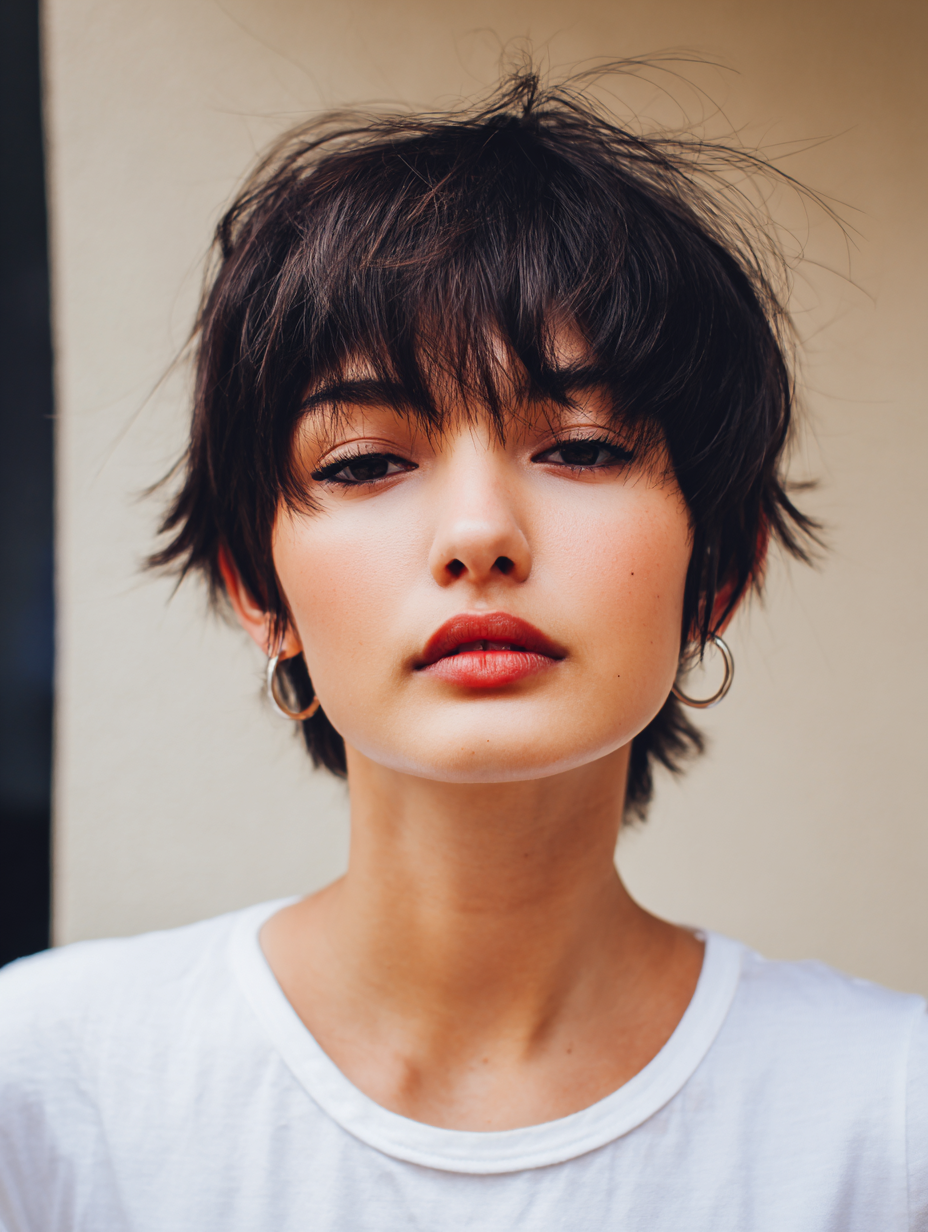
This relaxed everyday short shag focuses on comfort and natural movement for fine hair.
The layers are placed thoughtfully to encourage lift while keeping the silhouette soft.
It styles effortlessly with minimal heat and lightweight products. The cut adapts well to different textures and routines. It feels approachable, modern, and easy to maintain.
For anyone wanting volume without effort, this shag delivers a reliable, wearable result.
Style Guide for Short Shag Haircuts for Fine Hair
What Is a Short Shag?
A short shag is a layered haircut with soft, uneven lengths that create movement and texture. It usually sits between the ears and shoulders, with feathered ends and light layers throughout the crown and sides.
This cut focuses on creating shape without heavy bulk. Layers lift the roots and add dimension, which helps fine hair look fuller. Short shags often include bangs, face framing pieces, or textured ends to increase visual volume.
The result feels relaxed, airy, and easy to style, especially for hair that tends to fall flat.
Fine Hair Explained
Fine hair refers to the thickness of each individual strand, not how much hair you have. Each strand has a smaller diameter, which makes the hair feel soft and lightweight.
Because the strands are delicate, fine hair struggles to hold volume and can lose shape quickly. It also becomes oily faster since natural oils travel easily along the hair shaft.
Short shag haircuts work well here because layered structures reduce weight and help hair lift at the roots. The right cut makes fine hair appear fuller without heavy styling.
Thin vs Fine Hair Explained
Fine hair and thin hair are different, though they often get confused.
Fine hair describes strand thickness. Thin hair describes how much hair grows on your scalp, also known as low density. You can have fine hair with high density, or thick strands with low density.
If your hair is fine and thin, a short shag with shorter layers and added texture helps create the appearance of more hair. If your hair is fine but dense, longer layers prevent excessive puffiness while maintaining movement.
Understanding this difference helps you choose the right layering approach.
Hair Density and Texture Explained
Hair density and texture strongly affect how a short shag looks and behaves.
Low density fine hair benefits from shorter layers and crown lift. These create the illusion of fullness and prevent flat areas.
Medium density fine hair works well with blended layers and soft bangs. This keeps movement balanced without removing too much weight.
Straight fine hair shows every layer clearly, so soft feathering works better than harsh choppy cuts.
Wavy fine hair naturally adds volume, so controlled layering helps shape the waves without frizz or bulk.
Matching your shag structure to density and texture improves the final result.
Choosing the Right Length for Your Face Shape
Length and layer placement influence how balanced your features appear.
Round faces benefit from volume at the crown and longer front pieces that create a lengthening effect.
Oval faces suit most short shag variations, including chin length and ear length styles.
Square faces look softer with wispy layers and textured bangs that reduce strong angles.
Heart shaped faces balance well with fullness around the jaw and lighter volume at the crown.
A good length enhances your natural proportions while keeping the cut easy to manage.
Bangs or No Bangs?
Bangs can change the entire feel of a short shag, especially for fine hair.
Wispy bangs add softness and make fine hair appear thicker around the front. Curtain bangs create movement and frame the face without removing too much density. Textured fringe adds personality and draws attention upward.
If you prefer low maintenance styling, longer face framing layers may work better than full bangs.
Choose bangs based on styling habits and how much daily upkeep you prefer.
Styling Effort and Daily Routine
Short shags for fine hair can be low effort, but styling needs vary.
Air drying works well for naturally straight or slightly wavy fine hair with light layering. A round brush and blow dryer add lift at the crown when more volume is needed. Lightweight mousse or texturizing spray helps hold shape without weighing hair down.
If you want minimal daily styling, choose softer layers and a slightly longer short shag. More dramatic layering usually requires more styling to maintain definition.
Maintenance and Salon Visits
Short shag haircuts require regular trims to keep their shape.
Most styles need reshaping every six to eight weeks. Fine hair shows growth quickly, and overgrown layers can make the cut lose structure and volume.
Shorter styles with heavy layering require more frequent upkeep. Softer or slightly longer shags grow out more naturally.
Consistent maintenance keeps the layers working properly and prevents flat or uneven sections.
When a Short Shag Works Best for Fine Hair
A short shag works well if your hair lacks volume, struggles to hold styles, or feels weighed down by longer cuts. It suits people who want movement, texture, and a fuller appearance without heavy products.
However, extremely damaged or fragile hair may need strengthening treatments before adding strong layers. Healthy strands respond better to the structure and hold shape longer.
Choosing the right variation depends on your density, texture, and styling habits. The best results come from balancing volume, manageability, and natural movement.
