
Styling stays flexible with a round brush or light flat iron work.
This haircut suits straight to slightly wavy hair and complements most face shapes, especially longer and oval profiles.
Medium Length Emo Shag with Tapered Ends
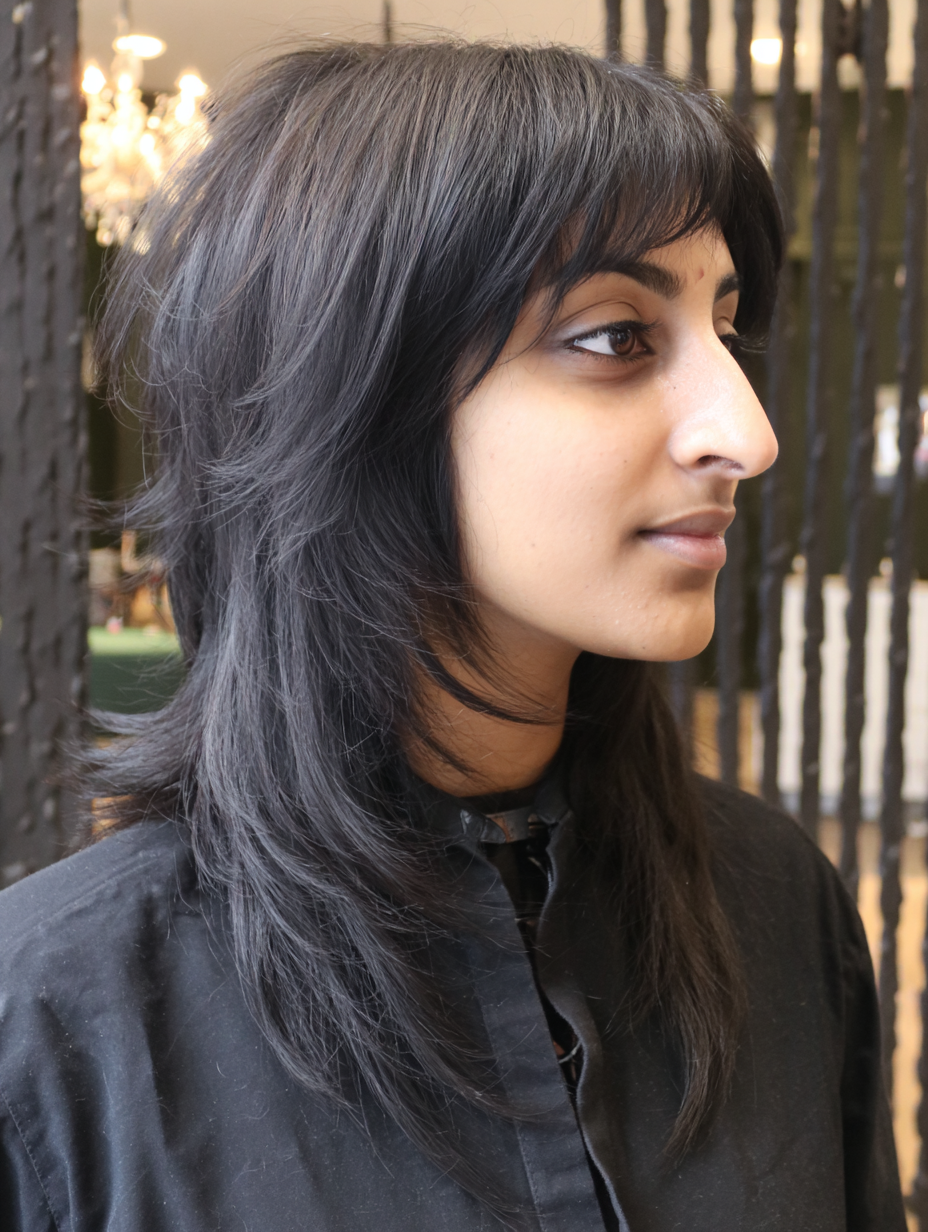
Tapered ends give this medium length emo shag a polished yet rebellious finish.
Layers are concentrated through the mid lengths, keeping the top smooth and controlled.
Styling feels effortless with a smoothing cream and quick blow dry. This style works well for fine hair that benefits from shape without bulk.
It flatters oval and heart shaped faces while remaining easy to manage daily.
Classic Emo Shag with Modern Texture
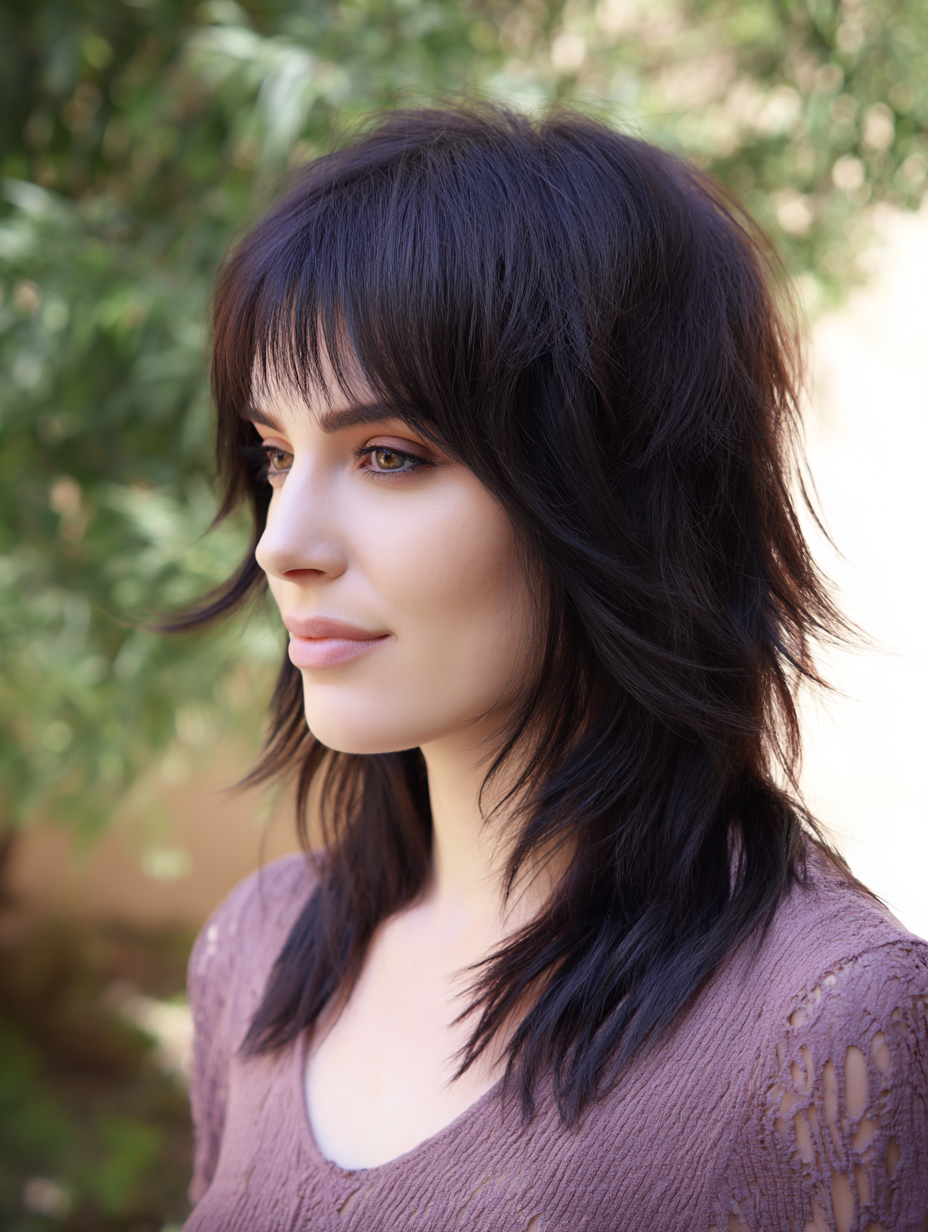
This classic emo shag gets an update with refined, modern texture.
Choppy layers create movement, while the overall shape remains balanced and wearable. Side swept bangs add depth without hiding facial features.
Styling stays simple using a texturizing spray and light finger styling.
This haircut works best for straight hair and suits most face shapes, making it a versatile option to finish the collection.
Emo Shag Haircuts Style Selection Guide
Emo shag haircuts focus on strong layering, defined face framing, and visible texture. The right variation depends on your hair density, natural texture, and how much styling effort you are willing to maintain daily.
This guide explains what to expect, how the cut behaves on different hair types, and what to consider before choosing one.
What Is an Emo Shag?
An emo shag is a heavily layered haircut known for dramatic face framing and noticeable texture. The style usually features choppy layers, strong crown volume, and long fringe or side swept bangs that shape the face.
The structure creates contrast between lifted roots and thinner ends. The result looks intentional and defined rather than soft or blended. The fringe often covers part of the forehead, and the layers remain clearly separated instead of smoothly connected.
This haircut suits people who prefer visible movement and strong shape rather than polished, uniform styling.
Emo Shag vs Wolf Cut
Emo shags and wolf cuts both rely on layered structure, but they create different overall shapes.
An emo shag emphasizes sharp layering and bold face framing. The fringe feels more structured, and the difference between crown volume and lengths appears more noticeable. The focus stays around the face rather than the back.
A wolf cut blends shag and mullet elements. It keeps more length toward the back and transitions more gradually between layers. The fringe usually appears softer and less structured.
An emo shag works better if you want strong face framing and dramatic fringe, while a wolf cut suits those who prefer softer layering and a more relaxed shape.
Hair Density, Thin vs Thick Hair
Hair density plays a major role in how an emo shag looks and behaves.
Thin hair contains fewer strands overall, so controlled layering helps create movement and lift. Too many layers can make the ends appear sparse, which is why balanced shaping becomes important.
Thick hair has greater density and natural volume. Heavy layering helps remove weight and prevents the haircut from looking bulky. Without enough weight removal, the shape may appear wide instead of textured.
Density determines how dramatic the layering appears and how much shaping the haircut requires over time.
Fine vs Thin Hair, Understanding the Difference
Fine hair and thin hair describe different characteristics, and each responds differently to layered cuts.
Fine hair refers to strand size. Individual strands are smaller in diameter and may struggle to hold volume or separation. Thin hair refers to the number of strands growing on the scalp.
Fine hair usually benefits from lighter layering to maintain body and prevent flatness. Thin hair requires careful shaping so the ends do not look see through. When hair is both fine and thin, minimal layering and structured fringe placement help preserve fullness.
Understanding this difference helps you choose a version that supports your hair’s natural behavior.
Hair Texture and Natural Movement
Natural hair texture affects how an emo shag settles and how much styling effort it requires.
Straight hair shows the choppy structure clearly and highlights the layered shape. It often needs styling to create lift at the roots and separation between layers.
Wavy hair enhances the layered structure naturally, adding movement and fullness with less effort. The texture supports the cut’s shape and makes styling more manageable.
Curly hair creates strong volume and texture, but shrinkage changes the final length and overall shape. Layer placement becomes especially important to maintain balance.
Texture influences both the final appearance and the daily styling routine.
Face Shape Considerations
Because the emo shag relies heavily on face framing, the placement of layers and fringe affects how the haircut complements facial features.
Round faces often benefit from longer fringe and vertical layering that adds length instead of width. Square faces usually pair well with softer texture around the jaw and layered fringe that reduces sharp angles.
Oval faces adapt easily to most emo shag variations because of their balanced proportions. Heart shaped faces often suit side swept fringe that balances a wider forehead.
The goal is to control where volume and texture sit around the face.
Styling Effort and Maintenance
Emo shag haircuts require consistent styling to maintain their structure and separation. Daily styling typically focuses on creating lift at the crown, defining the layers, and shaping the fringe.
Without regular styling, the layers may lose definition or fall flat. The haircut also requires routine maintenance to keep its shape.
Most versions need trims every six to eight weeks to maintain structure. Fringe may require more frequent shaping, and occasional reshaping helps keep the layers balanced as the hair grows.
This cut works best for those comfortable with moderate upkeep.
Before You Choose This Cut
An emo shag suits those who want strong shape, visible texture, and defined face framing. It works well for structured styling routines and for anyone comfortable maintaining layered structure and fringe.
It may not suit someone who prefers very low maintenance hair or extremely smooth finishes.
Understanding your hair density, texture, and styling habits helps you choose a version that remains manageable and consistent over time.
