
Electric Blue and Purple Jellyfish Haircut with Textured Layers
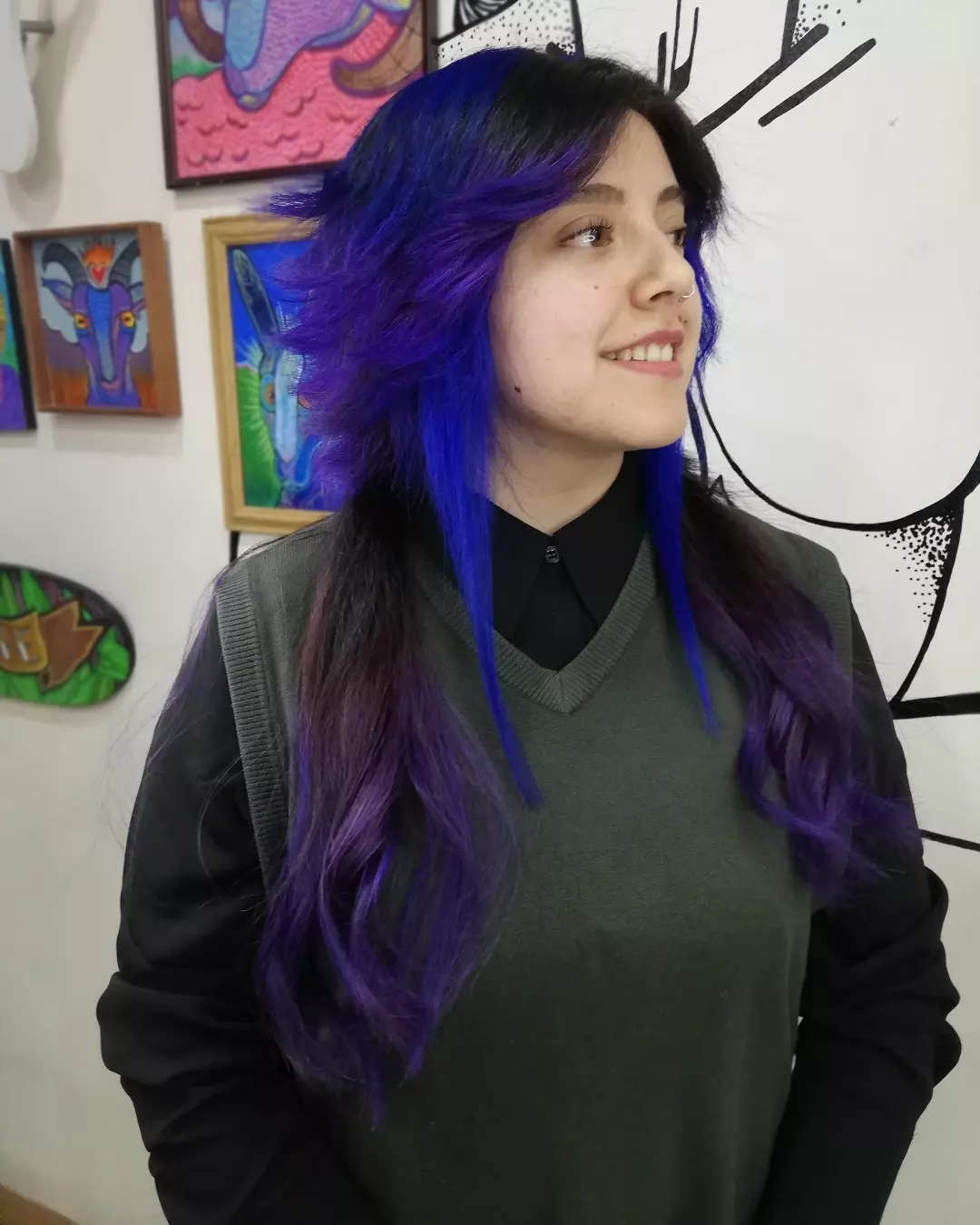
This jellyfish haircut combines bold color with a heavily textured, layered shape for a striking result.
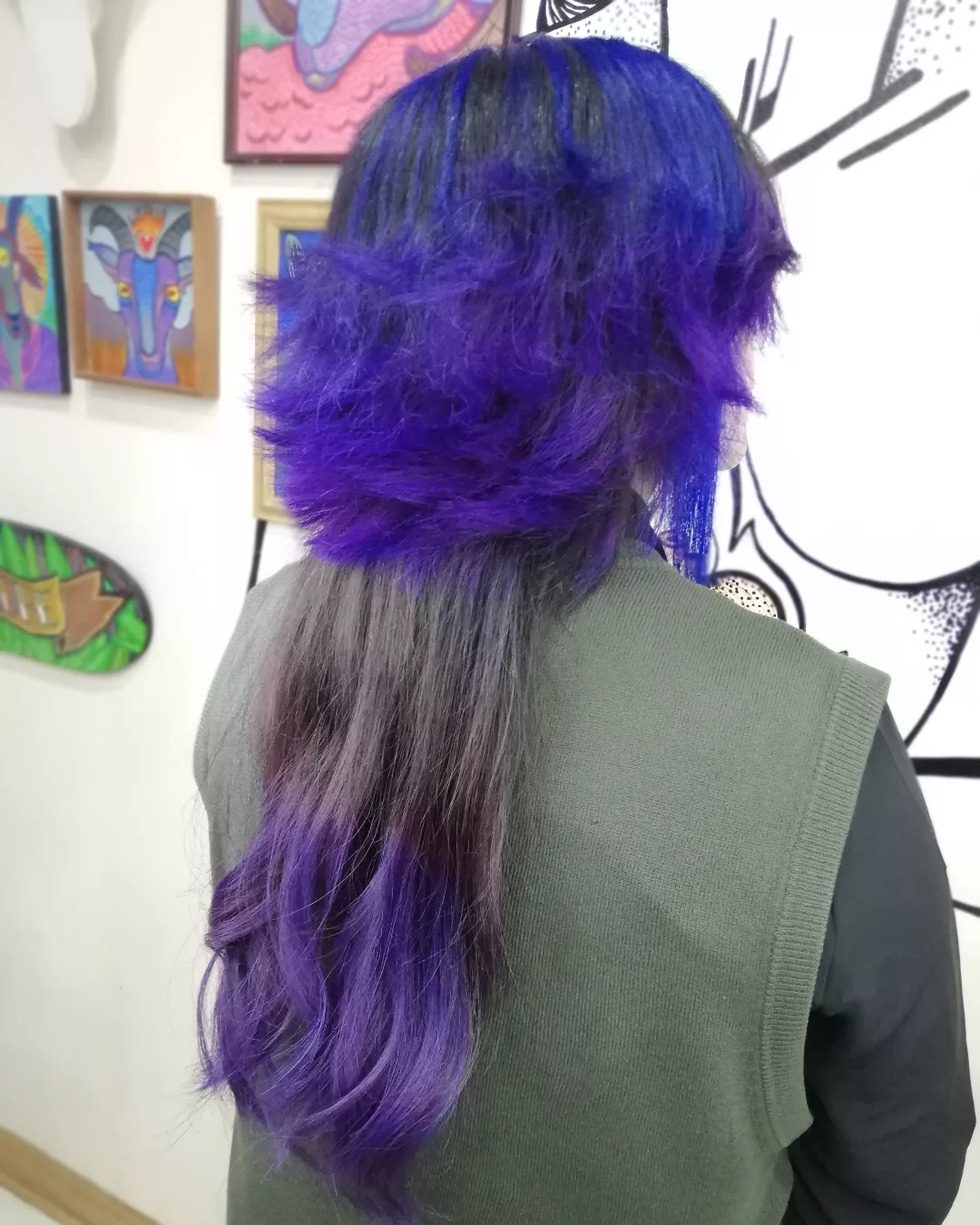
The top section features choppy layers in deep blue tones, creating volume and a slightly messy, lifted finish. Darker roots add depth and break up the color nicely.
Beneath, the longer section flows down in rich purple shades with soft waves, adding movement and contrast.
The separation stays strong, while the color blend gives the entire look a vibrant, edgy feel.
High-Contrast Jellyfish Haircut with Blonde Face Frame and Dark Lengths
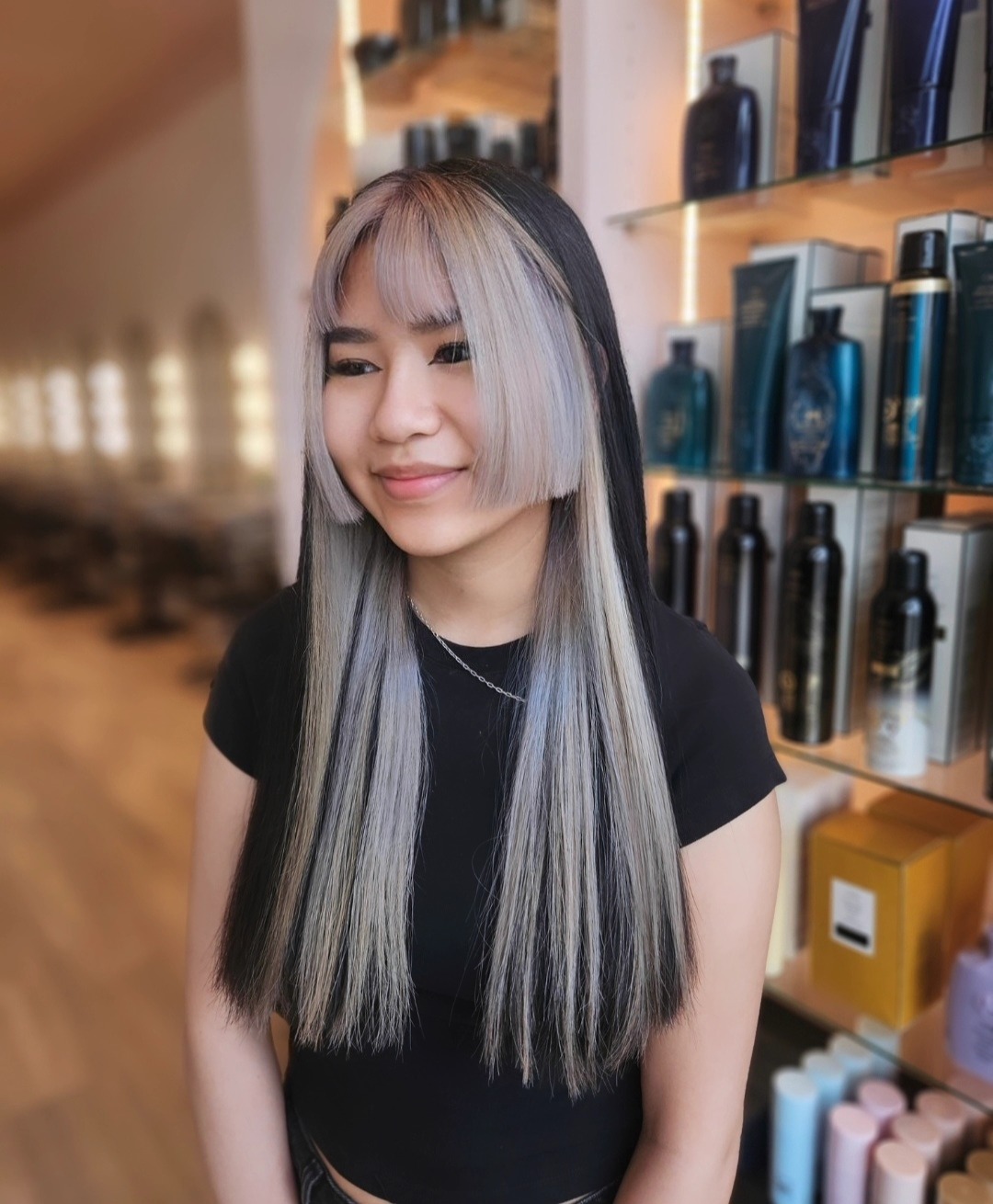
This jellyfish haircut uses strong color contrast to emphasize its layered shape.
The top section features a blunt, chin-length bob with bright blonde tones framing the face. Full bangs blend into the sides, keeping the front soft and balanced.
The darker base color surrounds and supports the lighter pieces, adding depth.
Beneath, long, straight lengths fall past the shoulders in a sleek finish. The clear separation between layers and tones creates a bold, graphic look.
Soft Shag Jellyfish Haircut with Wispy Layers and Natural Flow
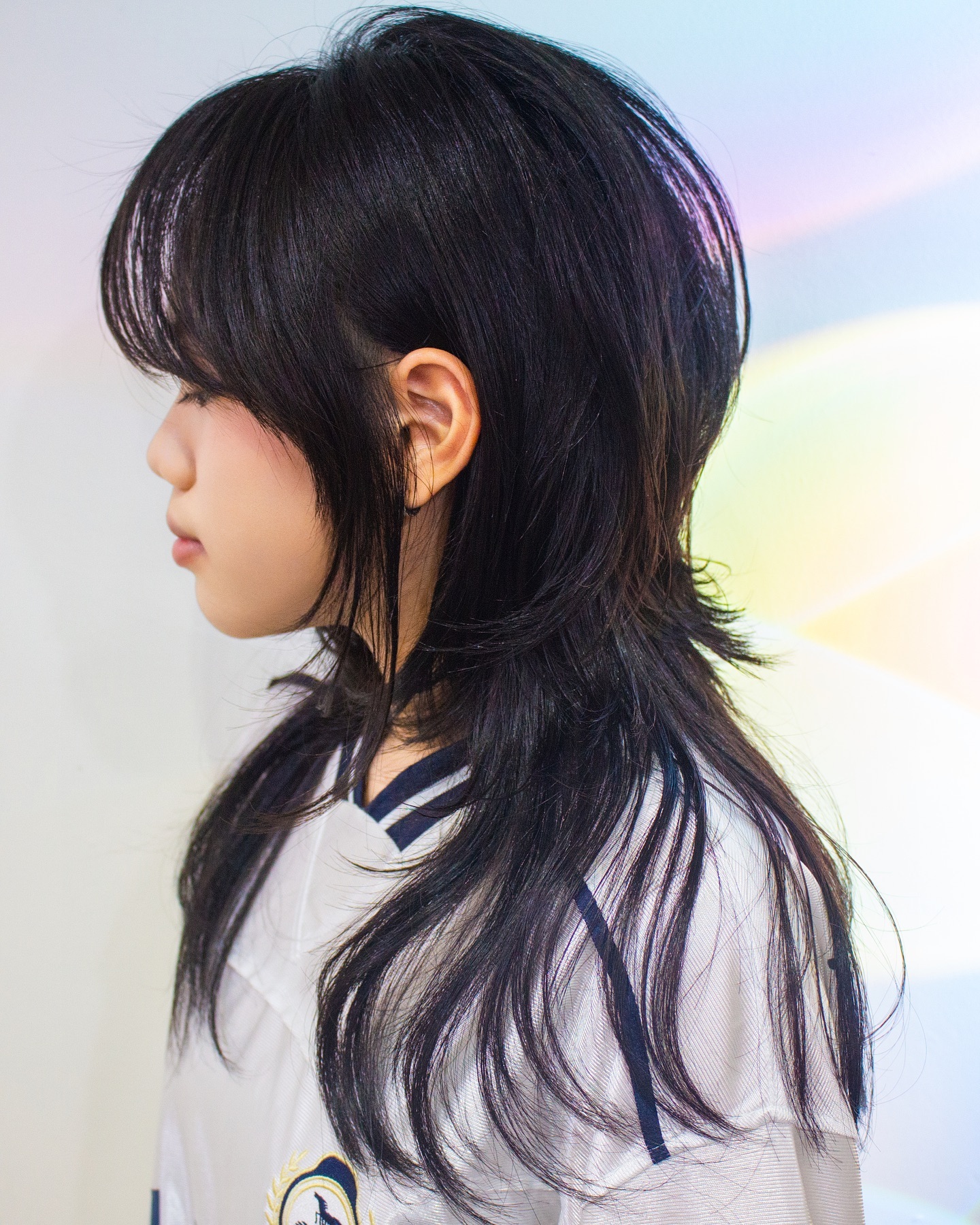
This jellyfish haircut blends into a soft shag shape, creating a lighter and more natural feel.
The top section sits around the cheekbones with gentle, feathered layers that frame the face without harsh lines.
Wispy bangs fall forward and connect smoothly into the sides. Beneath, longer strands extend down with thin, airy ends that move easily.
The separation between layers stays subtle, giving you shape and texture without a strong, blunt contrast.
Natural Brown Jellyfish Haircut with Soft Blunt Layers and Straight Lengths
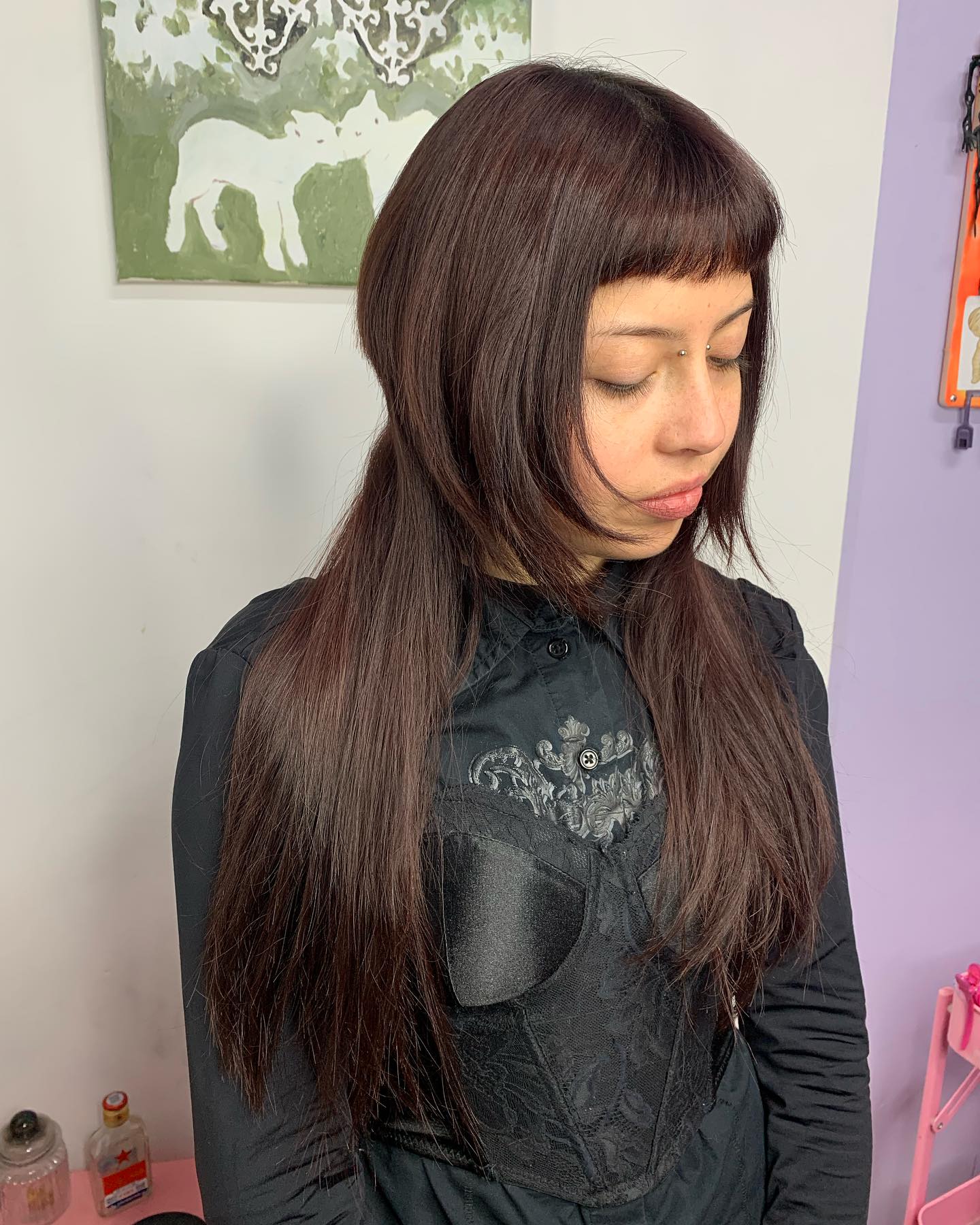
This jellyfish haircut keeps things clean and wearable with a soft, natural brown tone.
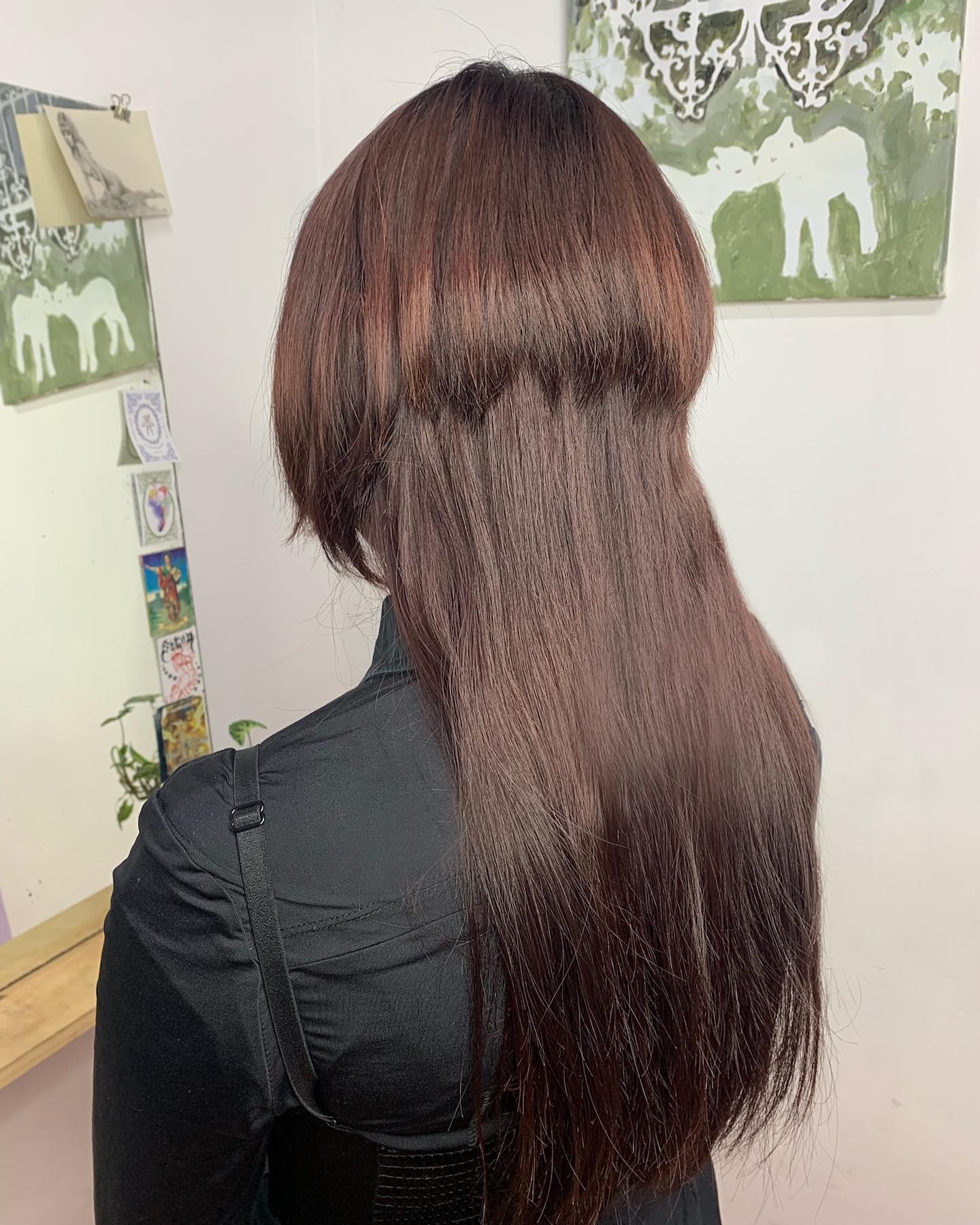
The top section forms a rounded, chin-length bob with slightly softened blunt edges that frame the face neatly.
Short, straight bangs sit across the forehead, adding structure without feeling heavy. Beneath, the longer section falls straight and smooth past the shoulders, creating a clear layer contrast.
The overall look feels simple, polished, and easy to maintain while still showing the signature shape.
Jellyfish Haircut Style Guide
What is a Jellyfish Haircut?
The jellyfish haircut is a two-part style defined by a sharp contrast in length.
It features a shorter, face-framing layer on top (the “bell”) and a longer, often disconnected layer underneath (the “tentacles”).
Unlike a traditional layered cut where lengths blend seamlessly, this style maintains a visible separation between the two sections.
The result is a graphic, high-impact shape that works best when the intention is to embrace volume on top and length below as two distinct elements.
Choosing Your Length: The Bell and The Tentacles
The success of this cut relies heavily on the relationship between the two lengths. Your decisions here will dictate the overall silhouette.
Long Hair as the Base – Keeping the underneath section long (mid-back or longer) creates the most dramatic version of the cut.
This option emphasizes the “tentacle” effect, allowing the longer hair to move independently from the shorter top layer.
It works well if you want to retain overall length but add significant volume and shape around the face. Be prepared for the top section to feel quite short in contrast.
Medium Length as the Base – A medium-length base (collarbone to mid-back) offers the most balanced interpretation.
The contrast between the two layers is noticeable but less extreme, making the style feel more like a structured shag than a radical disconnect.
This is a practical choice if you want the flexibility to wear the longer layer up or styled forward without dealing with extreme differences in weight.
Short Hair as the Base – When the underneath section is short (chin to shoulder length), the jellyfish effect becomes more subtle and resembles a heavily layered bob or a grown-out mullet.
The distinction between layers is softer because there is less length to create the dramatic drop.
This is a good option if you are transitioning from a shorter style and want to experiment with the shape without committing to growing out two vastly different lengths.
Jellyfish Cut vs. Wolf Cut
While both styles prioritize volume and texture, they serve different structural purposes.
- Shape: The wolf cut is a tapered, blended style that maintains a continuous line from the crown to the ends. It is widest at the mid-lengths and narrows at the tips. The jellyfish cut is intentionally disconnected; the top layer ends abruptly, creating a shelf-like effect before the longer bottom layer continues.
- Volume Distribution: A wolf cut concentrates volume throughout the hair, creating a wild, uniform texture. A jellyfish cut concentrates volume specifically at the crown and around the jawline (where the top layer ends), leaving the bottom layer relatively flat and separate.
- Maintenance: The wolf cut grows out gracefully because the layers remain blended. The jellyfish cut requires more precise upkeep because as it grows, the disconnect can become less defined or look unintentional.
Face Shapes Explained
The framing effect of the top layer makes face shape a primary consideration.
Round and Oval Shapes
A shorter top layer that ends at the cheekbones or jawline can add structure and angularity. If you have a round face, keep the top layer slightly above the jaw to create lift and definition. For oval faces, you have the most flexibility, but be mindful of the width—if the top layer is cut too wide and round, it can exaggerate the natural curves of the face.
Square and Heart Shapes
For square faces, a softer, longer top layer that grazes the jawline can help balance a strong jaw. Avoid ending the top layer directly at the widest part of the jaw, as this can create a boxy effect. For heart-shaped faces, a top layer with volume at the crown and less width at the cheekbones will complement a narrower chin. The goal is to use the shorter “bell” to balance the proportions of the upper and lower face.
Long or Oblong Shapes
A top layer with significant width and volume is beneficial for longer face shapes. This style can visually shorten the appearance of the face by adding horizontal mass at the cheek or eye level. Avoid keeping the top layer too flat or too long, as this can elongate the face further.
Hair Texture and Density Explained
This cut performs differently depending on your natural hair type.
Fine Hair and Low Density
The jellyfish cut can be an excellent choice for fine hair because the disconnected layers create an illusion of volume. The shorter top layer removes weight, allowing the hair to lift away from the scalp. However, the long “tentacle” section may appear sparse if density is very low. To counter this, keep the bottom layer slightly blunted rather than wispy to maintain the appearance of thickness.
Medium Density and Straight Hair
This texture shows the graphic lines of the cut most clearly. Straight, medium-density hair will highlight the sharp disconnect between the two layers. The style will look intentional and clean. The main consideration is that straight hair lacks natural texture to blend the two sections, so precision cutting is required to ensure the transition looks deliberate rather than accidental.
Thick and Curly Hair
Thick or curly hair requires a specialized approach. If the top layer is cut too short, curly hair can shrink up significantly, creating a shape that resembles a mushroom rather than a jellyfish. For curly textures, the top layer should be cut with the curl pattern in mind (cut dry) to ensure the “bell” sits where intended. Density can also become an issue—if the hair is very thick, the bottom layer may need to be texturized to prevent the top layer from looking like a heavy helmet.
Styling Effort and Maintenance
Be honest with yourself about how much time you are willing to dedicate to this cut.
Daily Styling – This is not a wash-and-go style for most hair types. To achieve the defined separation between the two layers, you will likely need to style the top section for volume and shape while keeping the bottom section smooth or textured depending on your preference. Common techniques include blow-drying the top layer with a round brush, using texturizing spray to define the disconnect, or flat ironing the longer layer to contrast with a wavy top.
Upkeep Schedule – The jellyfish haircut requires frequent maintenance to preserve its signature shape. Because the style relies on a hard line of demarcation between lengths, even an inch of growth can blur the intended effect. Plan for trims every 6 to 8 weeks to maintain the sharpness of the top layer. If you prefer a lower-maintenance schedule, opt for a softer version of the cut where the top layer is slightly longer and the disconnect is less severe.
Growth Phase – Understand what you are signing up for regarding the grow-out process. If you decide to change styles later, the two distinct lengths will grow out at different rates. You will go through an extended phase where the hair looks like a heavily layered mullet or a shag before the layers eventually even out. If you anticipate wanting to return to a one-length style soon, this cut may require patience during the transition.
