
The bangs are slightly uneven, adding character without looking messy.
This style works well with natural texture, especially for those who prefer a low-effort routine. A small amount of styling cream helps define the layers and fringe.
The result feels modern, relaxed, and easy to wear in everyday settings.
Mini Bob with Curved Bangs
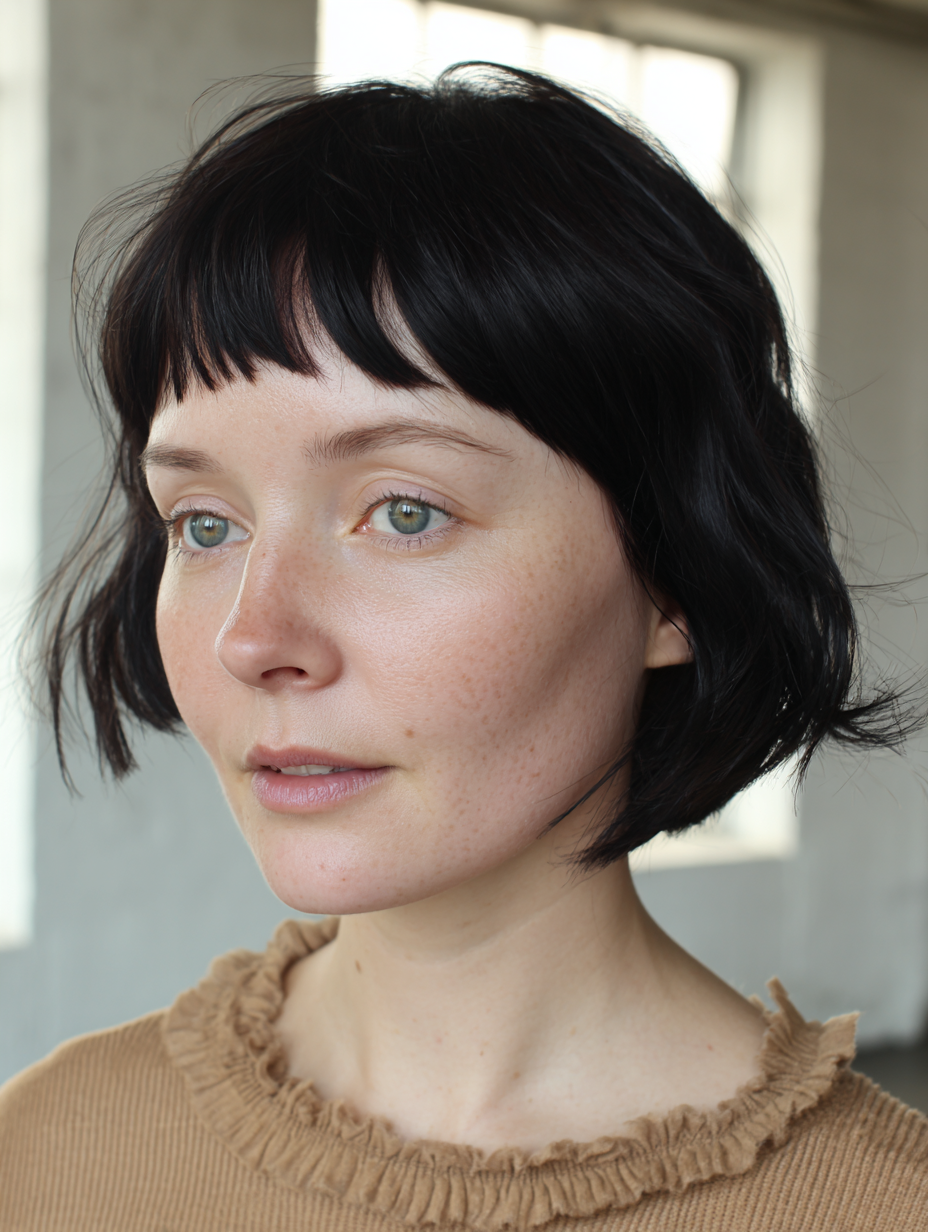
The mini bob sits just around the jawline, creating a compact and refined shape.
Curved bangs follow the natural line of the forehead, softening the overall look.
The curve blends smoothly into the sides, keeping the haircut cohesive and balanced. It works best for straight or softly wavy hair and requires minimal styling.
A simple blow-dry helps maintain the curve, giving the style a clean and softly structured finish.
Short Bob with Soft See-Through Bangs
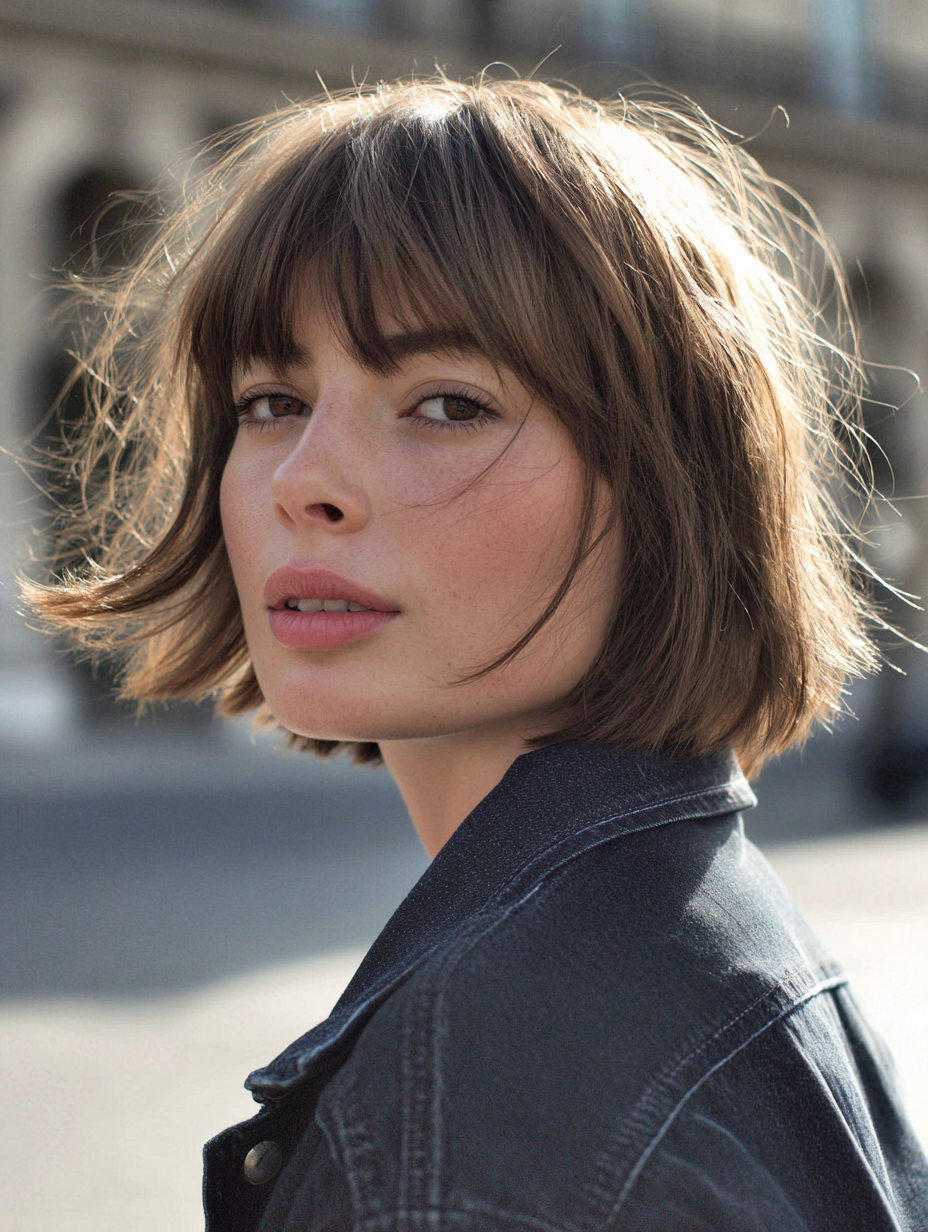
See-through bangs create a light, airy effect at the front, allowing some forehead to show through naturally.
Paired with a short bob, the overall look feels soft and modern without being too heavy.
This style works well for fine hair, helping it look fuller without adding weight. Styling remains easy, often needing just a quick brush and light shaping.
The airy fringe keeps the haircut fresh, relaxed, and easy to maintain daily.
Short Bobs With Bangs Style Guide
What Is a Short Bob With Bangs?
A short bob typically falls between the earlobe and the chin.
Adding bangs transforms the shape, drawing focus to the eyes and cheekbones. This combination creates a structured, intentional look that works across many face shapes.
The key is choosing the right length and fringe for your specific features and lifestyle.
Types of Bangs
Bangs are not a single style but a spectrum with distinct personalities.
Blunt bangs offer a bold, graphic line. They work well if you have straight hair and a willingness to style them daily.
Side-swept bangs provide softness and movement. They are forgiving during grow-out and suit round or square faces by creating diagonal lines.
Wispy or textured bangs are lighter with less density. They add softness without overwhelming smaller foreheads or finer hair.
Curtain bangs part in the middle and frame the face. They blend seamlessly into a short bob and require less frequent trims than other fringe styles.
For an indepth guide on bangs, check out our article on popular types of bangs.
Short, Medium, or Long Bob
A short bob (above the jaw) feels bold and modern. It emphasizes the neck and jawline but requires more frequent salon visits to maintain its shape.
A medium bob (jaw to chin length) offers balance. It provides enough weight to control wavy hair while still feeling fresh and manageable.
A longer bob (touching the shoulders) gives you versatility. You can tuck it behind your ears or pull it back, but it lacks the crisp, graphic quality of a shorter version.
Thin vs. Thick Hair: What to Consider
For thin hair, a short bob with blunt ends creates the illusion of density. Blunt bangs add visual weight to the front. Avoid heavy layering, as it can make hair appear sparser. A clean, one-length cut is your strongest option.
For thick hair, internal layering removes bulk while keeping the shape intact. Wispy or side-swept bangs prevent the front from looking too heavy. Your stylist will likely texturize the ends so the bob sits correctly instead of flaring out.
Hair Texture and Density Explained
Texture refers to your individual strand size: fine, medium, or coarse. Density is how many strands you have per square inch.
Fine hair benefits from precision cutting. A sharp bob with bangs looks intentional and polished. Avoid over-texturizing, which can cause the style to fall flat.
Coarse or curly hair requires a different approach. A short bob with bangs needs to be cut dry so the shape accounts for shrinkage. Longer curtain bangs often work better here, as very short fringe can curl unpredictably.
Medium texture is the most flexible. You can successfully wear most bob and bang combinations, provided the cut respects your natural wave pattern.
Face Shape Considerations
Your face shape determines which bob and bang combination feels balanced.
Oval faces have the most flexibility. Almost any short bob with bangs works, from blunt micro-bobs to textured chin-length cuts.
Round faces benefit from asymmetry. A short bob that hits below the chin with side-swept bangs creates vertical lines that add length. Avoid blunt bangs paired with a rounded bob shape, as this can exaggerate width.
Square faces need softness. Wispy bangs or curtain bangs break up a strong jawline. A bob with textured ends and slightly longer front pieces keeps the look from feeling boxy.
Heart-shaped faces suit volume at the jaw. A bob that grazes the chin paired with side-swept bangs balances a wider forehead and narrower chin. Avoid heavy, straight-across bangs that add bulk at the top.
Long faces benefit from width. A blunt bob at chin level with full, straight-across bangs visually shortens the face. Keep the length above the shoulders to avoid drawing the eye downward.
Styling Tool Requirements
Different cuts demand different tool setups.
Blunt bangs require a small round brush and a blow-dryer with a nozzle. A flat iron helps correct any bends or waves for a polished finish.
Side-swept and curtain bangs work with a round brush or a large roller. You can often air-dry them with a simple clip to hold the direction while they set.
Textured bangs are the most tool-flexible. They respond well to air-drying with a bit of paste or sea salt spray. A quick hit with a small flat iron corrects stubborn pieces without needing a full blowout.
The bob itself requires either a round brush for volume or a paddle brush for a sleeker finish. If you do not own a blow-dryer or prefer to avoid heat, choose a longer bob with curtain bangs and a natural texture that does not require forced shape.
Styling Effort and Maintenance
Be honest with yourself about the time you are willing to commit.
A short bob with bangs is not a wash-and-go style for most people. You should expect to:
- Style your bangs daily. Even if you skip the rest, bangs require a round brush or blow-dryer to sit correctly.
- Visit the salon every 4 to 6 weeks. Bangs grow out quickly, and the shape of a short bob loses its precision after eight weeks.
- Use minimal product. A lightweight mousse or texturizing spray adds volume without weighing down the cut.
If you prefer air-drying, choose a longer bob with curtain bangs. If you enjoy a quick blowout, a chin-length bob with blunt bangs is worth the routine.
