
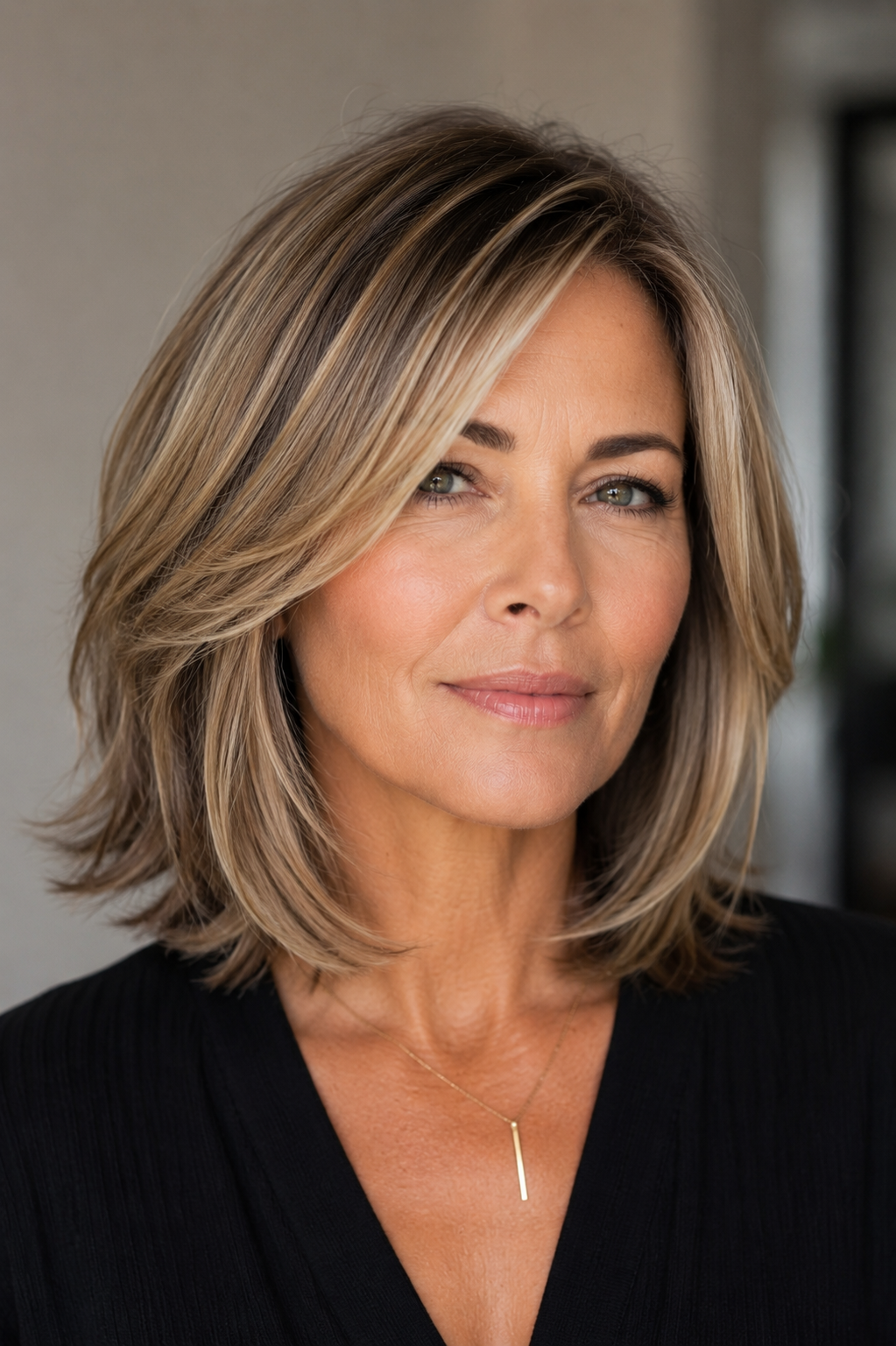
A bob handles these shifts better than most styles because the shape itself creates the appearance of fullness, even when density drops. The right cut works with what your hair does now, not what it did at 35.
Length matters less than weight distribution. A chin-length bob can look heavy on fine hair and a shoulder-length bob can look light on thick hair, depending on how the layers and ends are cut. The 24 versions below cover different lengths, textures, and styling preferences, with notes on what each one actually does for your hair.
24 Bob Haircuts for Women Over 50
Classic Chin-Length Bob
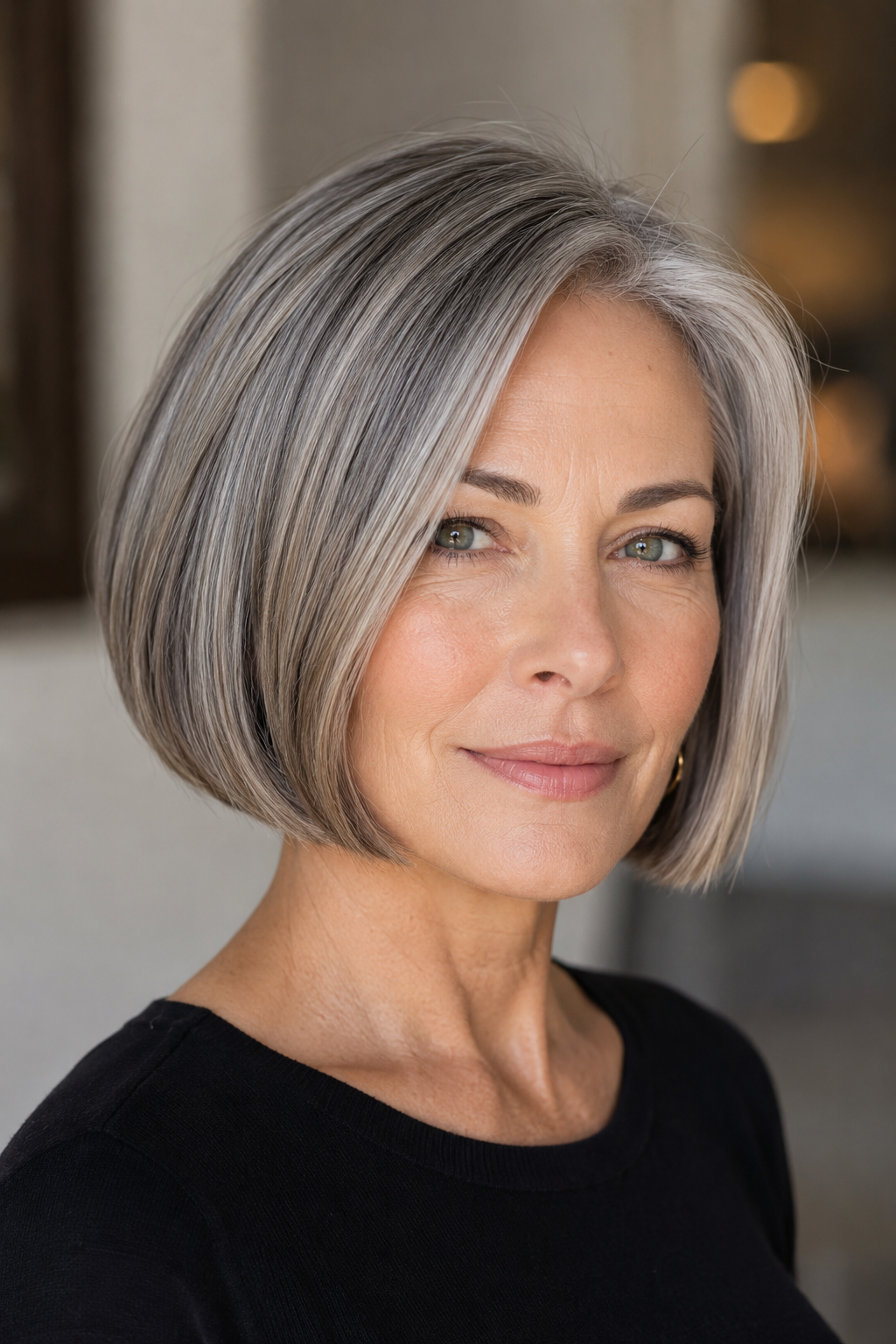
The original bob, cut to a single length that sits at the chin. The blunt line at the bottom creates the illusion of thickness, which helps fine hair look denser. Ask for the perimeter to be cut sharp rather than tapered. This works on straight and slightly wavy textures where the line falls cleanly. Style with a round brush and a quick blow-dry to set the shape. The cut grows out gracefully, which means longer stretches between salon visits.
Long Layered Bob
A bob that hits between the collarbone and shoulders, with long layers throughout. The layers add movement without removing the body of the cut. This suits most textures and face shapes, which is part of why it stays popular across decades. Use a leave-in cream and a light serum to finish the ends. The length covers the neck, which some women prefer as skin changes after 50. The shape transitions between casual and dressed-up without restyling.
Chin-Length Bob with Bangs
The classic bob paired with full or wispy bangs across the forehead. Bangs cover forehead lines and frame the eyes, which many women find flattering after 50. Ask your stylist to thin the bangs from underneath if your hair is thick, or leave them piecey if fine. Trim the bangs every few weeks to keep them above the eyes. The combination of a sharp bob line and soft bangs balances structure with softness.
Stacked Bob
The back gets cut shorter with stacked layers, while the front stays longer in an angled line. The stacking creates volume at the crown, which helps if your hair has flattened with age. This works especially well on fine to medium hair where lift at the crown disappears first. Ask for the stacking to be subtle rather than dramatic for a more modern shape. Style with a round brush, drying the back section upward to set the stack.
Inverted Bob
Shorter in the back, longer in the front, with a clean angled line connecting them. Different from the stacked bob, the inverted version has no layered stacking, just a sharp diagonal shape. This cut elongates the neck and draws the eye forward toward the face. It suits oval and heart-shaped faces especially well. Style with a flat iron to keep the angled line crisp, or air-dry for a softer interpretation that still holds the shape.
A-Line Bob
A gentle version of the inverted bob, where the front sits slightly longer than the back without a dramatic angle. The shape suits women who want movement without the sharpness of a true inverted cut. This works across textures and face shapes. The forward angle frames the jawline and softens the appearance of a longer face. Style with a round brush during blow-drying, or use a curling iron on the ends to flick them inward toward the chin.
