
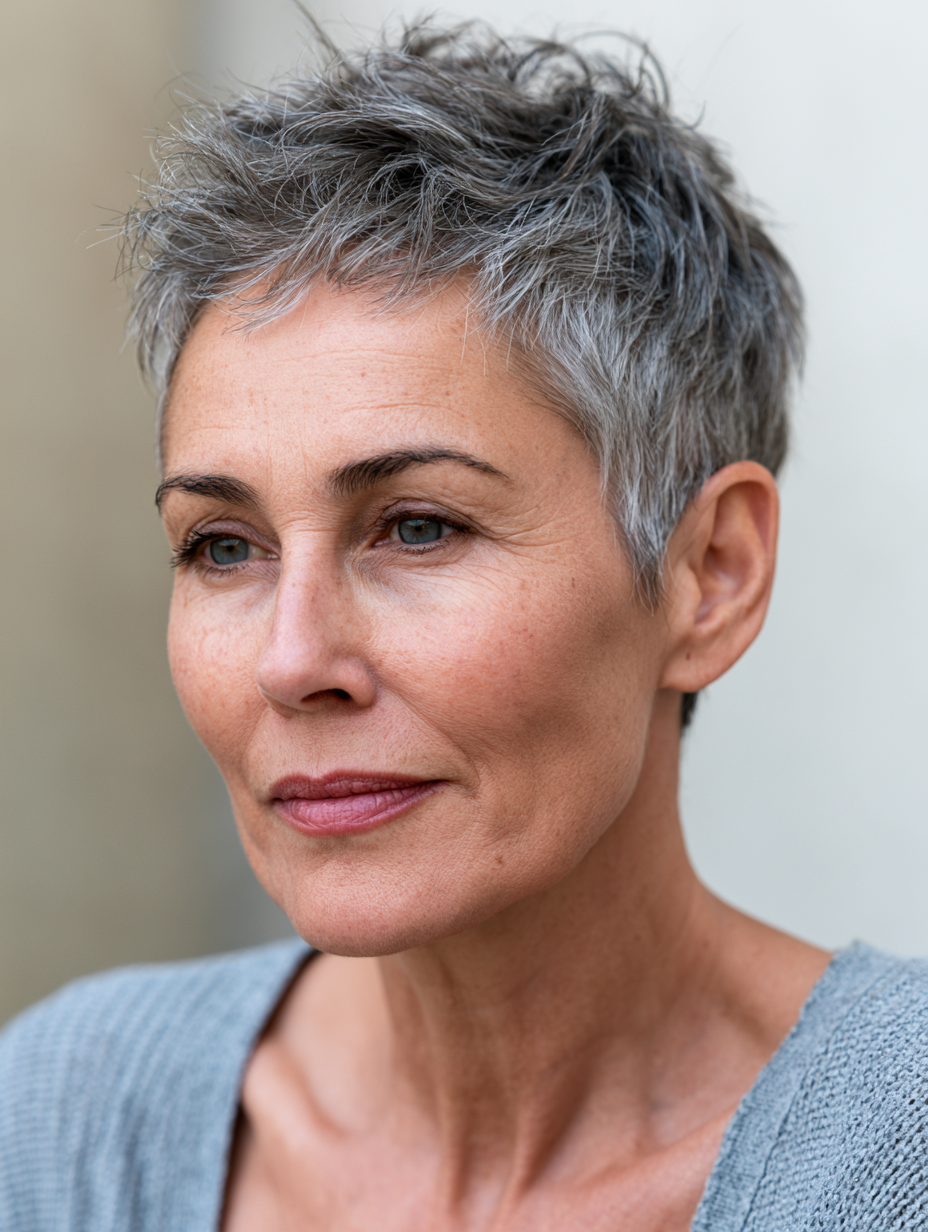
The 22 styles below cover short, medium, and shoulder-length options, all chosen for how they handle fine and thinning strands. Some build fullness through cut alone, others use color and styling to add the appearance of density. All work for women over 50 who want their hair to look healthier, not just shorter.
22 Hairstyles for Thin, Fine Hair Over 50 2026
Blunt Chin-Length Bob
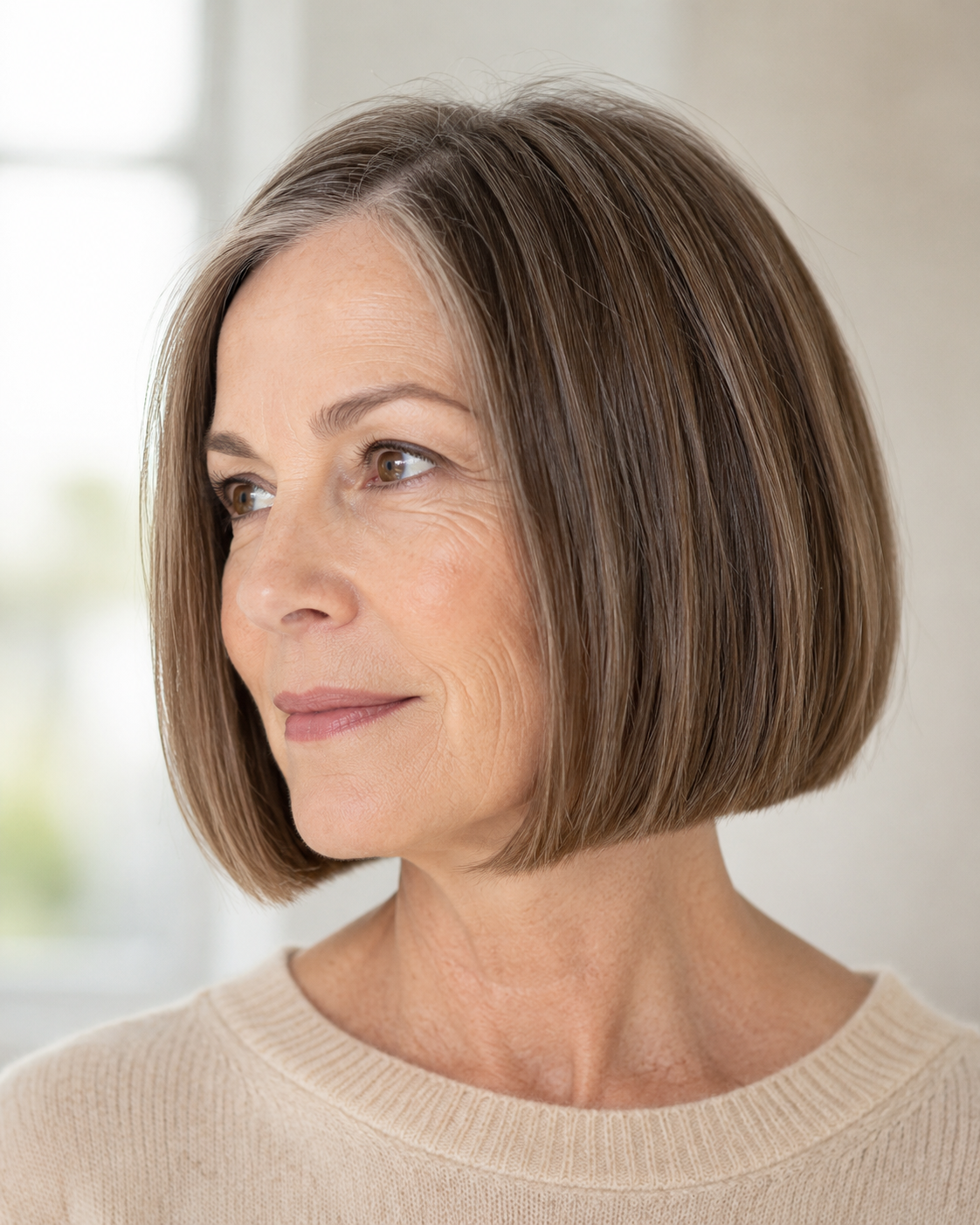
A bob cut to a single length at the chin with a sharp, unlayered perimeter.
The blunt line at the bottom creates the illusion of thickness, since fine hair gathers visual weight where the cut ends.
Ask for the perimeter to stay sharp rather than tapered or point-cut. Style with a round brush during blow-drying to set body at the roots.
The cut grows out gracefully without obvious layer lines. It works on straight and slightly wavy textures where the line falls cleanly.
Classic Pixie
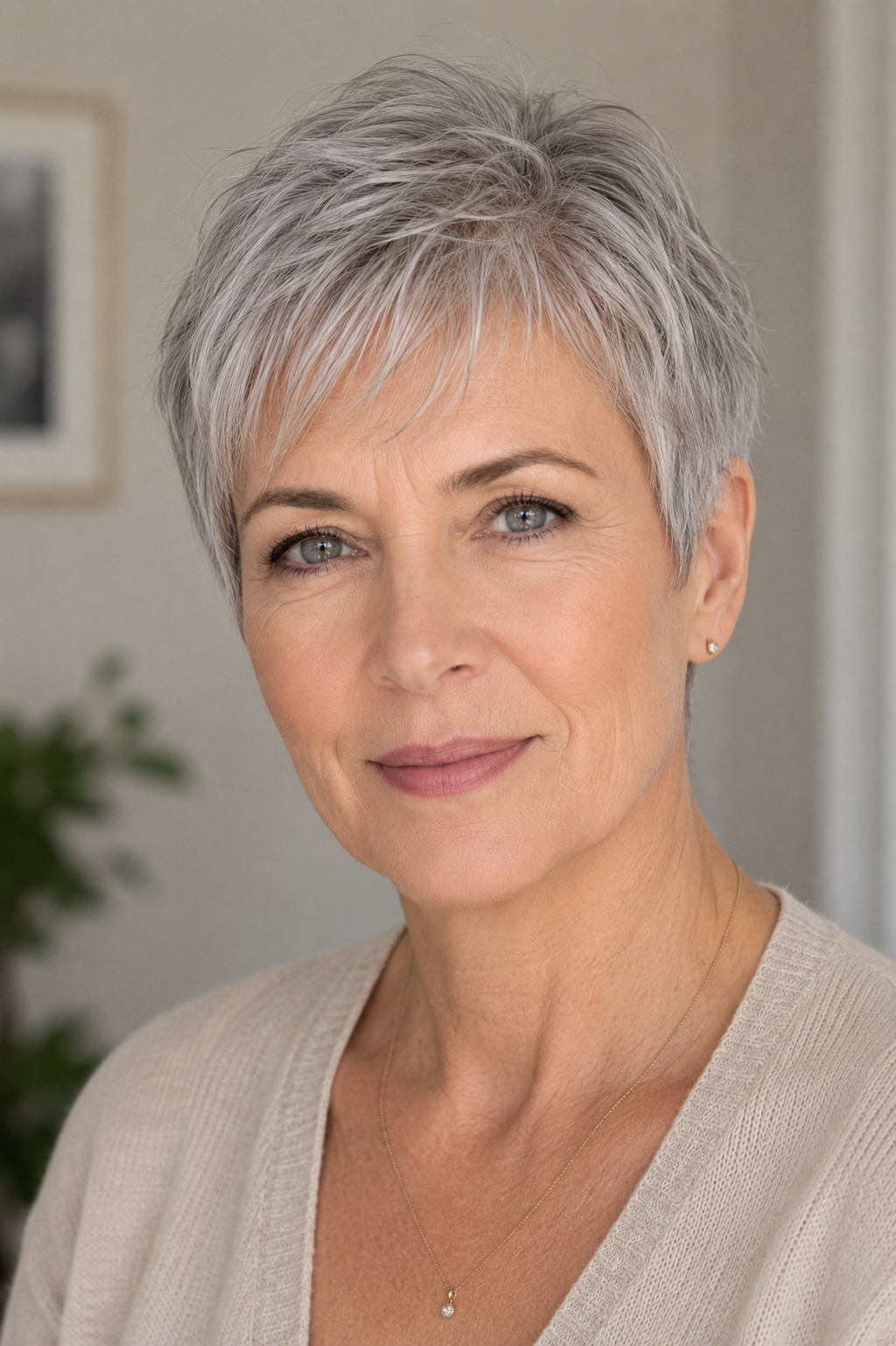
Length stays under two inches everywhere, layered just enough to give shape without removing visual density.
The short length makes fine hair look fuller, since shorter strands stand up rather than lying flat against the scalp.
A regular trim every four to six weeks keeps the shape. Style with a small amount of light cream or pomade.
The cut hides scalp visibility at the crown when layered correctly. It also requires the least daily styling of any short option.
Layered Lob
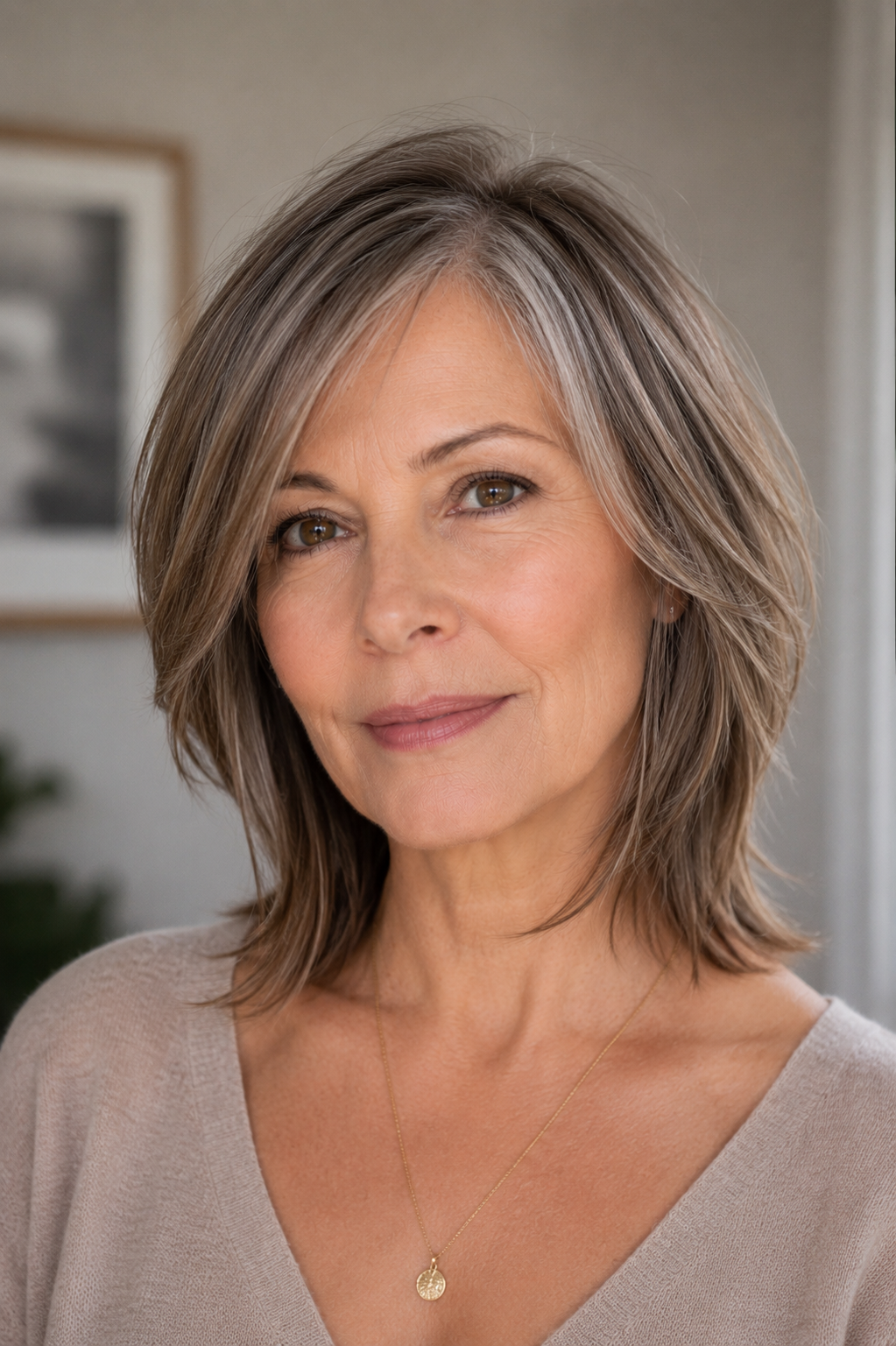
A long bob sitting at or just above the collarbone with long layers throughout.
The layers add movement without removing weight, which matters on fine hair. Ask for the layers to start lower on the cut, ending near the perimeter rather than higher up.
Style with a round brush or air-dry with a leave-in cream. The length covers the neck while the layers give the cut shape.
It works across textures and grows out without awkward stages.
Pixie with Soft Side Bangs
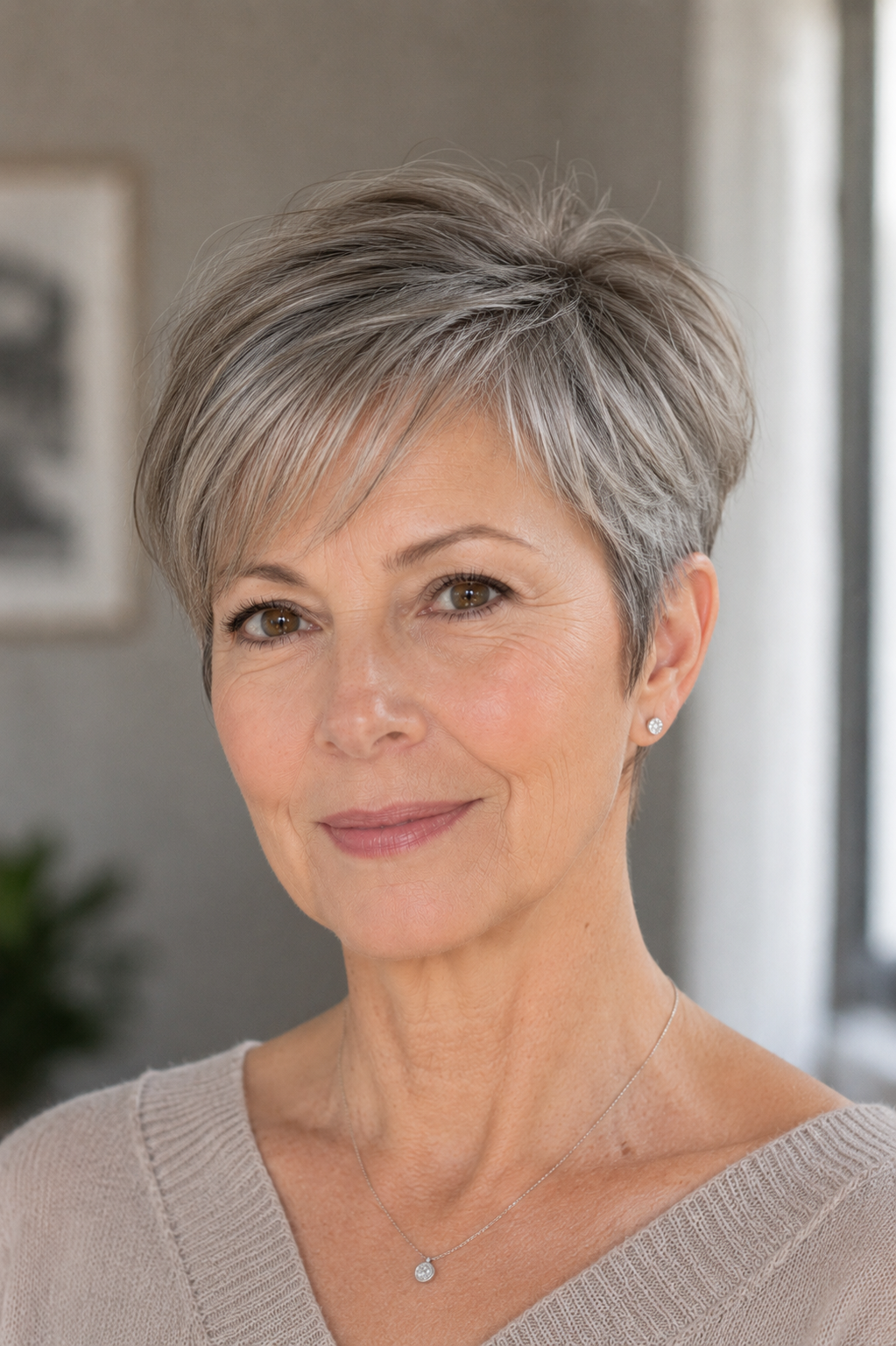
The bangs sweep gently across the forehead while the rest of the cut stays short and layered.
Side bangs cover forehead lines and frame the eyes. Ask your stylist to thin the bangs from underneath for a wispy finish that suits fine hair.
The rest of the cut stays a standard short pixie. Trim the bangs every few weeks to keep the length right.
The cut blends bangs into the pixie naturally as they grow out.
A-Line Bob
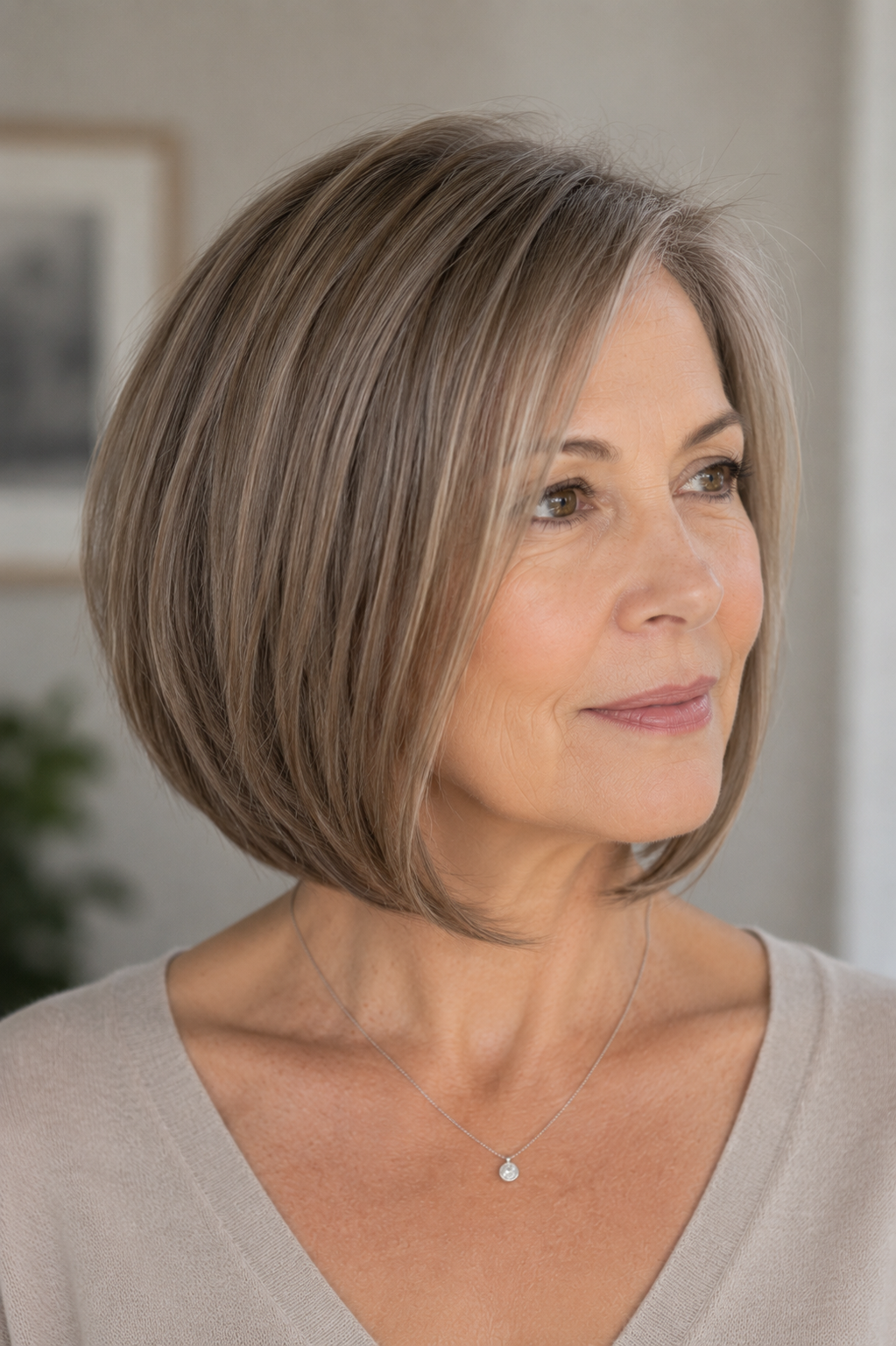
The front sits slightly longer than the back, creating a gentle forward angle.
The shape frames the jawline and softens the appearance of a longer face. Style with a round brush during blow-drying to set body at the crown.
This cut works on fine hair because the forward angle pulls weight toward the front, where the cut visibly ends.
Use a curling iron on the ends to flick them inward toward the chin for added shape.
Stacked Bob
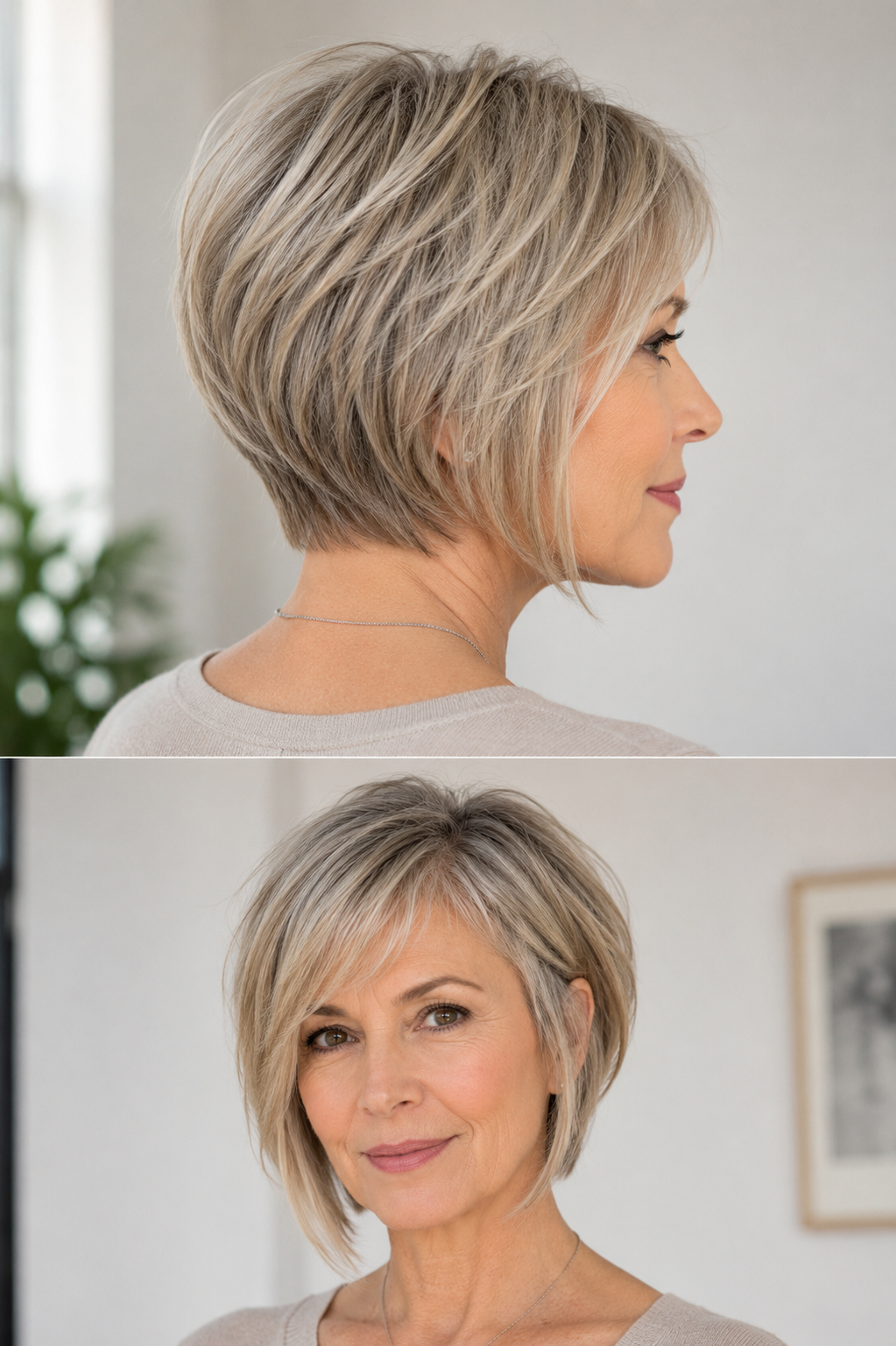
The back gets cut shorter with stacked layers, while the front stays longer in an angled line.
The stacking creates volume at the crown, which helps when fine hair has flattened over time.
Style with a round brush, drying the back section upward. This works best on fine to medium hair where the stacking shows up without bulk.
The shape adds presence without requiring volumizing product. It also grows out cleanly without obvious stages.
Blunt Lob with Curtain Bangs
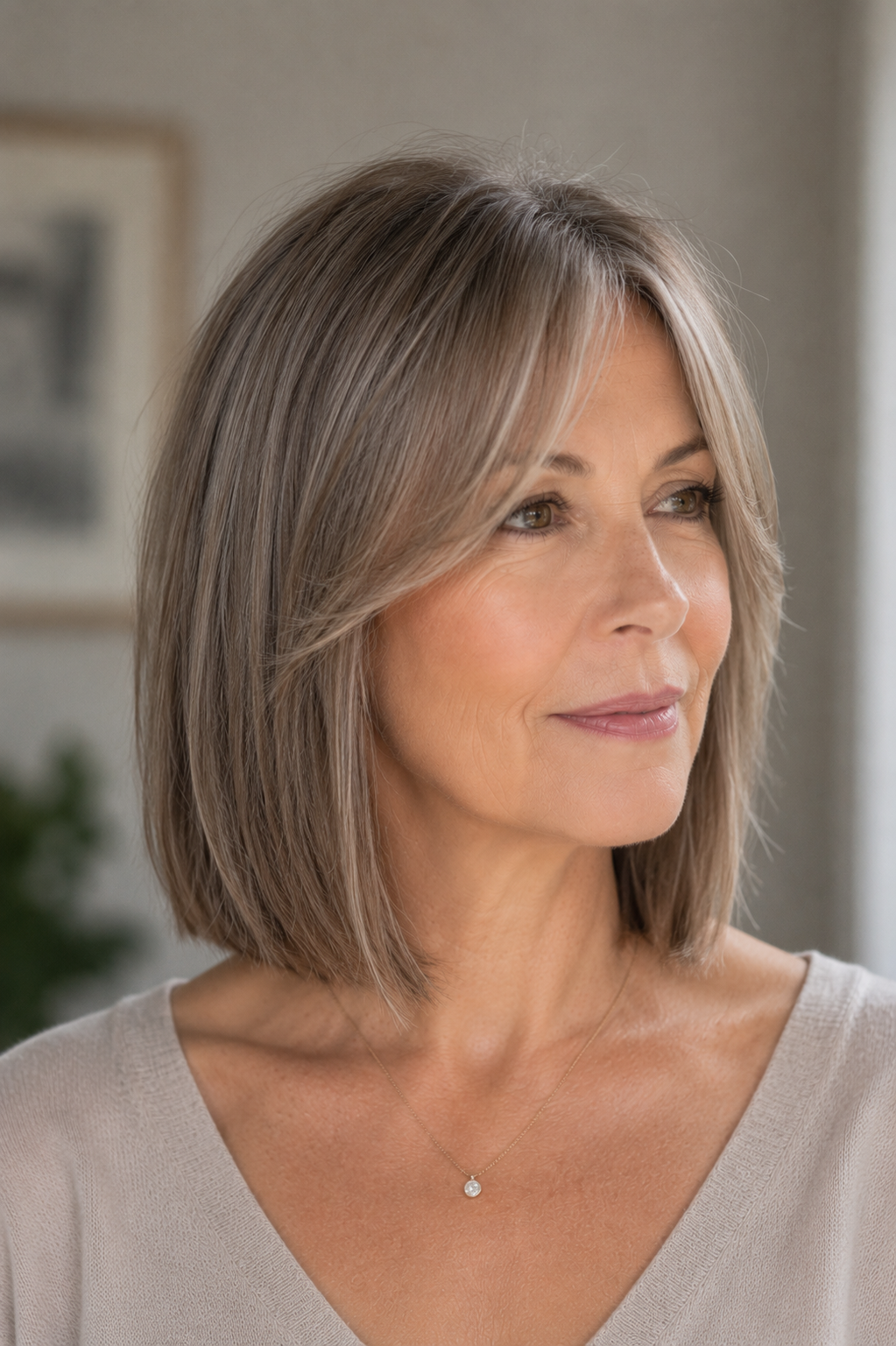
A blunt long bob paired with curtain bangs framing the face.
The blunt perimeter creates visual density, while the curtain bangs add softness and movement.
Style the bangs with a round brush blown away from the face, then let the lob air-dry or rough-dry for body.
The combination has stayed popular since 2024 and continues for 2026. The bangs grow out without harsh lines, which means less frequent trims than full bangs.
